Executive Intelligence. Industrial Risk. Geopolitics.
Strategic Sparring
for Decision-Makers
Risk intelligence across technology, law, markets and power dynamics.

Verdeckte Geschäftsrisiken, strategische Widersprüche und kritische Abhängigkeiten frühzeitig erkennen.
Kostenlose Analyse starten →
Verdeckte Machtstrukturen, Führungsrisiken und organisatorische Blockaden frühzeitig erkennen.
Kostenlose Analyse starten →
Geopolitische Risiken, globale Abhängigkeiten und kritische Lieferkettenrisiken frühzeitig erkennen.
Kostenlose Analyse starten →
Identify hidden business risks, strategic contradictions and critical dependencies at an early stage.
Start Free Analysis →
Identify hidden power structures, leadership risks and organizational blockers at an early stage.
Start Free Analysis →
Identify geopolitical risks, global dependencies and critical supply-chain vulnerabilities at an early stage.
Start Free Analysis →
Verdeckte Geschäftsrisiken, strategische Widersprüche und kritische Abhängigkeiten frühzeitig erkennen.
Kostenlose Analyse starten →
Verdeckte Machtstrukturen, Führungsrisiken und organisatorische Blockaden frühzeitig erkennen.
Kostenlose Analyse starten →
Geopolitische Risiken, globale Abhängigkeiten und kritische Lieferkettenrisiken frühzeitig erkennen.
Kostenlose Analyse starten →
Identify hidden business risks, strategic contradictions and critical dependencies at an early stage.
Start Free Analysis →
Identify hidden power structures, leadership risks and organizational blockers at an early stage.
Start Free Analysis →
Identify geopolitical risks, global dependencies and critical supply-chain vulnerabilities at an early stage.
Start Free Analysis →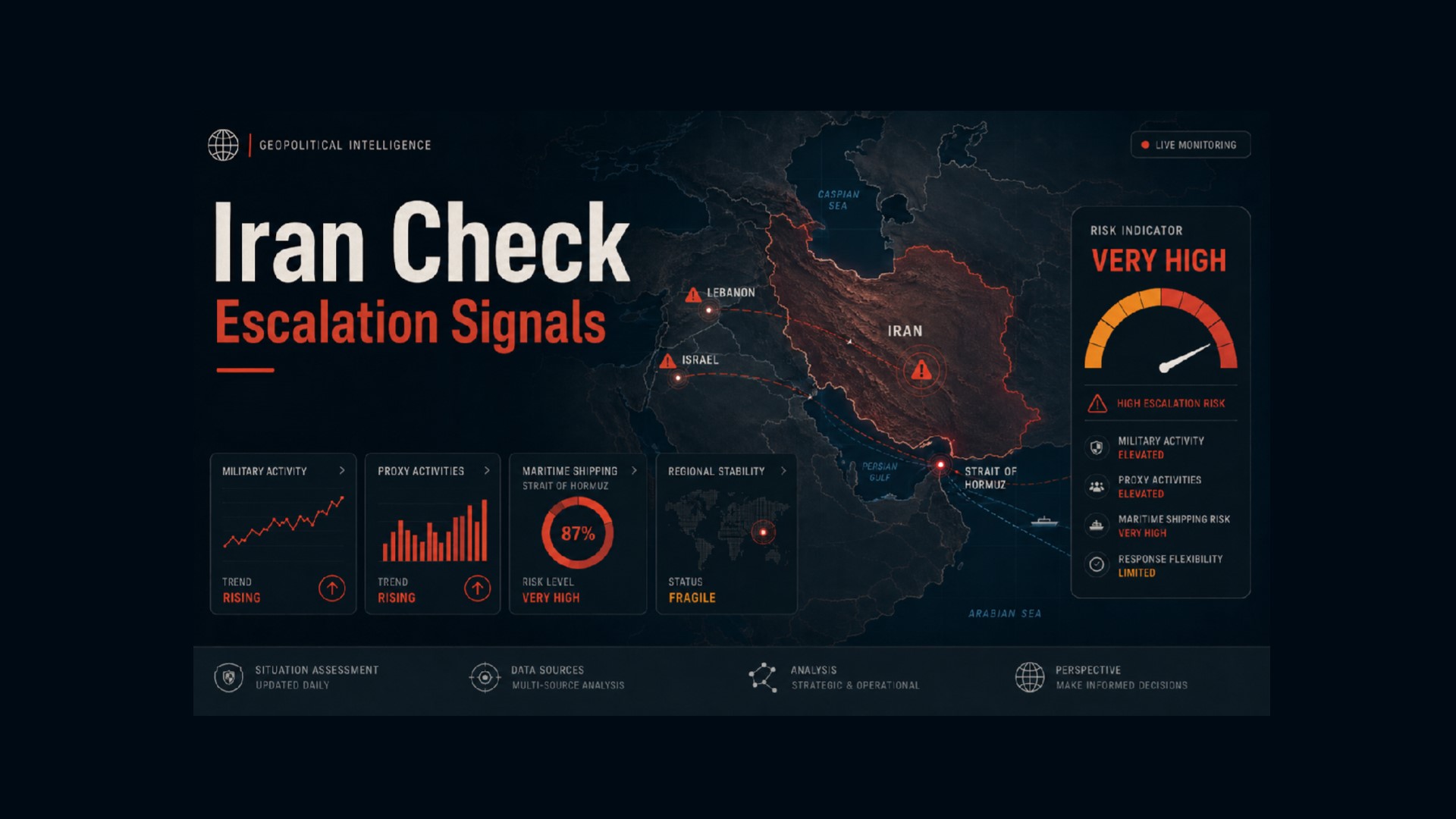
This escalation radar summarises five relevant signals as of September 8, 2026. It focuses on substantiated statements by official bodies, verified events and monitoring sources with potential implications for energy prices, supply chains, markets, maritime security, aviation and regional stability.
Tehran says a new zone will extend from the US blockade line into the Persian Gulf. Vessels planning to transit Hormuz are to be identified and sanctioned. Iran’s previous transit threats are therefore increasingly developing into a separate control regime.
Attacks hit civilian and economic targets in Abha, Khamis Mushait, Jazan and Najran. Saudi Arabia describes the attacks as a dangerous escalation and announces operational countermeasures.
Only seven visible commodity vessels transit Hormuz on Monday, down from eight the previous day. Commercial usage therefore remains far below normal levels, while Iran is simultaneously expanding its control claims.
| Actor | Type | Severity | Status | Source / Verification Status | Business Impact |
|---|---|---|---|---|---|
| Iran / United States / SNSC / Hormuz / international shipowners | Iran defines exclusion zone in response to US economic pressure | Critical · Level 5/5 | Tehran intensifies its maritime strategy towards Washington on September 8. Supreme National Security Council Secretary Mohsen Rezaei says the US “economic war” will be met with a maritime exclusion zone. The planned zone is intended to extend from the US blockade line through Hormuz into the Persian Gulf. Vessels entering the zone with the intention of transiting are to be identified and placed on an Iranian sanctions list. Power dynamics: Iran is attempting to counter the US blockade with its own administrative and military control regime for international shipping. The confrontation is shifting from blockade versus blockade towards competing navigation regimes. | Confirmed by Reuters, September 8, 2026 . Verification status: confirmed regarding the announced exclusion zone, its geographic scope and the planned sanctioning of vessels. A formal maritime notification or full operational implementation had not yet been issued at the time of research. Further reading: Schaaf Media · Strait of Hormuz Blockade 2026: Protecting Margins and Supply Chains in the Chokepoint Shock . | Critical business impact on Hormuz, tankers, charter contracts, insurance, sanctions, compliance and supply chains. A competing Iranian control regime creates additional legal, insurance and navigation risks for third countries and shipowners. |
| Iran / Oman / Hormuz / Bab el-Mandeb / international shipowners | Hormuz traffic remains extremely low while Bab el-Mandeb partially recovers | Critical · Level 5/5 | The operational situation in Hormuz remains significantly disrupted on September 8. Kpler records only seven commodity vessels in the Strait of Hormuz on Monday, down from eight on Sunday. Iran’s latest threats against energy infrastructure add further risk. Bab el-Mandeb, by contrast, moves temporarily in the opposite direction: visible transits rise from 17 to 29 vessels. Power dynamics: The central Gulf chokepoint remains structurally under wartime conditions despite individual transits. An improvement in the Red Sea only partially offsets the Hormuz disruption. | Confirmed by Reuters, September 8, 2026 . Verification status: confirmed regarding seven visible Hormuz transits, eight the previous day and 29 transits through Bab el-Mandeb. AIS shutdowns may mean that some vessel movements are not captured. Background: Schaaf Media · Iran Check: 5 Escalation Signals from September 6, 2026 . | Critical business impact on oil, LNG, LPG, freight rates, tanker charters, war-risk premiums and Europe-Asia supply chains. Companies should still not expect a reliable short-term normalisation of Hormuz. |
| Houthis / Saudi Arabia / Iran / Yemen / energy infrastructure | Iran-aligned Houthis attack Saudi Arabia – Riyadh announces countermeasures | Critical · Level 5/5 | The Iran conflict is again expanding through the Yemen theatre. Saudi Arabia reports Houthi attacks on civilian and economic targets in Abha, Khamis Mushait, Jazan and Najran. A total of 73 civilians are injured, including women and children. Riyadh describes the attacks as a dangerous escalation and announces measures to neutralise the threat. Power dynamics: The Iran-aligned Houthi axis is reopening a direct Saudi theatre. This once again creates an operational linkage between the US-Iran conflict, the Yemen war and Gulf energy infrastructure. | Confirmed by Saudi Gazette, September 8, 2026 . Verification status: confirmed regarding 73 injured civilians, the affected cities and the announced Saudi response. Direct Iranian operational control over the individual attacks has not been established. Background: Schaaf Media · Iran’s Proxies: The Hidden Escalation Map of the Middle East . | Critical business impact on Saudi Arabia, energy facilities, airports, aviation, industry, insurance and regional supply chains. A Saudi counter-response could draw the Yemen theatre much more deeply into the regional escalation. |
| South Korea / Iran / United States / Hormuz / maritime security | Seoul reassesses Hormuz deployment – Iran warns of “serious consequences” | High to critical · Level 4/5 | A new external actor is moving closer to the conflict. South Korea is reassessing possible military participation in US security operations in Hormuz. According to South Korean government sources, potential contributions are being reviewed again in light of the latest fighting. Iran warns Seoul that military participation in US operations would be regarded as direct support for the American side and would carry “serious consequences”. Power dynamics: Washington is seeking to broaden the burden of securing Hormuz across allied states. Iran, in turn, is increasing the political and military costs of such participation. This creates a new East Asia-Gulf cross-theatre linkage. | Confirmed by Korea Herald / Asia News Network, September 8, 2026 . Verification status: confirmed regarding South Korea’s renewed review of potential contributions and the Iranian warning. Seoul has not yet taken a final decision on a military deployment. Further reading: Schaaf Media · Oil as a Weapon: Why Energy Dominates Geopolitics and Markets in 2026 . | High to critical business impact on South Korea, Asian energy imports, tankers, maritime security, US alliance dynamics and supply chains. South Korean participation would connect the Hormuz conflict more directly with East Asian security architecture. |
| Israel / Hezbollah / Lebanon / Iran / southern Lebanon | New Israeli strike wave kills at least twelve in southern Lebanon | Critical · Level 5/5 | The Israel-Hezbollah escalation remains active within the current 48-hour window. Israeli air strikes hit Kfar Rumman in southern Lebanon on September 7. At least twelve people are killed, including two children and several women. Israel says the strikes followed renewed Hezbollah attacks against Israeli forces. The ceasefire brokered in June is therefore being eroded further. Power dynamics: Southern Lebanon is moving from limited retaliation back towards sustained military escalation. Hezbollah therefore remains an active cross-theatre channel of the Iran conflict. | Confirmed by AP News, September 8, 2026 . Verification status: confirmed regarding at least twelve fatalities, including two children, as well as the renewed Israeli strike wave. The strikes took place on September 7; the current AP report was published on September 8. Background: Schaaf Media · Middle East Escalation Check from September 7, 2026 . | Critical business impact on Lebanon, Israel, aviation, land logistics, ports, evacuation planning and regional investment. The continued erosion of the ceasefire increases the risk of a broader Israeli operation in southern Lebanon. |
The most important strategic shift on September 8, 2026 is Iran’s attempt to turn its control over Hormuz into a separate maritime rule system. The announced exclusion zone is intended to identify international vessels and subject them to Iranian sanctions. This creates competing US and Iranian control regimes over the same waterway.
Operationally, Hormuz remains severely constrained. Only seven visible commodity vessels transit the strait on Monday. Bab el-Mandeb is showing a short-term recovery, but the central Gulf chokepoint remains far from normalisation.
Particularly important today is the renewed escalation towards Saudi Arabia. Iran-aligned Houthis attack civilian and economic targets in four Saudi cities and injure 73 people. Riyadh announces countermeasures. The Iran conflict is therefore becoming more closely linked again with Yemen and Saudi energy and security infrastructure.
At the same time, a new external conflict linkage is emerging with South Korea. Seoul is reassessing participation in US Hormuz operations, while Iran warns of serious consequences. In southern Lebanon, another Israeli strike wave kills at least twelve people. The mandatory alliance review shows no new Iranian accession, partner or observer status today. EASA CZIBs for Iran, Iraq, Jordan, Lebanon, the Persian Gulf and the Gulf of Oman remain active until September 30, 2026; no new tightening was issued on September 8.
The five most important signals for a European and German risk assessment are: Iran’s newly defined maritime exclusion zone as a counter-model to the US blockade, the continued extremely low level of commercial traffic through Hormuz, the Houthi attacks on Saudi Arabia with 73 civilians injured and a Saudi response announced, South Korea’s possible participation in US Hormuz operations alongside an Iranian retaliation warning, and the new major Israeli strike wave in southern Lebanon as the ceasefire continues to erode.
Note: This assessment was prepared with the support of our Geo AI. AI can make mistakes. The analysis is intended as a radar for potential escalation signals and does not replace a fully verified intelligence assessment.
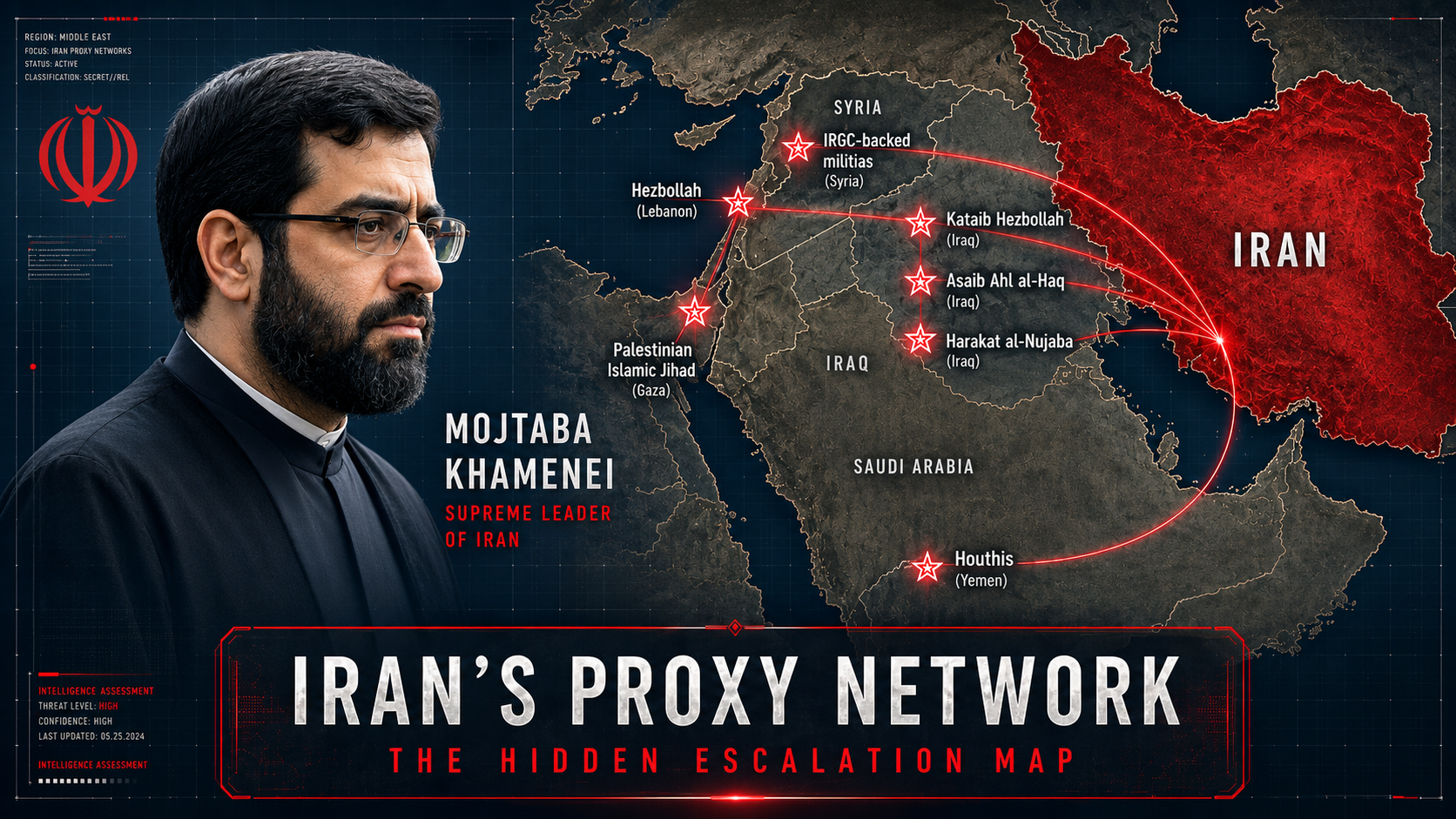
What decision-makers should watch now — before proxy escalation becomes a cost, compliance or supply-chain shock.
This 17-page executive briefing translates Iran’s proxy network into concrete business risks: energy price exposure, maritime chokepoints, war-risk premiums, sanctions, shadow fleets, supply-chain disruption and early-warning indicators for board-level decisions.
You are currently viewing a placeholder content from X. To access the actual content, click the button below. Please note that doing so will share data with third-party providers.
More Information