Executive Intelligence. Industrial Risk. Geopolitics.
Strategic Sparring
for Decision-Makers
Risk intelligence across technology, law, markets and power dynamics.


Verdeckte Geschäftsrisiken, strategische Widersprüche und kritische Abhängigkeiten frühzeitig erkennen.
Kostenlose Analyse starten →
Verdeckte Machtstrukturen, Führungsrisiken und organisatorische Blockaden frühzeitig erkennen.
Kostenlose Analyse starten →
Geopolitische Risiken, globale Abhängigkeiten und kritische Lieferkettenrisiken frühzeitig erkennen.
Kostenlose Analyse starten →
Identify hidden business risks, strategic contradictions and critical dependencies at an early stage.
Start Free Analysis →
Identify hidden power structures, leadership risks and organizational blockers at an early stage.
Start Free Analysis →
Identify geopolitical risks, global dependencies and critical supply-chain vulnerabilities at an early stage.
Start Free Analysis →
Verdeckte Geschäftsrisiken, strategische Widersprüche und kritische Abhängigkeiten frühzeitig erkennen.
Kostenlose Analyse starten →
Verdeckte Machtstrukturen, Führungsrisiken und organisatorische Blockaden frühzeitig erkennen.
Kostenlose Analyse starten →
Geopolitische Risiken, globale Abhängigkeiten und kritische Lieferkettenrisiken frühzeitig erkennen.
Kostenlose Analyse starten →
Identify hidden business risks, strategic contradictions and critical dependencies at an early stage.
Start Free Analysis →
Identify hidden power structures, leadership risks and organizational blockers at an early stage.
Start Free Analysis →
Identify geopolitical risks, global dependencies and critical supply-chain vulnerabilities at an early stage.
Start Free Analysis →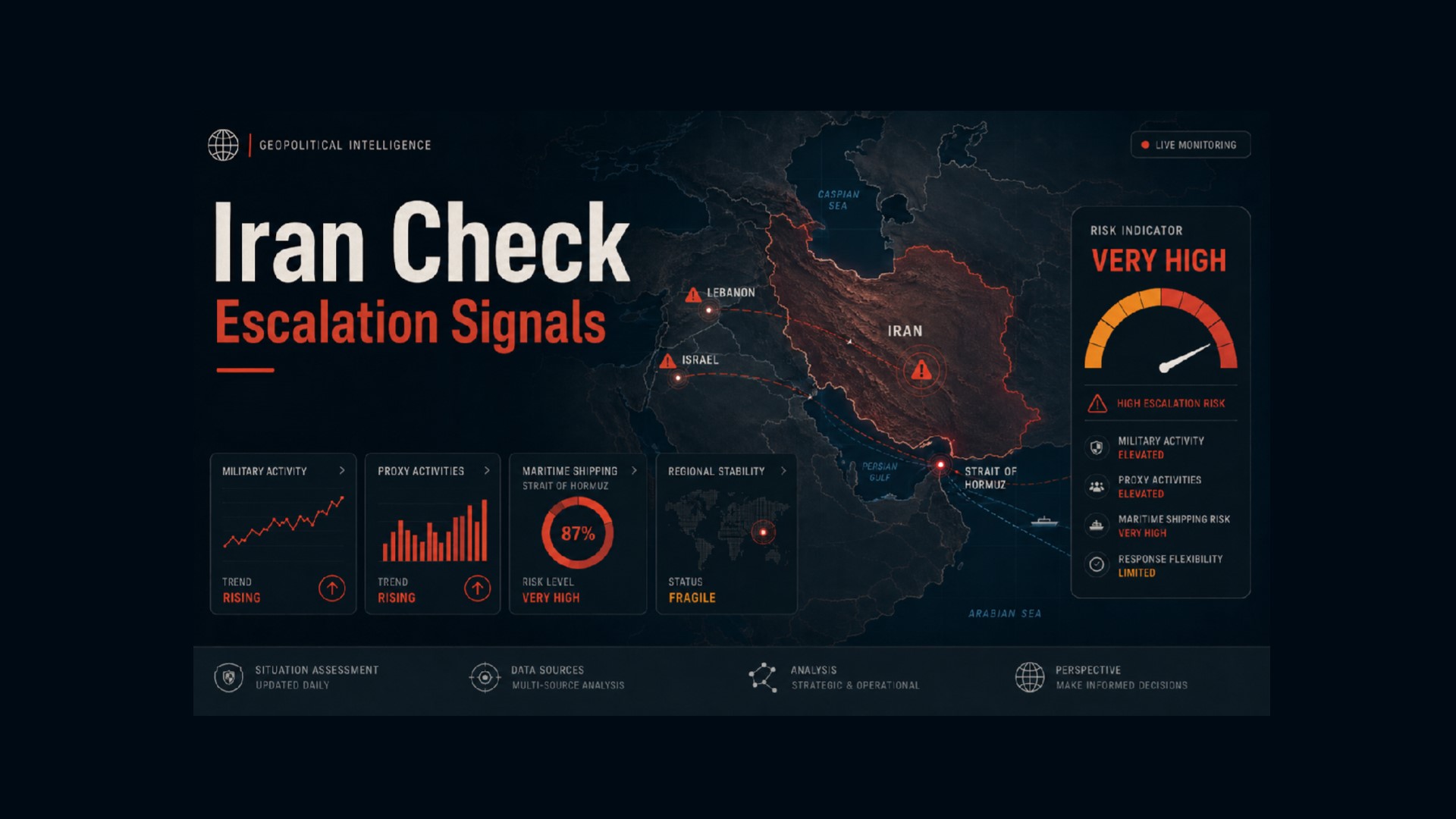
This escalation radar summarises five relevant signals as of September 14, 2026. It focuses on substantiated statements by official bodies, verified events and monitoring sources with potential implications for energy prices, supply chains, markets, maritime security, aviation and regional stability.
Fewer than ten visible commodity vessels per day transit the Strait of Hormuz over the weekend. At the same time, another vessel is struck by an unidentified projectile. The strait therefore remains highly unstable from both a military and commercial perspective.
Greater and Lesser Hanish fall to the Iran-aligned Houthis. Following the capture of Mokha and Mayun, their operational influence along the southern Red Sea and around Bab el-Mandeb continues to grow.
Oman postpones the planned meeting between Iran and the Gulf states because sufficient consensus is lacking. Brent simultaneously rises to around $107.5. A key short-term de-escalation channel is therefore temporarily unavailable.
| Actor | Type | Severity | Status | Source / Verification Status | Business Impact |
|---|---|---|---|---|---|
| Iran / Oman / Hormuz / international shipowners / UKMTO | Hormuz remains in single digits – new vessel incident raises risk | Critical · Level 5/5 | Commercial use of the Strait of Hormuz remains far below normal levels on September 14. Preliminary tracking data show that the number of commodity vessels remained in the single digits per day over the weekend. In total, four vessels leave the Gulf, while ten enter. The ten-day average is around 14 vessels per day. At the same time, UKMTO reports that a vessel was struck by an unidentified projectile while transiting the strait. Power dynamics: Even individual new attacks are enough to disrupt the fragile commercial recovery again. Hormuz therefore remains both a military conflict zone and a global supply-chain bottleneck. | Confirmed by Reuters, September 14, 2026 . Verification status: confirmed regarding the low number of visible transits, the ten-day average and the new vessel incident. AIS shutdowns may mean that some movements are not captured. Further reading: Schaaf Media · Strait of Hormuz Blockade 2026: Protecting Margins and Supply Chains in the Chokepoint Shock . | Critical business impact on oil, LNG, tanker charters, freight rates, insurance and Europe-Asia supply chains. New strikes on vessels keep war-risk premiums elevated and prevent reliable normalisation. |
| Houthis / Iran / Yemen / Saudi Arabia / Bab el-Mandeb / Hanish Islands | Houthis take Greater and Lesser Hanish – influence over Red Sea route expands | Critical · Level 5/5 | The Houthi offensive gains further strategic depth on September 14. Iran-aligned Houthi forces take Greater Hanish and Lesser Hanish in the southern Red Sea. Fighters are deployed on the islands. The territorial gains follow the capture of Mokha and Mayun directly around Bab el-Mandeb. The new positions are also only around 32 kilometres from the US military base in Djibouti. Power dynamics: Houthi influence is shifting from the ability to launch isolated attacks towards increasingly territorial control. This indirectly strengthens Iran’s coercive leverage over a second global chokepoint. | Confirmed by AP News, September 14, 2026 . Verification status: confirmed regarding the capture of Greater and Lesser Hanish and the deployment of Houthi forces. This does not automatically mean full control over international shipping through Bab el-Mandeb. Background: Schaaf Media · Iran’s Proxies: The Hidden Escalation Map of the Middle East . | Critical business impact on Bab el-Mandeb, Suez, container shipping, Saudi oil exports, insurance and delivery times. Territorial footholds increase the ability to place shipping under sustained military pressure. |
| Iran / Oman / Saudi Arabia / Gulf states / Hormuz / oil markets | Oman postpones Hormuz talks – oil prices respond immediately | Critical · Level 5/5 | The most important regional de-escalation attempt is temporarily stalled. Oman says on September 14 that the planned talks between Iran and the Gulf states will not take place as scheduled. Muscat says conditions for a constructive consensus are currently not in place. The dispute centres on differences over the Iran-Oman framework for navigation through Hormuz. At the same time, Brent rises to around $107.5 per barrel, while WTI climbs to around $102.9. Power dynamics: Without a regionally accepted mechanism, the Hormuz issue remains trapped between Iranian control, US military power and diverging Gulf interests. | Confirmed by The National, September 14, 2026 . Oil-market reaction: Gulf Today / Reuters, September 14, 2026 . Verification status: confirmed regarding the postponement of the talks and the immediate rise in oil prices. No new date has yet been set. Further reading: Schaaf Media · Oil as a Weapon: Why Energy Dominates Geopolitics and Markets in 2026 . | Critical business impact on oil prices, LNG, energy procurement, inflation, transport and industry. The failure of the short-term dialogue channel prolongs uncertainty over transit rules and supply volumes. |
| China / Iran / United States / Jordan / satellite intelligence | US report links Chinese satellite imagery to deadly Iranian attack | High to critical · Level 4/5 | A new great-power linkage moves into focus on September 14. A report citing US officials claims that Iran received satellite imagery from Chinese entities before a deadly attack on a US base in Jordan. Three US soldiers were killed in the July attack. Reuters was unable to independently verify the claims. The Chinese government rejects what it calls unsubstantiated allegations. The report also does not allege direct involvement by the Chinese government. President Trump plays down the matter and points to mutual intelligence gathering among major powers. Power dynamics: If operational support were eventually confirmed, the Iran conflict would acquire a new China-US intelligence dimension. | Reported by Reuters, September 14, 2026 . Verification status: unclear or partially confirmed. Trump’s response and China’s denial are confirmed. Reuters was unable to independently verify the alleged provision of satellite imagery; direct involvement by Beijing has not been established. Further analysis: Schaaf Media · Iran War: How the West Is Fighting While Losing Its Dominance . | High to critical business impact on US-China relations, technology exports, satellite data, sanctions and compliance. A confirmed intelligence link could trigger new export controls and secondary sanctions. |
| Iran / UAE / BRICS / India / China / Russia | Iran and UAE signal first political rapprochement since start of war | High · Level 3/5 | In parallel with the operational escalation, a cautious political counter-signal is emerging. President Masoud Pezeshkian says Iran and the UAE have agreed to put the past behind them and look to the future. The statement followed the first high-level meeting between the two sides since the start of the Gulf war. The meeting took place on the sidelines of the BRICS summit in New Delhi. Both states also support the BRICS declaration calling for maximum restraint and diplomacy. Power dynamics: BRICS therefore provides an indirect dialogue space between two states that have so far stood on opposing sides of the war. This is not yet an agreement, but it is a relevant de-escalation signal. | Confirmed by The Indian Express, September 14, 2026 . Verification status: confirmed regarding Pezeshkian’s public statement, the high-level Iran-UAE meeting and the joint BRICS declaration. No formal bilateral security or economic agreement has been announced. The mandatory alliance review shows no new Iranian membership status. Background: Schaaf Media · Middle East Escalation Check from September 13, 2026 . | High business impact on UAE-Iran trade, Gulf risk premiums, energy, investment and regional diplomacy. A durable Iran-UAE rapprochement could reduce regional escalation costs over the longer term, but it is not yet operationally secured. |
The most important operational finding on September 14, 2026 is the continued extreme fragility of Hormuz. Visible traffic remains in the single digits, while another vessel is struck by a projectile. A reliable normalisation therefore remains out of sight.
At the same time, the second chokepoint crisis is becoming more severe. The Houthis take Greater and Lesser Hanish and thereby expand their territorial positions in the southern Red Sea. Hormuz and Bab el-Mandeb therefore remain simultaneously under significant military pressure.
Diplomatically, the short-term outlook is also deteriorating. Oman postpones the planned Hormuz talks because sufficient regional consensus is lacking. Brent simultaneously rises back above $107. The political deadlock is therefore feeding directly into energy prices.
Also new is the potential China-Iran intelligence linkage. Reports of Chinese satellite imagery being provided to Iran have not been independently confirmed, but would be strategically significant if verified. At the same time, the Iran-UAE rapprochement provides a cautious political counter-signal. No new Iranian alliance, partner or observer status has been confirmed on September 14. EASA CZIBs for Iran, Iraq, Jordan, Lebanon, the Persian Gulf and the Gulf of Oman remain active until September 30, 2026; no new revision was published on September 14.
The five most important signals for a European and German risk assessment are: continued single-digit commercial traffic through Hormuz alongside another attack on a vessel, the capture of Greater and Lesser Hanish by the Houthis and the resulting increase in pressure on Bab el-Mandeb, the postponement of regional Hormuz talks alongside oil prices rising above $107, the still-unconfirmed possibility of Chinese satellite support for Iran, and the first visible political rapprochement between Iran and the UAE since the start of the war.
Note: This assessment was prepared with the support of our Geo AI. AI can make mistakes. The analysis is intended as a radar for potential escalation signals and does not replace a fully verified intelligence assessment.
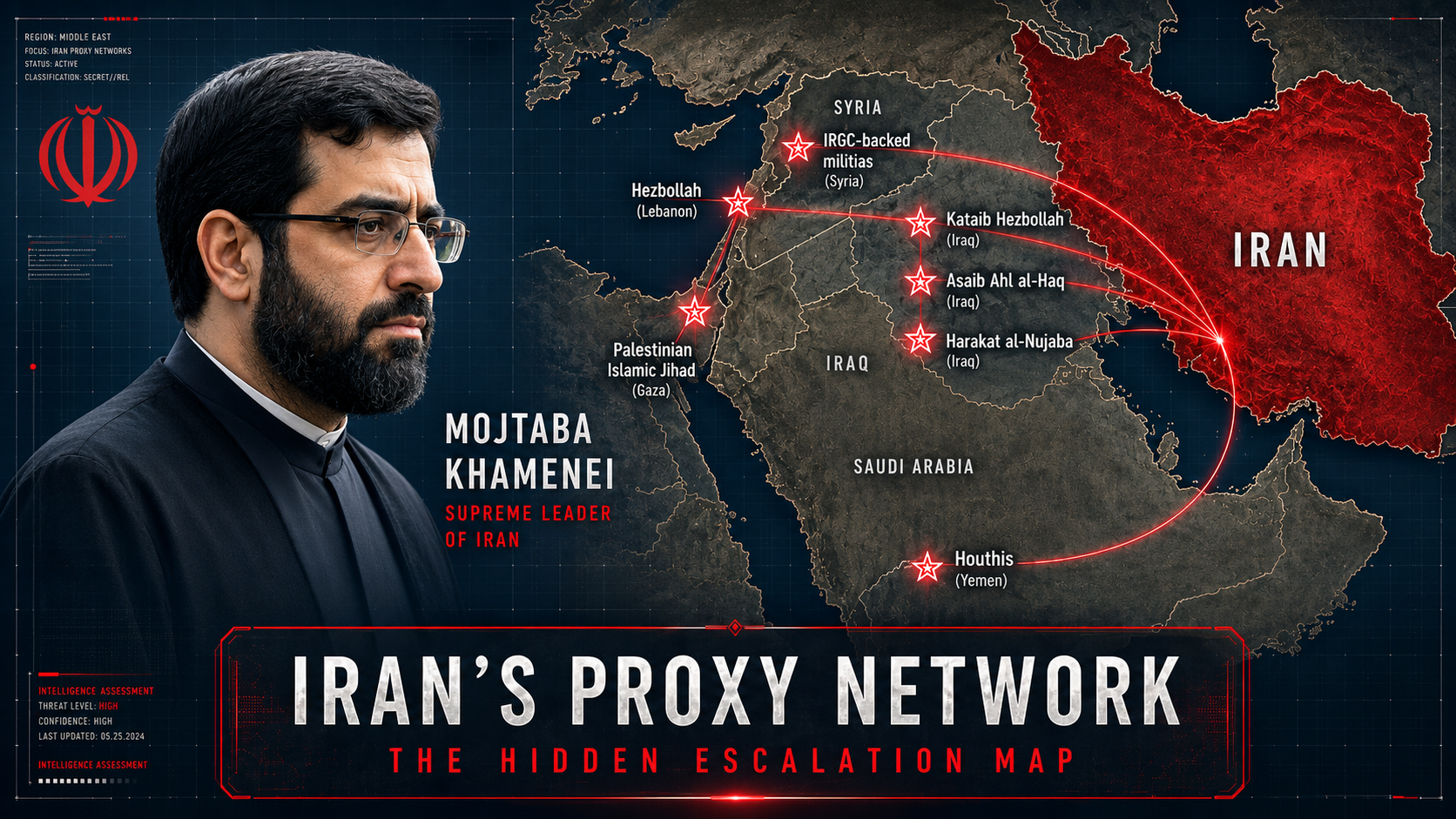
What decision-makers should watch now — before proxy escalation becomes a cost, compliance or supply-chain shock.
This 17-page executive briefing translates Iran’s proxy network into concrete business risks: energy price exposure, maritime chokepoints, war-risk premiums, sanctions, shadow fleets, supply-chain disruption and early-warning indicators for board-level decisions.
You are currently viewing a placeholder content from X. To access the actual content, click the button below. Please note that doing so will share data with third-party providers.
More Information