Executive Intelligence. Industrial Risk. Geopolitics.
Strategic Sparring
for Decision-Makers
Risk intelligence across technology, law, markets and power dynamics.


Verdeckte Geschäftsrisiken, strategische Widersprüche und kritische Abhängigkeiten frühzeitig erkennen.
Kostenlose Analyse starten →
Verdeckte Machtstrukturen, Führungsrisiken und organisatorische Blockaden frühzeitig erkennen.
Kostenlose Analyse starten →
Geopolitische Risiken, globale Abhängigkeiten und kritische Lieferkettenrisiken frühzeitig erkennen.
Kostenlose Analyse starten →
Identify hidden business risks, strategic contradictions and critical dependencies at an early stage.
Start Free Analysis →
Identify hidden power structures, leadership risks and organizational blockers at an early stage.
Start Free Analysis →
Identify geopolitical risks, global dependencies and critical supply-chain vulnerabilities at an early stage.
Start Free Analysis →
Verdeckte Geschäftsrisiken, strategische Widersprüche und kritische Abhängigkeiten frühzeitig erkennen.
Kostenlose Analyse starten →
Verdeckte Machtstrukturen, Führungsrisiken und organisatorische Blockaden frühzeitig erkennen.
Kostenlose Analyse starten →
Geopolitische Risiken, globale Abhängigkeiten und kritische Lieferkettenrisiken frühzeitig erkennen.
Kostenlose Analyse starten →
Identify hidden business risks, strategic contradictions and critical dependencies at an early stage.
Start Free Analysis →
Identify hidden power structures, leadership risks and organizational blockers at an early stage.
Start Free Analysis →
Identify geopolitical risks, global dependencies and critical supply-chain vulnerabilities at an early stage.
Start Free Analysis →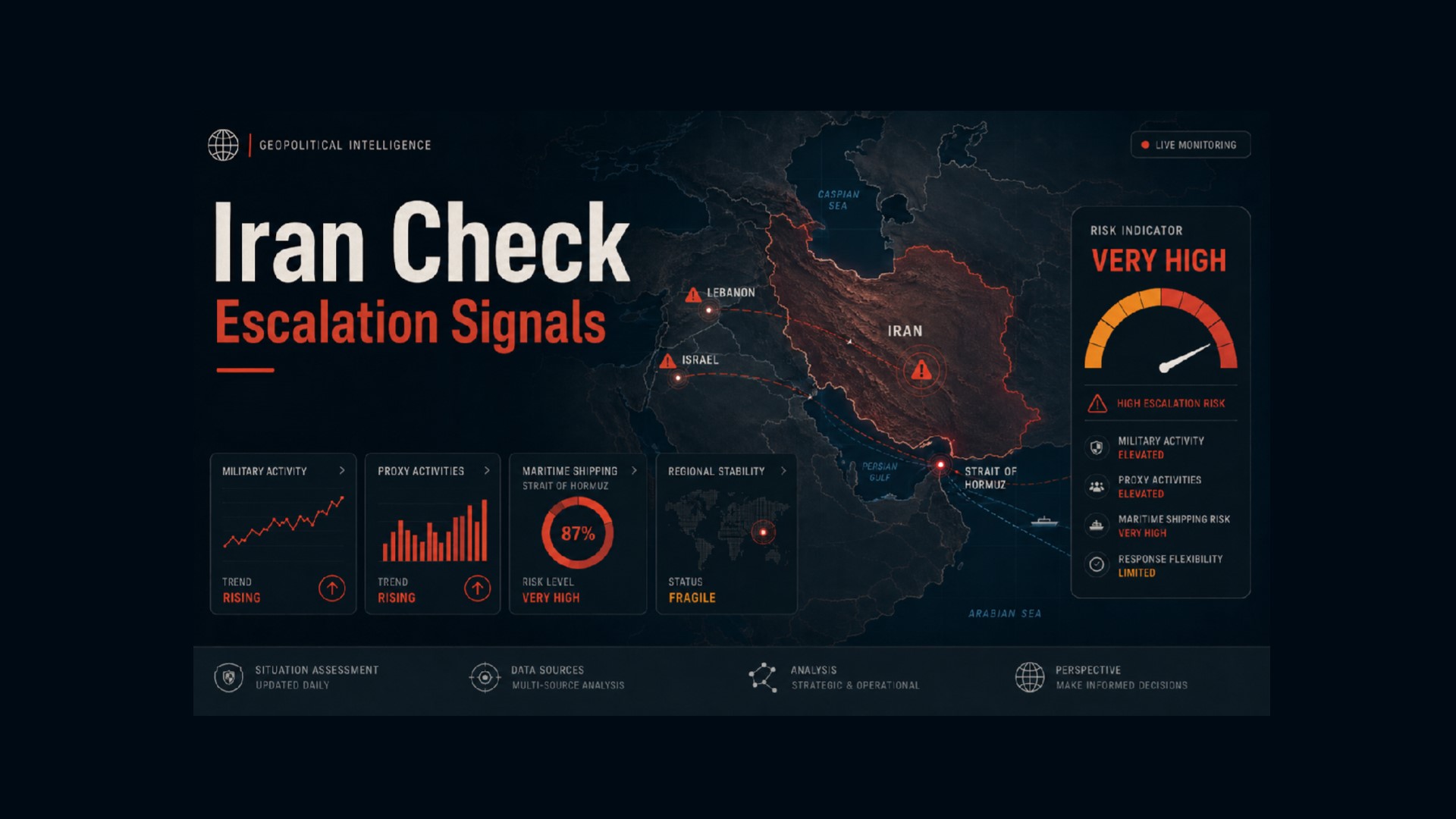
This escalation radar summarises five relevant signals as of August 9, 2026. It focuses on substantiated statements by official bodies, verified events and monitoring sources with potential implications for energy prices, supply chains, markets, maritime security, aviation and regional stability.
The Houthis claim a drone attack on the Aramco refinery in Jazan on August 9. A fire broke out at the site and was extinguished, according to Saudi Arabia. This means that not only tankers and ports, but Saudi refinery sites themselves remain direct targets in the regional escalation.
Iran says its agreement with Oman is in the final stages. At the same time, Tehran makes clear that the arrangement alone will not result in a full reopening of Hormuz. Iran is also rejecting direct talks with Washington for now. The gap between diplomatic progress and operational normalisation is therefore widening again.
The new trilateral defence arrangement is becoming more concrete: an armed attack on one partner is in principle to be treated as an attack on all three. Political cooperation is therefore evolving into an institutionalised deterrence structure that links the Iran conflict more closely with NATO member Türkiye and nuclear-armed Pakistan.
| Actor | Type | Severity | Status | Source / Verification Status | Business Impact |
|---|---|---|---|---|---|
| Houthis / Saudi Arabia / Aramco / Jazan / Iran | New drone attack on Saudi refinery expands pressure on energy infrastructure | Critical · Level 5/5 | The Houthis stated on August 9 that they had attacked the Aramco refinery in Jazan in southwestern Saudi Arabia with drones. A fire broke out at the facility and was extinguished, according to Saudi authorities. No injuries were reported. Saudi Arabia’s Energy Ministry did not initially confirm the cause of the fire. The refinery can process around 400,000 barrels of crude oil per day. Strategically, the attack is particularly relevant because it again expands the Houthi campaign from ships and ports to fixed Saudi energy infrastructure. Power dynamics: Iran-aligned actors can continue to pressure Saudi Arabia without Tehran itself carrying out an overt attack. At the same time, the escalation directly tests the new Saudi security architecture. | Confirmed by Reuters, August 9, 2026 and AP News, August 9, 2026 . Verification status: confirmed regarding the fire and its extinguishing at the facility and regarding the Houthi claim of a drone attack. The Saudi side has not yet confirmed the specific cause of the incident. | Critical business impact on Aramco, Saudi refineries, oil supply, Red Sea export chains, insurance, energy prices, site protection, workforce planning and business continuity. |
| Iran / United States / Oman / IRGC / Strait of Hormuz | Hormuz agreement close to completion, but Iran rejects automatic reopening and direct US talks | Critical · Level 5/5 | Iranian Foreign Minister Abbas Araghchi stated on August 9 that direct talks with the United States would not take place as long as Washington, from Iran’s perspective, continues to violate the existing interim agreement. Contacts are therefore continuing through intermediaries. At the same time, a separate Iran-Oman arrangement on new shipping routes through Hormuz is, according to Iranian statements, in its final phase. Tehran is, however, making one point explicit: this agreement alone will not result in the full reopening of the strait. On August 8, the Revolutionary Guard had already stated that reopening Hormuz would not depend on the Oman talks, but on the United States meeting Iranian conditions. Power dynamics: Iran is deliberately separating technical transit solutions from the broader political settlement with Washington. Hormuz therefore remains a central negotiating lever rather than a normalised international waterway. | Confirmed by Reuters, August 9, 2026 and Reuters, August 8, 2026 . Verification status: confirmed regarding the rejection of direct US talks, the advanced Iran-Oman process and Iran’s separation between a transit arrangement and a full reopening. Final conditions, the timetable and practical enforcement remain unresolved. | Critical business impact on oil, LNG, tankers, war-risk premiums, charter agreements, delivery times, energy procurement, trade finance and companies already planning for a rapid normalisation of Hormuz. |
| Iran / UAE / ADNOC / Revolutionary Guard / Hormuz | UAE accuses Iran of missile attack on ADNOC vessel in Hormuz | Critical · Level 5/5 | The United Arab Emirates stated on August 8 that Iran had attacked an ADNOC-linked vessel with a missile while it was transiting Hormuz. No injuries were reported in the incident. The UAE described Iranian attacks on vessels as piracy and called for them to stop immediately. ADNOC also stated that its vessels had already been targeted several times by missiles and drones since the conflict began. The new incident therefore stands in direct contradiction to the parallel discussions over a safe transit route. Power dynamics: As long as individual Gulf states continue to accuse Iran of direct attacks on their commercial vessels, a political Hormuz deal without a credible security mechanism remains only partially viable for shipowners. | Confirmed by Reuters, August 8, 2026 . Verification status: confirmed regarding the UAE accusation and ADNOC’s statements about repeated attacks. Specific Iranian responsibility for the individual strike is supported by the Emirati account, but has not been independently and conclusively verified. | Critical business impact on ADNOC, UAE exports, LNG and crude oil transport, vessel security, insurance, charter costs, crew safety, port planning and alternative sourcing routes. |
| Saudi Arabia / Türkiye / Pakistan / NATO / Iran | Defence pact adopts Article 5-like mutual defence logic and institutional structure | High to critical · Level 4/5 | The new defence pact between Saudi Arabia, Türkiye and Pakistan took on significantly more concrete form on August 8. Turkish Foreign Minister Hakan Fidan stated that the arrangement was technically comparable to an Article 5 logic: an armed attack on one partner would in principle be regarded as an attack on all three. The type and scale of support would be coordinated in each specific case. The framework is also expected to include a ministerial committee and a secretariat based in Saudi Arabia. A later expansion of the format is possible. Power dynamics: Short-term cooperation is evolving into an institutionalised regional deterrence structure. This links the Gulf conflict more closely with NATO member Türkiye, Pakistan and its nuclear deterrent capability. | Confirmed by Reuters, August 8, 2026 . Verification status: confirmed regarding the mutual defence logic, the planned institutions and the possibility of expansion. Specific military deployment plans or automatic troop commitments are not confirmed. | High to critical business impact on regional security planning, defence and dual-use supply chains, defence procurement, air defence, export controls, investment and long-term Gulf exposure. |
| United States / Pentagon / defence industry / Iran / global security architecture | Pentagon pushes for accelerated weapons production amid strained ammunition stocks | High · Level 3/5 | The Iran war is increasingly affecting US strategic endurance. The Pentagon is urging US defence companies to accelerate production and delivery of key weapons systems. The pressure reflects heavily used stocks, particularly air and missile defence interceptors such as Patriot and THAAD. Manufacturers are being asked to submit accelerated production plans. Operationally, this does not mean that Washington is becoming unable to act in the near term. Strategically, however, it shows that a prolonged Iran conflict is increasingly absorbing industrial capacity and competing with other security theatres for ammunition and production resources. Power dynamics: The conflict is therefore shifting partly from the battlefield into the US industrial base. Production capacity itself is becoming part of military deterrence. | Confirmed by AP News, August 9, 2026 . Verification status: confirmed regarding the Pentagon’s demand for faster production and the increased need for replenishment. The exact operational minimum stock levels of individual weapons systems remain classified or are not fully publicly verifiable. | High business impact on the defence industry, electronics, semiconductors, specialised materials, missile and air-defence supply chains, export controls, government procurement and capacity planning. At the same time, the risk of competing demand from Europe, the Middle East and other conflict theatres is increasing. |
The central escalation point on August 9, 2026 is the widening gap between diplomatic progress and operational reality. Iran and Oman are moving closer to a technical agreement on Hormuz. Tehran is simultaneously making clear, however, that the agreement will not automatically reopen the strait in full and that direct talks with Washington remain ruled out for now. Expectations of rapid normalisation are therefore losing substance again.
Operationally, the situation is deteriorating on two fronts at the same time. The UAE accuses Iran of a new missile attack on an ADNOC vessel in Hormuz. In western Saudi Arabia, the Houthis claim a drone attack on the Aramco refinery in Jazan. The energy crisis therefore continues to affect not only chokepoints and vessels, but increasingly refineries and fixed infrastructure as well.
At the same time, regional counter-deterrence is becoming institutionalised. Saudi Arabia, Türkiye and Pakistan are giving their new defence pact an Article 5-like mutual defence logic and are building joint political structures. The Iran conflict is therefore becoming more closely linked with NATO member Türkiye, Pakistan and a new regional security architecture.
Strategic secondary effects are also emerging on the US side. The Pentagon is pressing the defence industry to accelerate production and delivery of key weapons systems. This makes it increasingly visible that the prolonged Iran conflict is absorbing industrial capacity and ammunition reserves. EASA warnings for Iran, Iraq, Jordan, Lebanon, the Persian Gulf and the Gulf of Oman remain active at the same time, but were not tightened again on August 9.
The five most important signals for a European and German business risk assessment are: the new Houthi attack on the Aramco refinery in Jazan, Iran’s clear statement that the nearly completed Oman deal will not automatically reopen Hormuz, the UAE accusation of a new Iranian missile attack on an ADNOC vessel, the Article 5-like mutual defence logic of the Saudi Arabia-Türkiye-Pakistan defence pact, and increasing pressure on the US defence industry to expand weapons and ammunition production more rapidly because of the Iran war.
Note: This assessment was prepared with the support of our Geo AI. AI can make mistakes. The analysis is intended as a radar for potential escalation signals and does not replace a fully verified intelligence assessment.
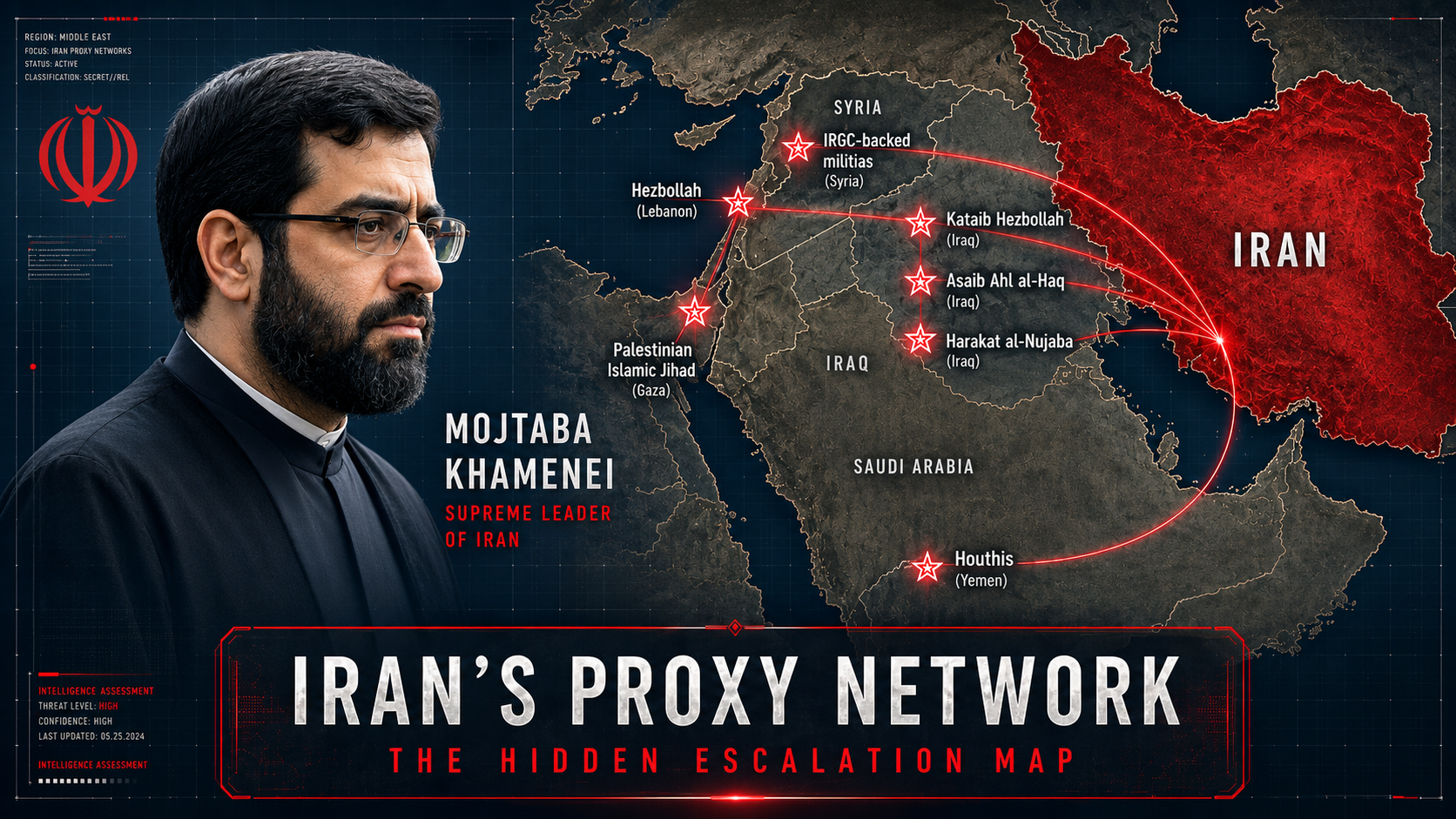
What decision-makers should watch now — before proxy escalation becomes a cost, compliance or supply-chain shock.
This 17-page executive briefing translates Iran’s proxy network into concrete business risks: energy price exposure, maritime chokepoints, war-risk premiums, sanctions, shadow fleets, supply-chain disruption and early-warning indicators for board-level decisions.
You are currently viewing a placeholder content from X. To access the actual content, click the button below. Please note that doing so will share data with third-party providers.
More Information