Executive Intelligence. Industrial Risk. Geopolitics.
Strategic Sparring
for Decision-Makers
Risk intelligence across technology, law, markets and power dynamics.


Verdeckte Geschäftsrisiken, strategische Widersprüche und kritische Abhängigkeiten frühzeitig erkennen.
Kostenlose Analyse starten →
Verdeckte Machtstrukturen, Führungsrisiken und organisatorische Blockaden frühzeitig erkennen.
Kostenlose Analyse starten →
Geopolitische Risiken, globale Abhängigkeiten und kritische Lieferkettenrisiken frühzeitig erkennen.
Kostenlose Analyse starten →
Identify hidden business risks, strategic contradictions and critical dependencies at an early stage.
Start Free Analysis →
Identify hidden power structures, leadership risks and organizational blockers at an early stage.
Start Free Analysis →
Identify geopolitical risks, global dependencies and critical supply-chain vulnerabilities at an early stage.
Start Free Analysis →
Verdeckte Geschäftsrisiken, strategische Widersprüche und kritische Abhängigkeiten frühzeitig erkennen.
Kostenlose Analyse starten →
Verdeckte Machtstrukturen, Führungsrisiken und organisatorische Blockaden frühzeitig erkennen.
Kostenlose Analyse starten →
Geopolitische Risiken, globale Abhängigkeiten und kritische Lieferkettenrisiken frühzeitig erkennen.
Kostenlose Analyse starten →
Identify hidden business risks, strategic contradictions and critical dependencies at an early stage.
Start Free Analysis →
Identify hidden power structures, leadership risks and organizational blockers at an early stage.
Start Free Analysis →
Identify geopolitical risks, global dependencies and critical supply-chain vulnerabilities at an early stage.
Start Free Analysis →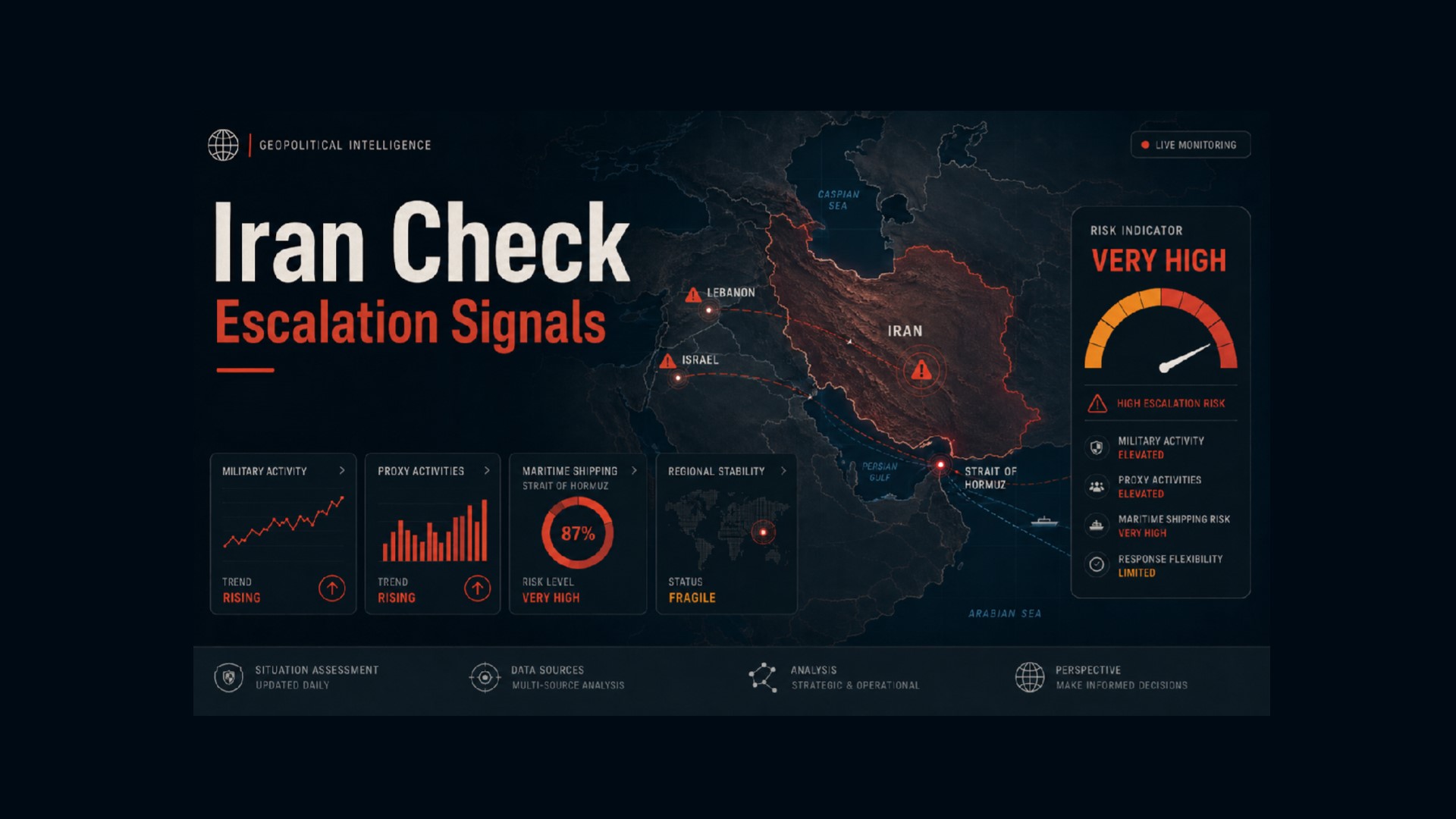
This escalation radar summarizes five relevant signals as of October 12, 2026. The focus is on verifiable statements by official sources, confirmed events and monitoring data with potential implications for energy prices, supply chains, markets, maritime security, aviation and regional stability.
Tehran confirms further exchanges through mediators. Washington’s response to Iran’s seven conditions remains under review; no agreement on reopening Hormuz has been reached.
Following two major attacks, 99.7 percent of scheduled flights were cancelled on Sunday. Around 60 percent are also expected to be cancelled on Monday.
The MT Petro Dolphin is hit by a drone off Oman; two Indian seafarers remain missing. The MT Valthera is also struck by a projectile.
| Actor | Type | Severity | Status | Source / Verification | Business Impact |
|---|---|---|---|---|---|
| Iran / United States / Qatar / Pakistan / Hormuz | Iran continues reviewing U.S. response to Hormuz proposal | High to Critical · Level 4/5 | The diplomatic situation remains deadlocked, but the communication channel is still open. Foreign Ministry spokesperson Esmaeil Baghaei says on October 12 that Iran is still reviewing Washington’s response to the proposal for reopening the Strait of Hormuz. Once the review is complete, Tehran will respond through mediators. Qatar and Pakistan remain among the intermediaries. Iran’s security leadership had previously stated that the U.S. response did not sufficiently meet Iran’s seven conditions. Washington also wants to bring Iran’s nuclear programme into the talks at an early stage. Tehran wants Hormuz and maritime security addressed first. Power dynamics: Both sides remain engaged, but disagree on priorities and sequencing. | Confirmed by Reuters, October 12, 2026 . Verification status: confirmed for the ongoing review of the U.S. response and continued exchanges through mediators. No agreement, reopening or new ceasefire has been reached. Background: Schaaf Media · Iran Check: 5 Escalation Signals – October 10, 2026 . | High to critical business impact on oil, LNG, tanker shipping, freight rates, insurance and inflation. Until a Hormuz compromise is reached, the central energy and trade route remains politically and militarily fragile. |
| Saudi Arabia / Houthis / Riyadh / civil aviation | Riyadh Airport almost completely shut down after attacks | Critical · Level 5/5 | The attacks have now reached a new operational dimension for civil aviation. King Khalid International Airport cancelled 99.7 percent of all scheduled flights on Sunday. According to Cirium, around 60 percent of Monday’s flights are also expected to be cancelled. More than one-third of all flights across Saudi Arabia are also expected to be cancelled. The latest attack killed one person and injured almost a dozen others. A previous attack killed 13 people and injured more than 300. Lufthansa has suspended flights to Riyadh until October 16. Air France-KLM has extended its suspension through the end of the month. Power dynamics: Houthi attacks are creating nationwide consequences for international transport connectivity for the first time. | Confirmed by Reuters, October 12, 2026 . Verification status: confirmed for the massive flight cancellations, fatalities and international airline suspensions. The FAA also advises U.S. airlines to exercise increased caution. Further analysis: Schaaf Media · Middle East Escalation Check – October 11, 2026 . | Critical business impact on business travel, air freight, international hubs, delivery times, tourism and insurance. The cancellations show that missile attacks are no longer creating security risks alone, but are directly impairing Saudi Arabia’s international connectivity. |
| Iran / Saudi Arabia / Houthis / Yemen | Iran unexpectedly offers to mediate between Saudi Arabia and Houthis | High · Level 3/5 | Tehran is sending an unexpected diplomatic signal. Foreign Minister Abbas Araghchi speaks with his Saudi counterpart Faisal bin Farhan. Iran says it is prepared to provide any assistance necessary to facilitate direct talks between Saudi Arabia and Yemen. Araghchi warns that an exclusively military approach would further escalate the situation. Iran’s Foreign Ministry also stresses on October 12 that the crisis must be resolved politically. Notably, the offer comes despite the Houthis’ close ties to Iran and their sharply intensified attacks on Saudi Arabia. Power dynamics: Tehran is seeking to remain both a supporter and a regional diplomatic broker. | Current reporting: Al Jazeera / Reuters, October 12, 2026 . Verification status: confirmed for the phone call, Iran’s mediation offer and its call for a political solution. Direct Saudi-Houthi talks or Saudi acceptance of the offer have not been confirmed. Background: Schaaf Media · Iran’s Proxies: The Hidden Escalation Map of the Middle East . | High business impact on Saudi Arabia, Yemen, Bab el-Mandeb, energy, investment risk and regional supply chains. A functioning political channel could reduce risk. At the same time, Iran’s mediation role shows how strongly Tehran intends to continue influencing the regional security architecture. |
| Saudi Arabia / Türkiye / Pakistan / Egypt / R4 | R4 backs Saudi Arabia’s legitimate countermeasures against Houthis | High to Critical · Level 4/5 | The regional security architecture is becoming more consolidated. Saudi Arabia, Türkiye, Pakistan and Egypt jointly condemn the attacks on Riyadh Airport. Acting as the R4, the four states describe the attacks as a dangerous escalation. They explicitly support all legitimate measures by Saudi Arabia to defend itself against further attacks. At the same time, operational involvement remains differentiated. Türkiye rules out a troop deployment and participation in offensive operations. Ankara is providing primarily defensive and technical support. The Turkish parliament has also not yet ratified the joint defence pact. Power dynamics: Political solidarity is broadening, without yet developing into a joint offensive operation. | Confirmed by Reuters, October 12, 2026 . Verification status: confirmed for the joint R4 statement and support for Saudi countermeasures. A Turkish troop deployment or participation in offensive operations has been explicitly ruled out. Further analysis: Schaaf Media · Middle East Escalation Check – October 11, 2026 . | High to critical business impact on regional security, military logistics, Saudi Arabia, Red Sea, investment and aviation. The R4 statement increases Riyadh’s political backing, while deliberately limiting the risk of direct Turkish involvement in the war. |
| Hormuz / Oman / India / commercial shipping | Two more commercial vessels attacked – two Indian seafarers missing | Critical · Level 5/5 | The wave of attacks against commercial vessels is continuing. The MT Petro Dolphin, carrying eleven Indian crew members, is hit by a drone at Sohar Anchorage off Oman. Nine seafarers are rescued. Two Indian nationals remain missing. In a second incident, the Marshall Islands-flagged MT Valthera is hit by an unidentified projectile. A fire breaks out on board. All eleven Indian seafarers on that vessel are safe. India condemns the repeated attacks and calls for immediate de-escalation. Power dynamics: The physical risk to international crews continues to rise and now extends to anchorage areas off Oman. | Confirmed by Indian Express, October 12, 2026 . Verification status: confirmed for both attacks, two missing seafarers and ongoing search-and-rescue operations. Responsibility for both attacks has not been conclusively established. Further analysis: Schaaf Media · Strait of Hormuz Blockade 2026: Protecting Margins and Supply Chains in the Chokepoint Shock . | Critical business impact on tankers, crew safety, LNG and oil shipments, marine insurance, personnel costs and delivery times. The risk no longer affects only the actual Hormuz passage, but increasingly waiting and anchorage zones off Oman. |
The most important political development on October 12, 2026 is the still unresolved Hormuz negotiation. Iran is reviewing Washington’s response to its seven conditions and says it will reply through mediators. This keeps a diplomatic channel open. However, no breakthrough, reopening or new ceasefire has been reached.
Tehran’s parallel mediation offer in the Saudi-Houthi conflict is particularly surprising. Iran is offering to facilitate talks between Saudi Arabia and Yemen. Tehran is therefore attempting to position itself as a regional conflict mediator despite its close ties to the Houthis. Whether Riyadh will accept the offer remains open.
Operationally, however, the situation is worsening sharply. Riyadh Airport is almost completely disrupted following the latest attacks. 99.7 percent of Sunday’s flights were cancelled. International airlines are also suspending services. EASA most recently tightened its Saudi Arabia advisory on October 9 because of the widening threat environment.
At the same time, the maritime situation remains critical. Two more vessels are hit in the Hormuz/Oman area. Two Indian seafarers remain missing. In parallel, Saudi Arabia, Türkiye, Pakistan and Egypt are jointly backing Saudi countermeasures through the R4 format. The mandatory alliance review shows no new Iranian membership, partner or observer status as of October 12. Türkiye continues to limit its support to defensive and technical capabilities and rules out offensive operations.
The five most important signals for a European risk assessment are: Iran’s continued review of the U.S. response to the Hormuz proposal with no agreement yet reached, the near-total shutdown of Riyadh Airport following repeated Houthi attacks, Iran’s unexpected offer to mediate between Saudi Arabia and the Houthis, or Yemen more broadly, the R4’s joint backing for legitimate Saudi countermeasures while Türkiye continues to limit its military role, and the renewed attacks on two commercial vessels in the Hormuz/Oman area with two Indian seafarers still missing.
Note: This assessment was prepared with support from our Geo-AI. AI can make mistakes. The analysis is intended as a radar for potential escalation signals and does not replace a fully verified intelligence assessment.
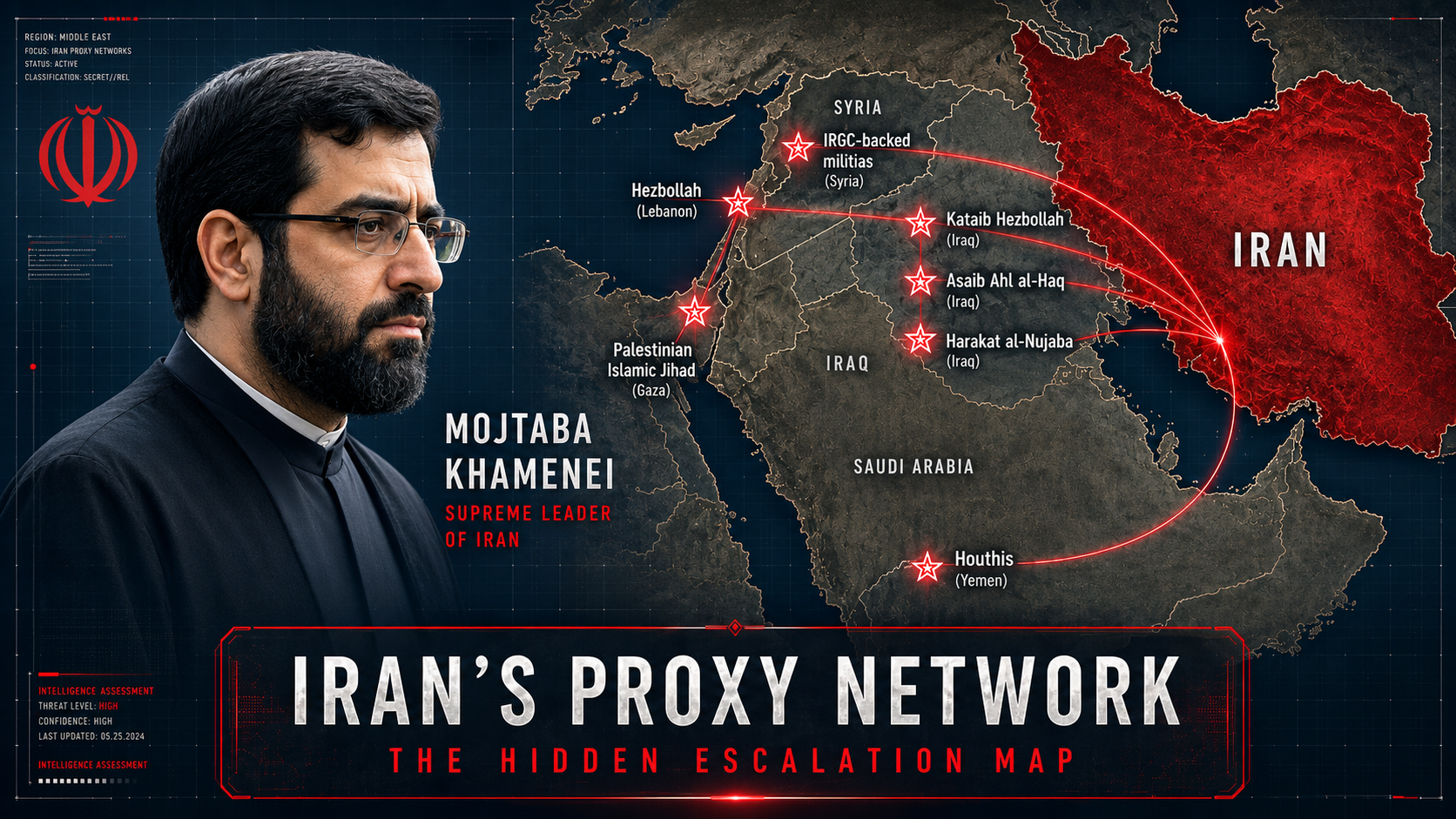
What decision-makers should watch now — before proxy escalation becomes a cost, compliance or supply-chain shock.
This 17-page executive briefing translates Iran’s proxy network into concrete business risks: energy price exposure, maritime chokepoints, war-risk premiums, sanctions, shadow fleets, supply-chain disruption and early-warning indicators for board-level decisions.
You are currently viewing a placeholder content from X. To access the actual content, click the button below. Please note that doing so will share data with third-party providers.
More Information