Executive Intelligence. Industrial Risk. Geopolitics.
Strategic Sparring
for Decision-Makers
Risk intelligence across technology, law, markets and power dynamics.


Verdeckte Geschäftsrisiken, strategische Widersprüche und kritische Abhängigkeiten frühzeitig erkennen.
Kostenlose Analyse starten →
Verdeckte Machtstrukturen, Führungsrisiken und organisatorische Blockaden frühzeitig erkennen.
Kostenlose Analyse starten →
Geopolitische Risiken, globale Abhängigkeiten und kritische Lieferkettenrisiken frühzeitig erkennen.
Kostenlose Analyse starten →
Identify hidden business risks, strategic contradictions and critical dependencies at an early stage.
Start Free Analysis →
Identify hidden power structures, leadership risks and organizational blockers at an early stage.
Start Free Analysis →
Identify geopolitical risks, global dependencies and critical supply-chain vulnerabilities at an early stage.
Start Free Analysis →
Verdeckte Geschäftsrisiken, strategische Widersprüche und kritische Abhängigkeiten frühzeitig erkennen.
Kostenlose Analyse starten →
Verdeckte Machtstrukturen, Führungsrisiken und organisatorische Blockaden frühzeitig erkennen.
Kostenlose Analyse starten →
Geopolitische Risiken, globale Abhängigkeiten und kritische Lieferkettenrisiken frühzeitig erkennen.
Kostenlose Analyse starten →
Identify hidden business risks, strategic contradictions and critical dependencies at an early stage.
Start Free Analysis →
Identify hidden power structures, leadership risks and organizational blockers at an early stage.
Start Free Analysis →
Identify geopolitical risks, global dependencies and critical supply-chain vulnerabilities at an early stage.
Start Free Analysis →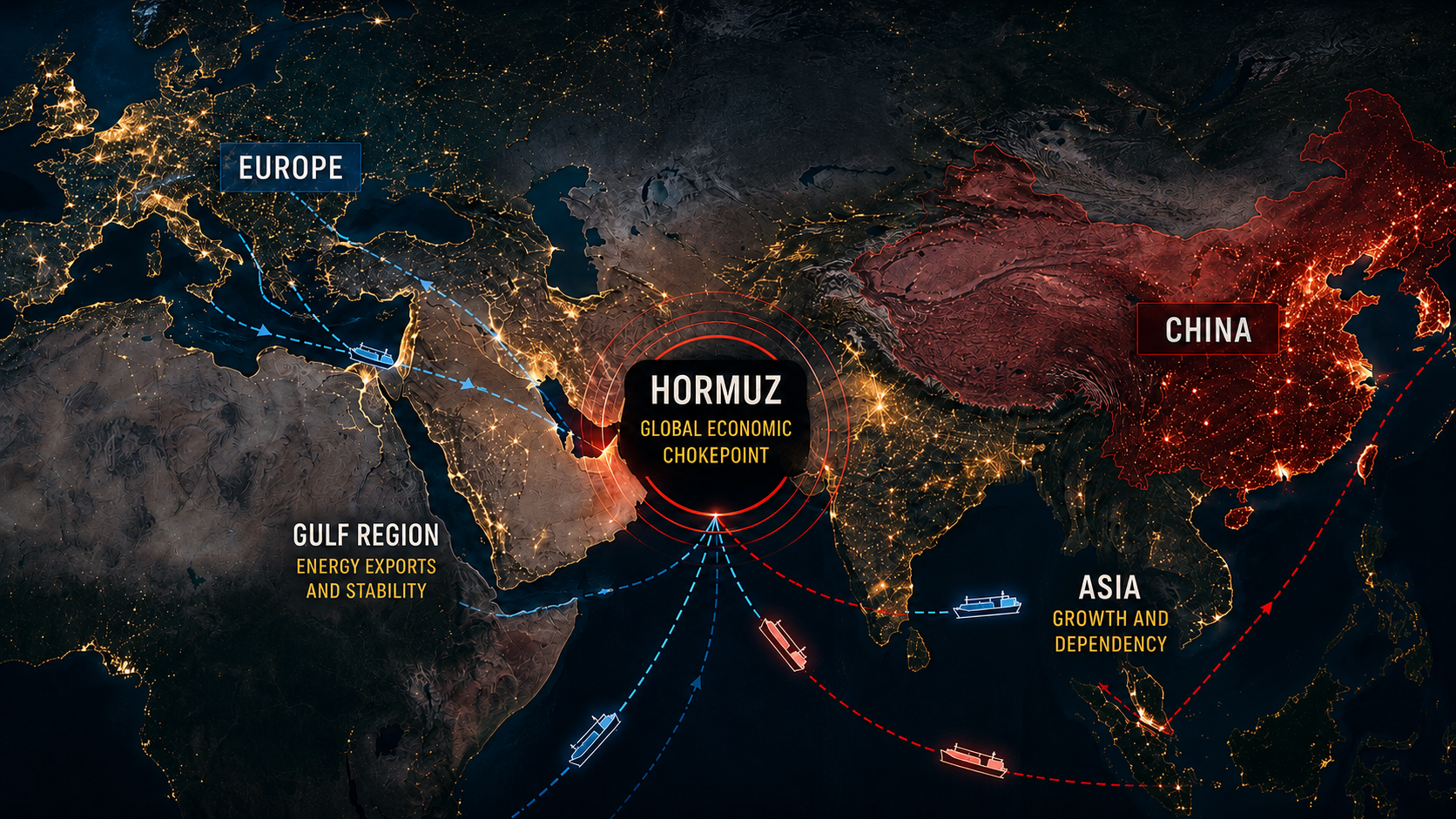
This Chokepoint Check assesses the current pressure on the Strait of Hormuz, Bab al-Mandab and critical water, power, port and energy infrastructure across the Gulf region. The key question is not merely whether a route remains geographically open, but whether transport, insurance, energy supply and site operations remain operationally viable.
Another physical strike on commercial shipping is raising risk sharply again despite increasing LNG transits.
UKMTO reported early on October 3 that a crude oil tanker four nautical miles east of Oman had been struck by an unidentified projectile.
The Red Sea chokepoint is shifting from a maritime threat into a potential new major theatre of war.
Riyadh is considering a limited coastal offensive or a broader multi-front operation. More than 100,000 Yemeni troops could be mobilised.
Attacks on southern Saudi Arabia continue and are causing direct ground damage despite successful interceptions.
On October 3, one person was injured by debris from an intercepted missile. Additional projectiles hit or threatened Khamis Mushait and Najran.
UKMTO reported early on October 3 that the master of a crude oil tanker had reported a projectile strike four nautical miles east of Oman. The crew was uninjured according to current information.
The perpetrator and the type of projectile remain unknown. What matters operationally is the continuation of a series of physical tanker attacks directly within the Hormuz corridor.
Crew, charter and war-risk exposure remain extremely high. Rising transit volumes therefore still do not represent a secure normalisation.
Verification status: confirmed for the strike through the UKMTO report; the perpetrator and projectile type remain unclear. No environmental damage was reported. Reuters / UKMTO, October 3, 2026 · SchaafMedia: Middle East Escalation Check from October 1, 2026
Saudi Arabia is considering, according to regional and Western sources, a coastal offensive around Bab al-Mandab or a broader multi-front operation. More than 100,000 Yemeni troops could be mobilised.
The operation has not yet begun, but preparations are concrete. The objective is to reverse recent Houthi gains along the Red Sea coast and restore greater freedom of maritime movement.
An offensive could increase shipping and insurance risks in the short term. The longer-term objective would be to restore more reliable Red Sea transits.
Verification status: partially confirmed. Six sources interviewed by Reuters report concrete preparations; no start date or formal operational order has been announced. Dawn / Reuters, October 3, 2026 · SchaafMedia: Iran Check – 5 Escalation Signals from October 2, 2026
Saudi Arabia reported on October 3 three intercepted ballistic missiles targeting Khamis Mushait, as well as additional Houthi drones. Debris injured one resident in Asir.
Even successful interception does not fully prevent damage on the ground. Saudi Civil Defense also reported that a Houthi projectile struck a school in Najran, with no casualties reported.
Site, personnel and business-continuity risks remain high. Air defence reduces the probability of direct hits, but does not eliminate operational risk.
Verification status: partially confirmed. The information comes from Saudi military and civil-defence authorities; not all attacks have been independently verified. Arab News / SPA, October 3, 2026 · SchaafMedia: Iran Check – 5 Escalation Signals from October 2, 2026
Government forces reported on October 2 20 strikes against Houthi movements, personnel, vehicles and equipment within three hours. Around 19 access roads were declared military zones.
Fighting intensity is therefore increasing even before any larger offensive begins. Control over Taiz affects both southern Yemen and access to the Red Sea and Bab al-Mandab corridor.
Land corridors and supply routes within Yemen are becoming less predictable. Any expansion toward the coast would also directly affect maritime logistics.
Verification status: partially confirmed. The strikes were reported by a spokesperson for the internationally recognised government; Reuters confirmed the road closures through several military sources. Reuters, October 2, 2026 · SchaafMedia: Middle East Escalation Check from October 1, 2026
Pakistan announced a crisis meeting of the three pact members in Riyadh for next week. Iran’s proposal to politically engage the Houthis is expected to be discussed.
The proposal is explicitly not yet a formal negotiation offer. Islamabad also said more than six states had expressed interest in potentially joining at a later stage.
The pact is gaining political relevance for Yemen and chokepoint security. However, it does not yet provide any new operational guarantees.
Verification status: confirmed for the meeting and Pakistani statements. No new members have been admitted, and no political process with the Houthis has yet been agreed. Yemen Monitor / Reuters, October 2, 2026 · SchaafMedia: Iran Check – 5 Escalation Signals from October 2, 2026
Another tanker is hit near Hormuz while fighting around Yemen and Bab al-Mandab intensifies.
Riyadh is planning a larger offensive, government forces are intensifying strikes and Saudi Arabia is reinforcing its defences.
Both critical sea routes remain usable, but security, crew, insurance and routing risks are increasing.
Energy and supply chains remain dependent on costly protection measures and transport corridors with limited predictability.
Another crude oil tanker was struck by an unidentified projectile directly along the Hormuz corridor.
Transit remains possible · repeated physical attacks prevent a secure normalisationMissile and drone attacks continue to affect Saudi regions and are causing injuries and material damage despite interception.
Critical sites and the population remain directly exposed to missile and drone warfareHormuz attacks, Yemen fighting and a potential Bab al-Mandab offensive are occurring simultaneously.
Both chokepoints and regional military and supply-chain risks are simultaneously affectedOverall risk remains critical. The 5/5 signal in Hormuz is reinforced by two high-to-critical operational developments at Bab al-Mandab and in Saudi Arabia. At the same time, fighting intensity in Yemen is increasing. The limited recovery in energy flows is therefore insufficient to reduce the accumulated overall risk.
Disclaimer: This assessment was prepared with support from our Geo AI. AI can make mistakes. This analysis is intended as a source-based radar for potential escalation signals and does not constitute fully verified intelligence, security, insurance or investment advice. In fast-moving situations, status, source availability and risk assessments may change at short notice.
Independent of the subject covered in this article, this separate Executive Briefing provides an in-depth analysis of another critical risk domain affecting European companies.
The 27-page Executive Briefing “Black Swan Risk Mapping for Europe’s Next Mobility and Infrastructure Shock” examines how geopolitical, infrastructural and administrative developments that are currently viewed in isolation could reinforce one another.
Based on the GFDD Framework™, the report shows how these dynamics could affect operational continuity, access to critical resources and the strategic resilience of companies.
The briefing includes a structured systemic-shock analysis and a directly applicable Business Exposure Checklist for CEOs, CFOs, COOs, investors and strategy teams.
You are currently viewing a placeholder content from X. To access the actual content, click the button below. Please note that doing so will share data with third-party providers.
More Information