Executive Intelligence. Industrial Risk. Geopolitics.
Strategic Sparring
for Decision-Makers
Risk intelligence across technology, law, markets and power dynamics.


Verdeckte Geschäftsrisiken, strategische Widersprüche und kritische Abhängigkeiten frühzeitig erkennen.
Kostenlose Analyse starten →
Verdeckte Machtstrukturen, Führungsrisiken und organisatorische Blockaden frühzeitig erkennen.
Kostenlose Analyse starten →
Geopolitische Risiken, globale Abhängigkeiten und kritische Lieferkettenrisiken frühzeitig erkennen.
Kostenlose Analyse starten →
Identify hidden business risks, strategic contradictions and critical dependencies at an early stage.
Start Free Analysis →
Identify hidden power structures, leadership risks and organizational blockers at an early stage.
Start Free Analysis →
Identify geopolitical risks, global dependencies and critical supply-chain vulnerabilities at an early stage.
Start Free Analysis →
Verdeckte Geschäftsrisiken, strategische Widersprüche und kritische Abhängigkeiten frühzeitig erkennen.
Kostenlose Analyse starten →
Verdeckte Machtstrukturen, Führungsrisiken und organisatorische Blockaden frühzeitig erkennen.
Kostenlose Analyse starten →
Geopolitische Risiken, globale Abhängigkeiten und kritische Lieferkettenrisiken frühzeitig erkennen.
Kostenlose Analyse starten →
Identify hidden business risks, strategic contradictions and critical dependencies at an early stage.
Start Free Analysis →
Identify hidden power structures, leadership risks and organizational blockers at an early stage.
Start Free Analysis →
Identify geopolitical risks, global dependencies and critical supply-chain vulnerabilities at an early stage.
Start Free Analysis →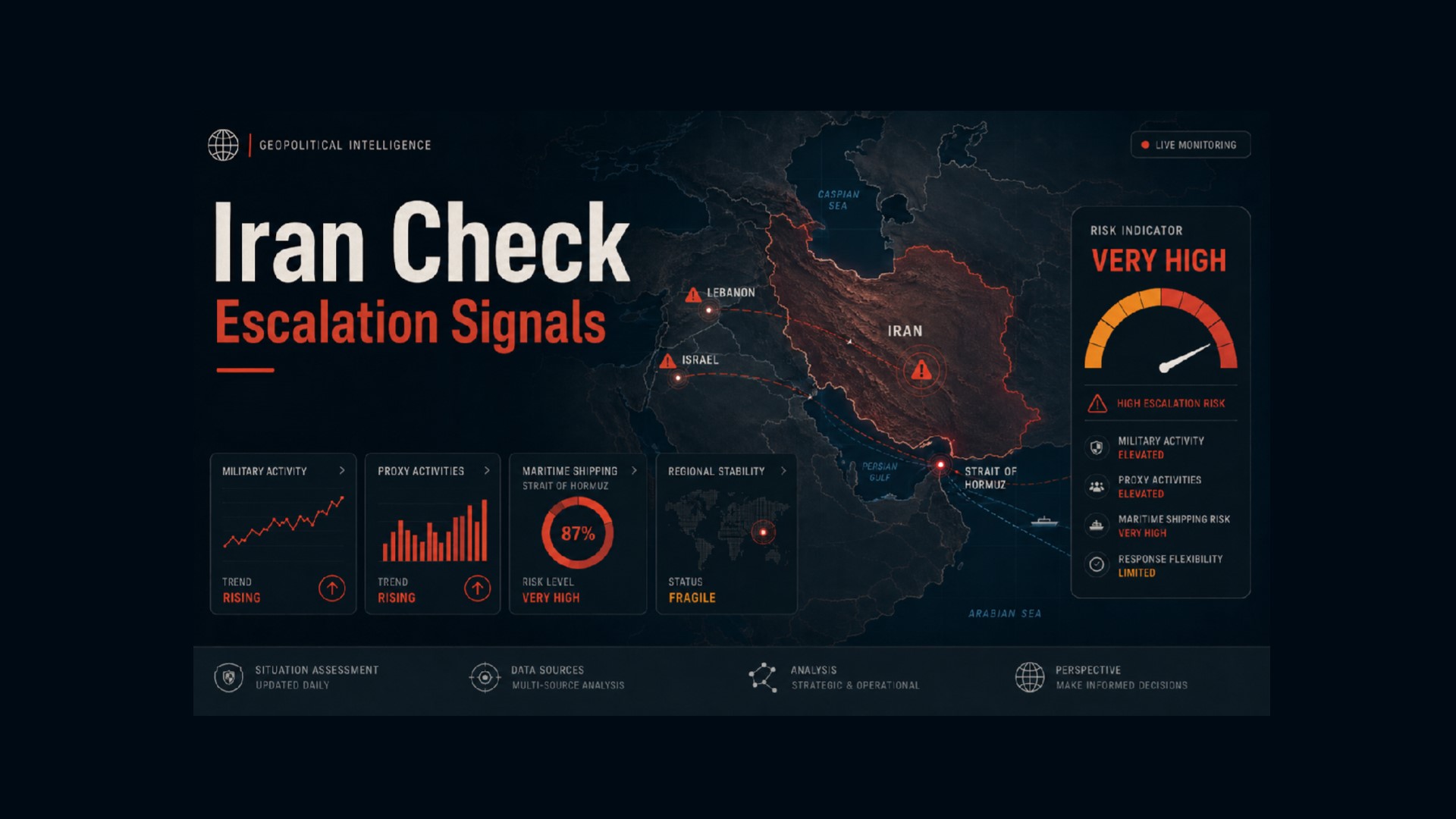
This escalation radar summarizes five relevant signals as of October 2, 2026. The focus is on verifiable statements by official sources, confirmed events and monitoring data with potential implications for energy prices, supply chains, markets, maritime security, aviation and regional stability.
Washington is significantly reinforcing its military presence in the Middle East. More than 20,000 U.S. troops and Marines could be deployed in the region by the end of October. Trump explicitly keeps the option of further strikes on Iran open.
The Saudi coalition holds the Houthis responsible for a drone attack on a power station that also supplies the Prophet’s Mosque. The Houthis deny responsibility.
Between 19 and 21 LNG cargoes passed through Hormuz in September. Qatar and the UAE are therefore increasing actual energy flows significantly, although security and insurance risks remain elevated.
| Actor | Type | Severity | Status | Source / Verification | Business Impact |
|---|---|---|---|---|---|
| United States / Iran / Gulf states / Israel | U.S. deploys third aircraft carrier and around 9,000 additional troops | Critical · Level 5/5 | The United States is significantly reinforcing its military presence in the Middle East. Around 9,000 additional troops and Marines are being deployed to the region. These include the USS Theodore Roosevelt and its Carrier Strike Group as well as the Makin Island Amphibious Ready Group. By the end of October, three U.S. aircraft carriers could therefore be operating in the region simultaneously. In total, more than 20,000 U.S. troops and Marines could then be deployed at sea. Trump also says that further strikes on Iran remain an option. Power dynamics: Washington is increasing its immediate military response capability, while diplomacy remains stalled. | Confirmed by AP News, October 1, 2026 . Verification status: confirmed for the troop deployment, the third aircraft carrier and Trump’s statement on possible further strikes. No new attack order against Iran has been confirmed. Background: Schaaf Media · Iran Check: 5 Escalation Signals – September 30, 2026 . | Critical business impact on Gulf states, energy, shipping, aviation, insurance and investment risk. Greater U.S. capacity strengthens deterrence, but also lowers the operational threshold for renewed escalation. |
| Iran / Qatar / UAE / Hormuz / LNG | LNG shipments through Hormuz reach highest level since the war began | High to Critical · Level 4/5 | Operationally, Hormuz is showing further signs of relief. In September, between 19 and 21 LNG cargoes were recorded passing through the strait, depending on the data provider. Of these, 13 cargoes originated in Qatar and six in the UAE. This is the highest monthly level since the Iran war began in February. Several QatarEnergy-linked vessels switched off their AIS signals while transiting and later reappeared near India. Power dynamics: Physical energy flows are stabilizing, although the passage continues to operate under wartime conditions. | Confirmed by Reuters, October 2, 2026 . Verification status: confirmed for the LNG cargoes, Qatar and UAE shares and several dark transits. Whether this shipping level can be maintained through the winter remains uncertain. Further analysis: Schaaf Media · Strait of Hormuz Blockade 2026: Protecting Margins and Supply Chains in the Chokepoint Shock . | High to critical business impact on LNG, energy supply, tankers, freight rates and marine insurance. Higher actual shipment volumes reduce supply risks, while dark transits and military protection keep costs elevated. |
| Saudi Arabia / Houthis / Iran / Medina | Saudi Arabia blames Houthis for attack on Medina power station | Critical · Level 5/5 | The Saudi-Houthi conflict gains a new symbolic escalation dimension. The Saudi coalition says an investigation into drone debris confirmed Houthi responsibility for an attack on a power station in Medina. One transformer was taken out of service. The electricity grid remained operational. The facility also supplies the Prophet’s Mosque, one of Islam’s most important pilgrimage sites. The Houthis deny responsibility. Power dynamics: Attacks near major religious sites significantly increase the political and regional escalation potential. | Confirmed as the Saudi account by Dawn / Reuters, October 2, 2026 . Verification status: partially confirmed. The damage to the power station and the Saudi investigation are confirmed. The Houthis deny responsibility. Background: Schaaf Media · Middle East Escalation Check – October 1, 2026 . | Critical business impact on Saudi Arabia, electricity supply, pilgrimage travel, civil aviation and insurability. Attacks near key religious sites also increase political and societal risks. |
| Yemen / Houthis / Saudi Arabia / Taiz / Bab el-Mandeb | 20 airstrikes on Houthi targets – Taiz becomes military operations zone | Critical · Level 5/5 | The Yemen front continues to escalate. The internationally recognized government reports 20 airstrikes within three hours on October 2 against Houthi movements, vehicles and military equipment in Taiz. Around 19 roads in and around the province were closed as military operations areas, according to Reuters sources. Unrestricted Houthi control over Taiz would facilitate access toward Aden and southern Yemen. At the same time, Houthi pressure on the Red Sea coast and Bab el-Mandeb would increase. Power dynamics: Taiz is developing into a central military junction connecting the northern, southern and coastal fronts. | Confirmed by Reuters, October 2, 2026 . Verification status: confirmed for the 20 airstrikes and road closures. Casualty figures are largely based on statements by the conflict parties and are not fully confirmed. Further analysis: Schaaf Media · Iran’s Proxies: The Hidden Escalation Map of the Middle East . | Critical business impact on Taiz, Aden, Bab el-Mandeb, land logistics, Red Sea shipping and humanitarian supply. Further Houthi expansion toward the south would increase risks for key transport corridors. |
| United States / Iran / UAE / Israel / civil aviation | Co-pilot attacks captain during Flydubai flight – U.S. retaliation threat against Iran | High to Critical · Level 4/5 | A serious aviation incident takes on geopolitical significance. During a Flydubai flight from Dubai to Tel Aviv, the co-pilot attacks the captain inside the cockpit and seriously injures him. The aircraft subsequently enters a sudden descent. The injured captain manages to open the cockpit door. Passengers and other flight personnel then overpower the co-pilot. The aircraft ultimately makes a safe emergency landing in Tabuk, Saudi Arabia. Following the incident, the UAE suspends flights to Israel. President Trump says that if Iranian involvement is proven, Iran will be hit very hard. However, there is currently no publicly established link to Iran. Power dynamics: A serious civil aviation security incident could, if wrongly attributed, feed directly into military escalation with Iran. | Confirmed by AP News, October 2, 2026 . Verification status: confirmed for the cockpit attack, the captain’s injuries, the dangerous descent, intervention by passengers and crew, and the emergency landing in Saudi Arabia. Any connection to Iran is explicitly unconfirmed. Background: Schaaf Media · Middle East Escalation Check – October 1, 2026 . | High to critical business impact on civil aviation, UAE-Israel connections, business travel, insurance and regional airports. It also creates a significant miscalculation risk as long as the motive and possible background remain unresolved. |
The most important military development on October 2, 2026 is the major reinforcement of the U.S. presence. Around 9,000 additional troops and Marines as well as a third aircraft carrier are being deployed to the region. Washington is therefore increasing its operational response capability, while further strikes against Iran remain politically on the table.
At the same time, Hormuz is showing further operational relief. LNG shipments reached their highest monthly level since the war began in September. Qatar and the UAE are moving significantly more cargoes through the strait again. The route nevertheless remains costly and security-sensitive.
The Saudi-Houthi front is escalating sharply in parallel. Saudi Arabia blames the Houthis for an attack on a power station in Medina. At the same time, 20 airstrikes are carried out in Taiz within a matter of hours and key roads are designated military operations zones. This also increases pressure on Bab el-Mandeb.
In addition, a new aviation and miscalculation risk is emerging. During a Flydubai flight from Dubai to Tel Aviv, the co-pilot attacks the captain inside the cockpit. The aircraft then enters a dangerous descent. Passengers and crew overpower the co-pilot before the aircraft makes an emergency landing in Saudi Arabia. Trump threatens Iran with major retaliation if Iranian involvement is confirmed. No Iran link has so far been established. The mandatory alliance review shows no new Iranian membership, partner or observer status as of October 2. EASA continues to list active warnings for several conflict airspaces in the region; no new revision was published on October 2.
The five most important signals for a European risk assessment are: the major reinforcement of the U.S. military presence with around 9,000 additional personnel and a third aircraft carrier, the significant recovery of LNG shipments through the Strait of Hormuz, the attack on a Medina power station attributed by Saudi Arabia to the Houthis, the sharp intensification of fighting around Taiz with potential implications for Bab el-Mandeb, and the co-pilot’s attack on the captain during a Flydubai flight, followed by an emergency landing and a conditional U.S. retaliation threat against Iran.
Note: This assessment was prepared with support from our Geo-AI. AI can make mistakes. The analysis is intended as a radar for potential escalation signals and does not replace a fully verified intelligence assessment.
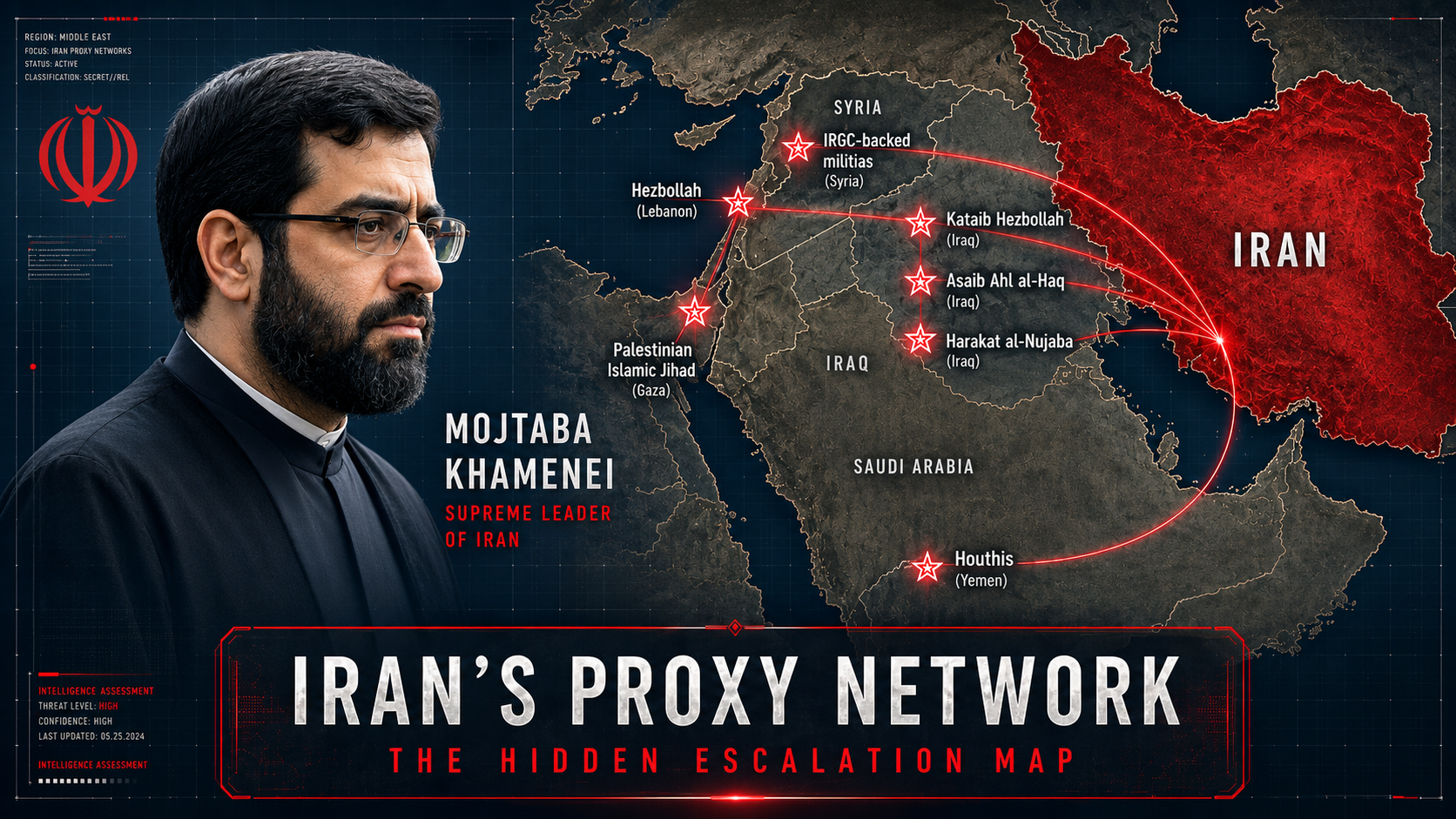
What decision-makers should watch now — before proxy escalation becomes a cost, compliance or supply-chain shock.
This 17-page executive briefing translates Iran’s proxy network into concrete business risks: energy price exposure, maritime chokepoints, war-risk premiums, sanctions, shadow fleets, supply-chain disruption and early-warning indicators for board-level decisions.
You are currently viewing a placeholder content from X. To access the actual content, click the button below. Please note that doing so will share data with third-party providers.
More Information