Executive Intelligence. Industrial Risk. Geopolitics.
Strategic Sparring
for Decision-Makers
Risk intelligence across technology, law, markets and power dynamics.

Verdeckte Geschäftsrisiken, strategische Widersprüche und kritische Abhängigkeiten frühzeitig erkennen.
Kostenlose Analyse starten →
Verdeckte Machtstrukturen, Führungsrisiken und organisatorische Blockaden frühzeitig erkennen.
Kostenlose Analyse starten →
Geopolitische Risiken, globale Abhängigkeiten und kritische Lieferkettenrisiken frühzeitig erkennen.
Kostenlose Analyse starten →
Identify hidden business risks, strategic contradictions and critical dependencies at an early stage.
Start Free Analysis →
Identify hidden power structures, leadership risks and organizational blockers at an early stage.
Start Free Analysis →
Identify geopolitical risks, global dependencies and critical supply-chain vulnerabilities at an early stage.
Start Free Analysis →
Verdeckte Geschäftsrisiken, strategische Widersprüche und kritische Abhängigkeiten frühzeitig erkennen.
Kostenlose Analyse starten →
Verdeckte Machtstrukturen, Führungsrisiken und organisatorische Blockaden frühzeitig erkennen.
Kostenlose Analyse starten →
Geopolitische Risiken, globale Abhängigkeiten und kritische Lieferkettenrisiken frühzeitig erkennen.
Kostenlose Analyse starten →
Identify hidden business risks, strategic contradictions and critical dependencies at an early stage.
Start Free Analysis →
Identify hidden power structures, leadership risks and organizational blockers at an early stage.
Start Free Analysis →
Identify geopolitical risks, global dependencies and critical supply-chain vulnerabilities at an early stage.
Start Free Analysis →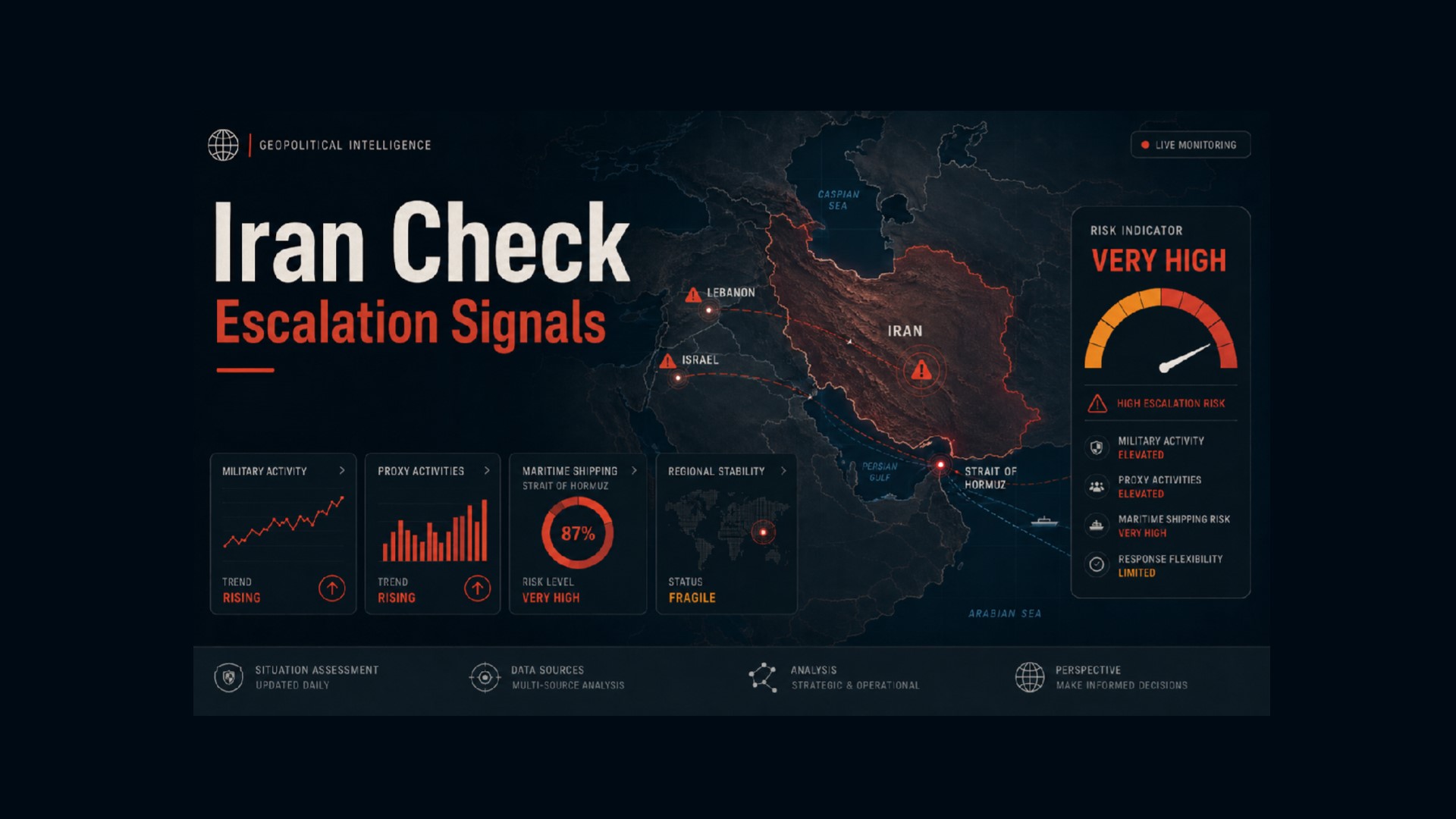
This escalation radar summarizes five relevant signals as of October 28, 2026. The focus is on verifiable statements by official sources, confirmed events and monitoring sources with potential implications for energy prices, supply chains, markets, maritime security, aviation and regional stability.
Qatar is proposing a seven-day roadmap with reciprocal confidence-building measures. However, a senior Iranian official describes the ideas as unacceptable.
Vessels without a compelling reason to transit the area are advised to avoid it. Neutral shipping must expect inspections, delays and blockade-related measures.
Aden Airport is attacked with ballistic missiles. At the same time, the claimed attack on Saudi Arabia’s largest refinery is putting renewed pressure on energy markets.
| Actor | Type | Severity | Status | Source / Verification | Business Impact |
|---|---|---|---|---|---|
| Iran / Qatar / USA / Israel / Pakistan | New Qatar proposal to end the Iran war meets resistance | Critical · Level 5/5 | Qatar has presented Iran with a new mediation proposal aimed at ending the war with the USA and Israel. The proposal envisages a seven-day roadmap with daily reciprocal confidence-building measures. Several countries could act as guarantors. Tehran is expected to respond by the end of the week. However, a senior Iranian negotiating official says Qatar has so far presented only “unacceptable ideas” rather than an acceptable offer. Iran also continues to insist that it will not make concessions on its nuclear program under pressure. Power dynamics: A concrete diplomatic mechanism is back on the table, but the starting positions remain far apart. | Confirmed by Reuters, October 28, 2026 . Verification status: partially confirmed. The mediation efforts and the Iranian rejection are confirmed. The full details of the proposal are not public. Background: Schaaf Media · Middle East Escalation Check from October 27, 2026 . | Critical business impact on energy prices, Hormuz, sanctions, shipping, investment and regional planning. The decisive question is whether the proposal can quickly develop into a viable negotiation process. |
| USA / Iran / Hormuz / Gulf of Oman | US Navy advises against unnecessary transit through Hormuz | Critical · Level 5/5 | US Naval Forces Central Command tightens its operational shipping advisory on October 28. Vessels that do not have to transit Hormuz or the Gulf of Oman are advised to avoid the area. Transiting ships should allow additional time because of higher traffic volumes and US blockade operations. Neutral vessels sailing between neutral ports may also be inspected, boarded or searched. Power dynamics: The US blockade of Iran is increasingly affecting neutral commercial shipping as well. | Current maritime source: Insurance Journal / Bloomberg, October 28, 2026 . Verification status: confirmed. The warning originates from US Naval Forces Central Command and was distributed through the Joint Maritime Information Center. Further reading: Schaaf Media · Hormuz Blockade 2026: Protecting Margins and Supply Chains in the Chokepoint Shock . | Critical business impact on tankers, container shipping, insurance, transit times, charter costs, energy imports and port planning. The key new factor: Even neutral shipping must now factor in additional blockade-related inspections and delays. |
| Houthis / Yemen / Saudi Arabia / Aden | Aden Airport attacked as pressure on Saudi oil sector continues | Critical · Level 5/5 | The Houthis attack Aden Airport with ballistic missiles on October 28. The airport is the main international gateway for southern Yemen controlled by the internationally recognized government. Flight operations are suspended after the attack. On October 27, the Houthis also claimed a missile strike on Ras Tanura, Saudi Arabia’s largest refinery. Saudi Arabia has not initially confirmed that specific hit. Power dynamics: The Houthi conflict increasingly links aviation, Saudi energy infrastructure and the Iran war. | Current regional source: The National, October 28, 2026 . Market reaction: Reuters, October 28, 2026 . Verification status: confirmed for the attack on Aden Airport. The claimed strike on Ras Tanura has not been independently confirmed. Background: Schaaf Media · Iran’s Proxies: The Hidden Escalation Map of the Middle East . | Critical business impact on oil, refineries, airports, air freight, Red Sea logistics and insurance. Brent rises by around 2 percent at times on October 28 to above USD 115 per barrel. |
| Israel / Iran / Netanyahu | Caretaker government constrains Netanyahu but does not rule out Iran war | High to Critical · Level 4/5 | Israel’s election produces no clear majority. Netanyahu therefore remains in office as prime minister of a caretaker government. Such a government is politically subject to a stronger duty of restraint. Security decisions, however, are an important exception. Israeli legal experts note that a caretaker government can still legally initiate a war, explicitly including against Iran. At the same time, parliamentary oversight can be temporarily weaker during coalition negotiations. Power dynamics: The election does not remove the Iran escalation risk, but primarily changes the domestic decision-making structure. | Current source: Reuters, October 28, 2026 . Verification status: confirmed. The political caretaker status is confirmed. No new Israeli decision to attack Iran has been confirmed. Further reading: Schaaf Media · Iran War: How the West Is Losing Its Dominance . | High to critical business impact on Israel, Iran, aviation, energy, insurance and investment planning. Key point: Political uncertainty does not automatically mean military paralysis. |
| Iran / IAEA / USA / Israel | IAEA sees no repairs at bombed nuclear sites but still lacks broad access | High to Critical · Level 4/5 | IAEA Director General Rafael Grossi says before the UN Security Council that since June 2025 there have been no indications of repairs or reconstruction at the damaged Iranian nuclear facilities. At the same time, inspector access to large parts of Iran’s nuclear program remains restricted. Particularly critical: The IAEA still cannot verify the status of Iran’s stockpile of highly enriched uranium. The agency puts the known stockpile of uranium enriched to up to 60 percent at 440.9 kilograms. Power dynamics: There is no evidence of active reconstruction, but nuclear uncertainty remains because of the inspection gap. | Confirmed by AP, October 28, 2026 . Verification status: confirmed. The statement comes from IAEA Director General Grossi. Russia and China had previously tried unsuccessfully to prevent the Iran dossier from being addressed by the UN Security Council. Background: Schaaf Media · Iran Check: 5 Escalation Signals from October 24, 2026 . | High to critical business impact on sanctions, energy, Iran negotiations, investment and military escalation risk. The new IAEA assessment reduces evidence of active reconstruction, but does not remove strategic uncertainty. |
The most important political development on October 28, 2026 is Qatar’s new mediation effort. The proposal envisages a seven-day roadmap with reciprocal confidence-building measures. Tehran is already rejecting key elements, however, and continues to oppose nuclear concessions under pressure. A new diplomatic mechanism therefore exists, but there is no breakthrough yet.
Operationally, the situation in the Strait of Hormuz is tightening at the same time. US Naval Forces Central Command is advising vessels without a compelling need to transit to avoid Hormuz and the Gulf of Oman. Neutral shipping must expect inspections, searches and additional delays related to the US blockade of Iran.
The Houthi conflict is also widening further. Aden Airport is attacked with ballistic missiles, while the claimed strike on Ras Tanura increases concerns about renewed Saudi energy disruptions. Oil markets react immediately, with Brent once again rising above USD 115 per barrel.
In Israel, the election does not remove the risk of a new war with Iran. Netanyahu initially heads a caretaker government that is politically more constrained, but remains legally capable of taking military decisions against Iran. In parallel, the IAEA says it has found no evidence that bombed Iranian nuclear facilities are being repaired. However, because inspection access remains limited, the status of Iran’s highly enriched uranium remains unclear. EASA continues to maintain active warnings for Iran, Saudi Arabia, the Persian Gulf/Gulf of Oman, Iraq, Lebanon and Yemen; no new revision was identified on October 28.
The five most important signals for a German and European risk assessment are: Qatar’s new seven-day mediation mechanism while Iran simultaneously rejects key conditions, the new US Navy warning against unnecessary transit through Hormuz and the Gulf of Oman and the possibility of inspections of neutral vessels, the Houthi attacks on Aden Airport and the continued threat to Saudi oil infrastructure with an immediate oil-price reaction, Israel’s caretaker government, which constrains Netanyahu politically but does not legally rule out military action against Iran, and the IAEA finding of no reconstruction activity while uncertainty over Iran’s highly enriched uranium remains unresolved.
Note: This assessment was prepared with the support of our Geo-AI. AI can make mistakes. The analysis is intended as a radar for potential escalation signals and does not replace a fully verified intelligence assessment.
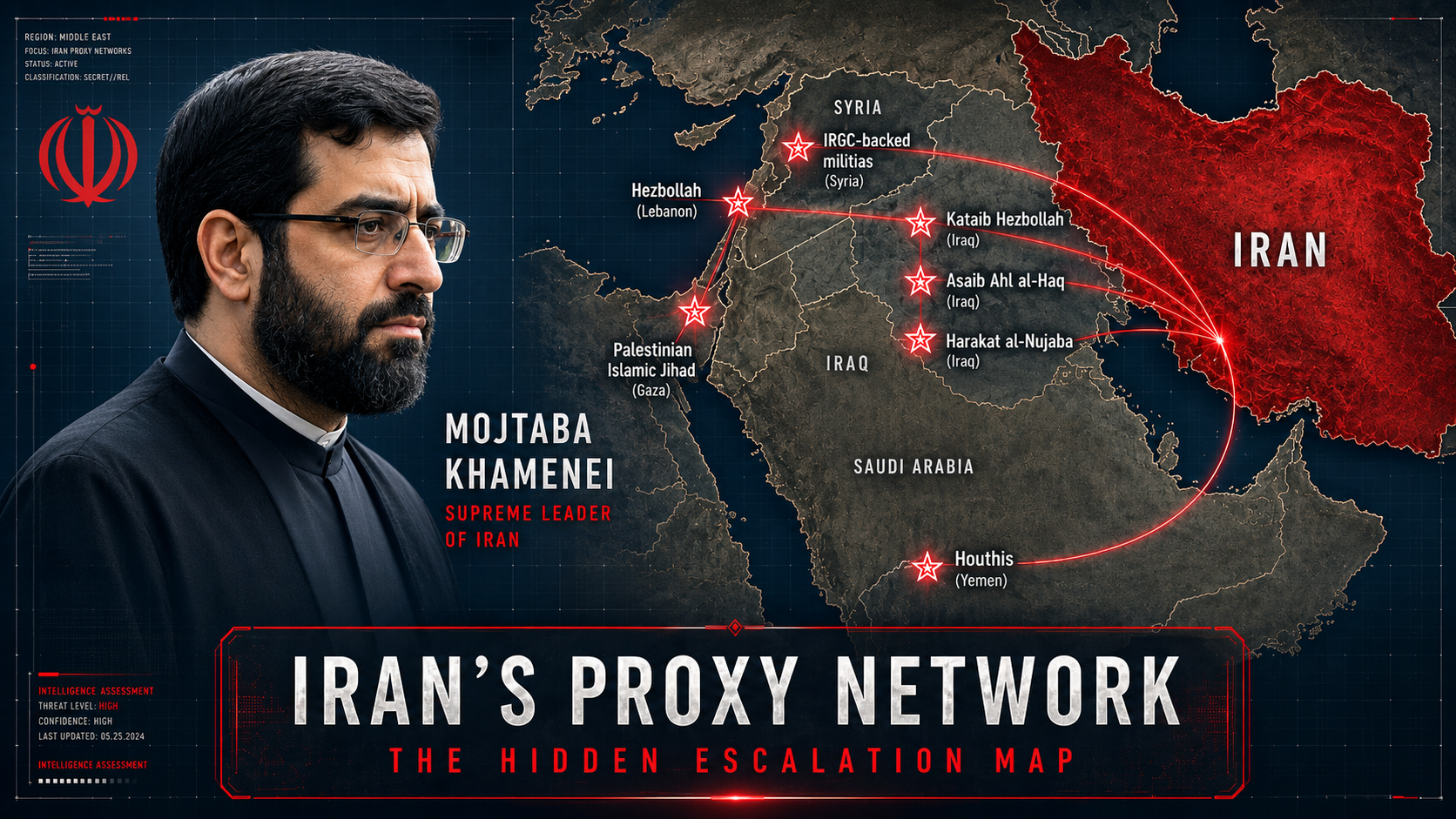
What decision-makers should watch now — before proxy escalation becomes a cost, compliance or supply-chain shock.
This 17-page executive briefing translates Iran’s proxy network into concrete business risks: energy price exposure, maritime chokepoints, war-risk premiums, sanctions, shadow fleets, supply-chain disruption and early-warning indicators for board-level decisions.
You are currently viewing a placeholder content from X. To access the actual content, click the button below. Please note that doing so will share data with third-party providers.
More Information