Executive Intelligence. Industrial Risk. Geopolitics.
Strategic Sparring
for Decision-Makers
Risk intelligence across technology, law, markets and power dynamics.


Verdeckte Geschäftsrisiken, strategische Widersprüche und kritische Abhängigkeiten frühzeitig erkennen.
Kostenlose Analyse starten →
Verdeckte Machtstrukturen, Führungsrisiken und organisatorische Blockaden frühzeitig erkennen.
Kostenlose Analyse starten →
Geopolitische Risiken, globale Abhängigkeiten und kritische Lieferkettenrisiken frühzeitig erkennen.
Kostenlose Analyse starten →
Identify hidden business risks, strategic contradictions and critical dependencies at an early stage.
Start Free Analysis →
Identify hidden power structures, leadership risks and organizational blockers at an early stage.
Start Free Analysis →
Identify geopolitical risks, global dependencies and critical supply-chain vulnerabilities at an early stage.
Start Free Analysis →
Verdeckte Geschäftsrisiken, strategische Widersprüche und kritische Abhängigkeiten frühzeitig erkennen.
Kostenlose Analyse starten →
Verdeckte Machtstrukturen, Führungsrisiken und organisatorische Blockaden frühzeitig erkennen.
Kostenlose Analyse starten →
Geopolitische Risiken, globale Abhängigkeiten und kritische Lieferkettenrisiken frühzeitig erkennen.
Kostenlose Analyse starten →
Identify hidden business risks, strategic contradictions and critical dependencies at an early stage.
Start Free Analysis →
Identify hidden power structures, leadership risks and organizational blockers at an early stage.
Start Free Analysis →
Identify geopolitical risks, global dependencies and critical supply-chain vulnerabilities at an early stage.
Start Free Analysis →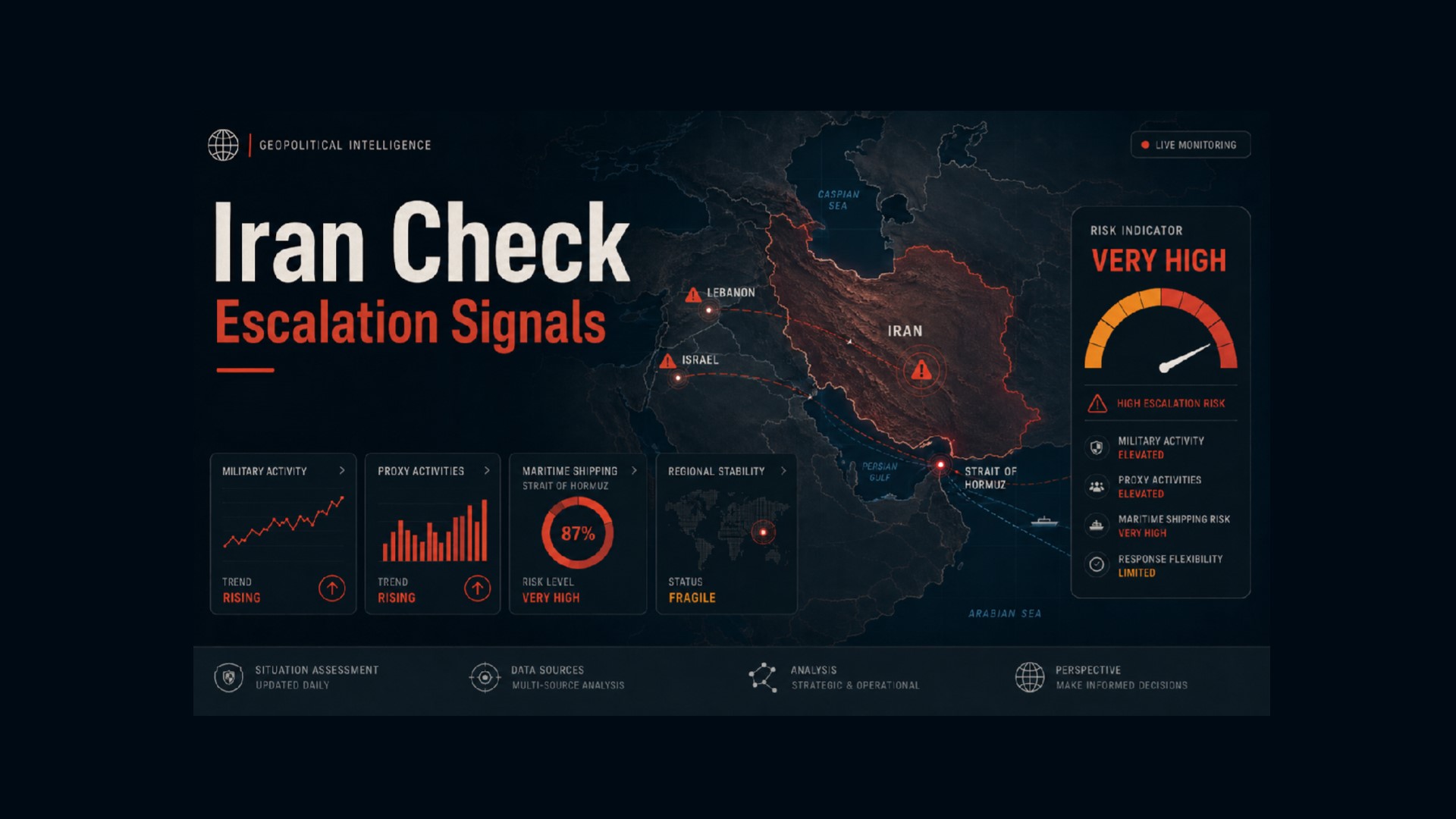
This escalation radar summarizes five relevant signals as of October 24, 2026. The focus is on verifiable statements by official sources, confirmed events and monitoring data with potential implications for energy prices, supply chains, markets, maritime security, aviation and regional stability.
Tom Barrack says a U.S. strike as early as this weekend is possible. Trump initially distances himself from the statement, but subsequently threatens another “Epic Fury” operation.
Senior Iranian security officials report detailed plans targeting communications cables in the Gulf. Repairs could also be deliberately obstructed in the event of renewed conflict.
Iran has reportedly significantly increased efforts targeting American representatives abroad. According to U.S. intelligence, some lethal plots have already reached advanced stages.
| Actor | Type | Severity | Status | Source / Verification | Business Impact |
|---|---|---|---|---|---|
| United States / Israel / Iran | U.S. strike on Iran potentially possible as early as this weekend | Critical · Level 5/5 | The threat of renewed military action against Iran is intensifying again. U.S. Special Envoy Tom Barrack says an American strike could take place as early as this weekend. Asked whether an attack could happen that quickly, he explicitly answers: “Absolutely.” Trump initially reacts with surprise and says he is unaware of such plans. Shortly afterwards, however, he sharpens his own rhetoric. Washington could conduct another “Epic Fury” operation if Tehran does not accept a deal. In parallel, Netanyahu again calls for fundamental political change in Iran. Barrack rejects that objective and says Washington is not seeking regime change. Power dynamics: U.S. and Israeli objectives are not fully aligned, but the immediate military threat environment is increasing. | Current regional source: Dawn / Agencies, October 24, 2026 . Verification status: confirmed for Barrack’s statement, Trump’s subsequent renewed strike threat and the differing positions on regime change. It has not been confirmed that a specific U.S. strike order exists for this weekend. Background: Schaaf Media · Iran War: How the West Is Losing Its Dominance . | Critical business impact on Iran, Israel, Gulf states, energy, aviation, shipping, insurance and investment planning. Particularly relevant: The rhetorical timeline for potential renewed strikes has shortened from “after the midterms” to a matter of days. |
| Iran / United States / Israel / Hormuz / Gulf states | Iran plans attacks on undersea cables and digital infrastructure | Critical · Level 5/5 | Iran is expanding its potential retaliation strategy well beyond energy and shipping. Two senior Iranian security officials report detailed plans to target undersea cables in the Gulf if the United States and Israel attack Iran again. Tehran reportedly intends not only to damage cables during a conflict, but also to obstruct repairs in order to prolong potential outages. One official says that in the event of another attack there would be “no red lines”. In addition to undersea cables, data centres, AI infrastructure and U.S. military facilities have previously been identified as potential targets. Power dynamics: Iran is attempting to extend the cost of a renewed war into the Gulf states’ digital infrastructure and international business networks. | Published on October 23 and directly shaping the situation on October 24: Reuters, October 23, 2026 . Verification status: partially confirmed. Confirmed are the statements of two senior Iranian security officials. No public operational order or specific target locations have been disclosed. Further analysis: Schaaf Media · Strait of Hormuz Blockade 2026: Protecting Margins and Supply Chains in the Chokepoint Shock . | Critical business impact on internet connectivity, banks, payment systems, cloud services, data centres, telecommunications and digital supply chains. What is new: The chokepoint conflict is increasingly expanding from physical transport networks into digital infrastructure. |
| Iran / United States / Gulf states / U.S. diplomats | U.S. intelligence warns of advanced Iranian attack plots | Critical · Level 5/5 | The threat is extending beyond conventional military targets. According to a current U.S. intelligence memo, Iran has “substantially increased” its efforts to target American representatives abroad. Planning for lethal attacks against U.S. citizens has reportedly reached advanced stages in parts of the Middle East and other countries. The memo was submitted to Secretary of State Marco Rubio. The warning coincides with the reduction of U.S. embassy personnel in Saudi Arabia and other regional missions. Specific targets or planned attack locations have not been publicly disclosed. Power dynamics: Iran could attempt to respond to U.S. pressure asymmetrically, beyond conventional war zones. | Confirmed by ABC News, October 24, 2026 . Verification status: partially confirmed. Confirmed is the reported content of the U.S. intelligence memo. The specific attack plans cannot by nature be publicly verified. Background: Schaaf Media · Iran Check: 5 Escalation Signals from October 22, 2026 . | Critical business impact on U.S. companies, diplomats, expatriates, business travel, security services, insurance and site planning. For international companies, the risk now extends beyond military escalation to potential targeted asymmetric security threats. |
| Houthis / Saudi Arabia / Riyadh / Taif / Yanbu | New Houthi missile and drone attacks on Saudi Arabia | Critical · Level 5/5 | The Houthi attack campaign against Saudi Arabia continues on October 24. Saudi air defence initially intercepts a ballistic missile heading toward Riyadh and a drone over the Eastern Province. Later, the coalition reports two further ballistic missiles heading toward Taif and Yanbu. Alerts are also temporarily issued for Jeddah, Makkah and other regions. Two explosions are heard in Riyadh in the morning. No successful strikes on the named targets are reported. Yanbu is particularly relevant because the city is a major Saudi energy and export hub. Power dynamics: The Houthis are keeping several Saudi economic and population centres under pressure simultaneously. | Current regional source: Arab News, October 24, 2026 . Verification status: confirmed for Saudi reports of intercepted missiles and drones. Successful strikes in Riyadh, Taif or Yanbu have not been confirmed. Further analysis: Schaaf Media · Iran’s Proxies: The Hidden Escalation Map of the Middle East . | Critical business impact on Saudi Arabia, oil, petrochemicals, aviation, logistics, business travel and insurance. The geographic spread of the alerts increases the risk of short-term disruptions far beyond individual sites. |
| R4 / Germany / France / UK / Italy / Iran | Eight countries jointly warn against renewed attacks on Iran | High to Critical · Level 4/5 | In parallel with the military escalation, an unusually broad diplomatic counterweight is emerging. The foreign ministers of Türkiye, Saudi Arabia, Pakistan and Egypt meet jointly for the first time with their counterparts from Germany, France, the United Kingdom and Italy. The discussions focus on the U.S.-Israel-Iran conflict, Hormuz, Bab el-Mandeb and Houthi attacks. Türkiye says all participants agree that a new attack on Iran would broaden the war. Germany, France and the United Kingdom also signal willingness to engage in new talks with Tehran over its nuclear programme. The group calls for safe and unhindered shipping as well as a diplomatic resolution of the conflict. Power dynamics: Regional states and European powers are coordinating their Iran de-escalation position in this format for the first time. | Officially confirmed by Italian Foreign Ministry, October 24, 2026 . Verification status: confirmed. The meeting, participating countries and joint de-escalation position are officially documented. It is not, however, a new military alliance or mutual defence arrangement. Background: Schaaf Media · Middle East Escalation Check from October 23, 2026 . | High to critical business impact on energy, Hormuz, trade, EU-Gulf relations, sanctions and investment planning. Politically significant is that major European and regional states are for the first time jointly attempting to prevent another round of attacks. |
The most important development on October 24, 2026 is the renewed shortening of the potential military escalation window. U.S. Special Envoy Barrack considers an attack possible as early as this weekend. Trump initially distances himself from the statement, but then personally threatens another “Epic Fury” operation. In parallel, Netanyahu continues to call for fundamental political change in Tehran. No specific strike order has been confirmed.
Iran is simultaneously expanding its retaliation threat. In addition to U.S. bases, energy infrastructure and shipping, undersea cables, data centres and digital infrastructure are now becoming part of the potential conflict environment. Particularly significant: Iranian officials say they intend to deliberately obstruct repairs to damaged cables. The Hormuz conflict is therefore clearly expanding into the digital infrastructure of the Gulf economy.
At the same time, U.S. intelligence is warning of advanced Iranian planning against American representatives abroad. This increases the asymmetric threat beyond conventional military targets. In Saudi Arabia, the Houthi attack campaign is also continuing. Missiles are intercepted heading toward Riyadh, Taif and Yanbu, along with a drone over the Eastern Province.
Politically, however, a broad de-escalation bloc is emerging in parallel. Türkiye, Saudi Arabia, Pakistan and Egypt are coordinating for the first time with Germany, France, the United Kingdom and Italy. The eight countries warn against renewed attacks on Iran and call for diplomacy as well as safe shipping through Hormuz and Bab el-Mandeb. The mandatory alliance review shows no new Iranian membership, partner or observer status as of October 24. The new R4-Europe format is not a military alliance, but it does represent a new diplomatic coordination structure. EASA continues to maintain active advisories for Iran, Saudi Arabia, the Persian Gulf/Gulf of Oman, Iraq, Lebanon and Yemen; no new revision was identified on October 24.
The five most important signals for a European risk assessment are: the new U.S. strike threat, including the possibility of an attack as early as this weekend and Trump’s renewed “Epic Fury” warning, Iran’s concrete planning against undersea cables, data centres and digital infrastructure in the Gulf as a new layer of retaliation, the U.S. intelligence warning of advanced Iranian attack plots against American representatives abroad, the continued Houthi attacks involving ballistic missiles toward Riyadh, Taif and Yanbu and a drone over the Eastern Province, and the first joint Iran de-escalation initiative involving the R4 states and Germany, France, the United Kingdom and Italy.
Note: This assessment was prepared with support from our Geo-AI. AI can make mistakes. The analysis is intended as a radar for potential escalation signals and does not replace a fully verified intelligence assessment.
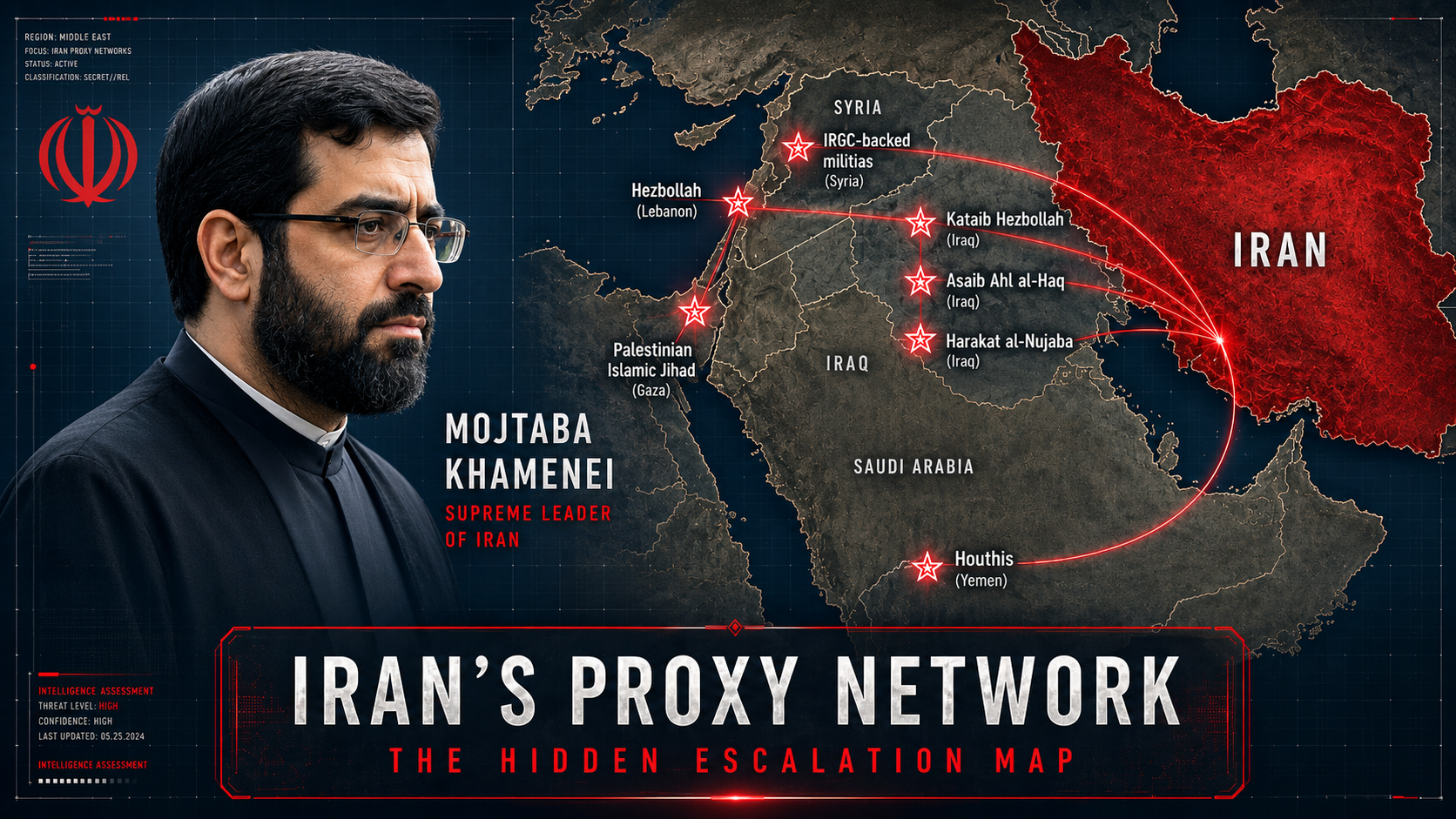
What decision-makers should watch now — before proxy escalation becomes a cost, compliance or supply-chain shock.
This 17-page executive briefing translates Iran’s proxy network into concrete business risks: energy price exposure, maritime chokepoints, war-risk premiums, sanctions, shadow fleets, supply-chain disruption and early-warning indicators for board-level decisions.
You are currently viewing a placeholder content from X. To access the actual content, click the button below. Please note that doing so will share data with third-party providers.
More Information