Executive Intelligence. Industrial Risk. Geopolitics.
Strategic Sparring
for Decision-Makers
Risk intelligence across technology, law, markets and power dynamics.


Verdeckte Geschäftsrisiken, strategische Widersprüche und kritische Abhängigkeiten frühzeitig erkennen.
Kostenlose Analyse starten →
Verdeckte Machtstrukturen, Führungsrisiken und organisatorische Blockaden frühzeitig erkennen.
Kostenlose Analyse starten →
Geopolitische Risiken, globale Abhängigkeiten und kritische Lieferkettenrisiken frühzeitig erkennen.
Kostenlose Analyse starten →
Identify hidden business risks, strategic contradictions and critical dependencies at an early stage.
Start Free Analysis →
Identify hidden power structures, leadership risks and organizational blockers at an early stage.
Start Free Analysis →
Identify geopolitical risks, global dependencies and critical supply-chain vulnerabilities at an early stage.
Start Free Analysis →
Verdeckte Geschäftsrisiken, strategische Widersprüche und kritische Abhängigkeiten frühzeitig erkennen.
Kostenlose Analyse starten →
Verdeckte Machtstrukturen, Führungsrisiken und organisatorische Blockaden frühzeitig erkennen.
Kostenlose Analyse starten →
Geopolitische Risiken, globale Abhängigkeiten und kritische Lieferkettenrisiken frühzeitig erkennen.
Kostenlose Analyse starten →
Identify hidden business risks, strategic contradictions and critical dependencies at an early stage.
Start Free Analysis →
Identify hidden power structures, leadership risks and organizational blockers at an early stage.
Start Free Analysis →
Identify geopolitical risks, global dependencies and critical supply-chain vulnerabilities at an early stage.
Start Free Analysis →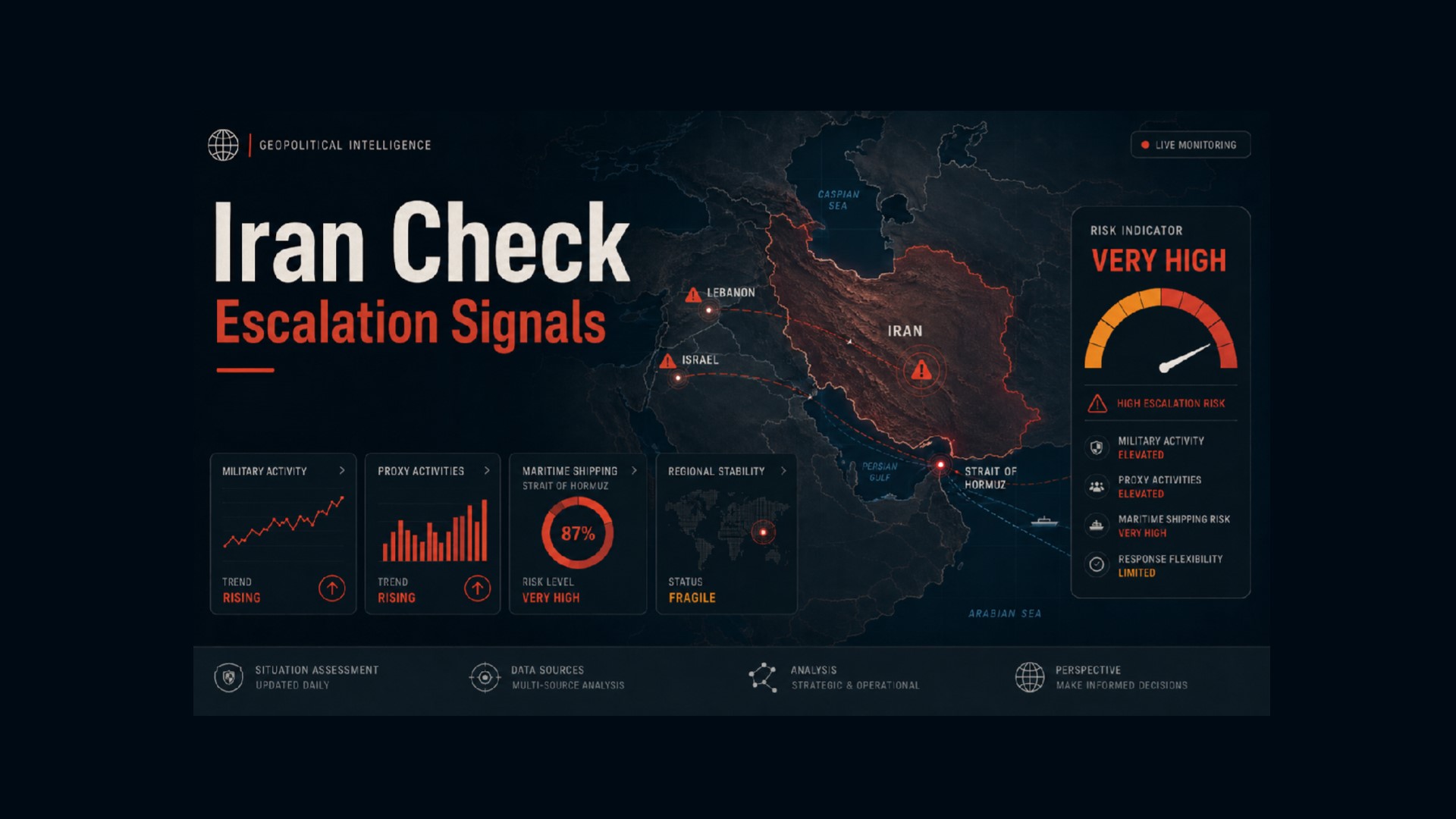
This escalation radar summarises five relevant signals as of September 12, 2026. It focuses on substantiated statements by official bodies, verified events and monitoring sources with potential implications for energy prices, supply chains, markets, maritime security, aviation and regional stability.
Several drones launched from Iraq strike the pipeline in the Riyadh and Medina regions. Saudi Arabia reports injuries and damage and suspends operations as a precaution. A central bypass route around Hormuz is therefore temporarily unavailable.
Iran-aligned Houthi forces secure strategic positions directly at the strait. Their operational influence over one of the most important shipping routes between Asia, Suez and Europe therefore increases significantly.
The pipeline towards the Red Sea is shut down, while the Houthis simultaneously tighten their position around Bab el-Mandeb. Both the land corridor and its maritime onward route are therefore becoming more vulnerable at the same time.
| Actor | Type | Severity | Status | Source / Verification Status | Business Impact |
|---|---|---|---|---|---|
| Saudi Arabia / Iraq / Iran-aligned militias / East-West Pipeline | Drones from Iraq hit Saudi pipeline – strategic Hormuz bypass route shut down | Critical · Level 5/5 | Saudi Arabia confirms on September 12 that several drones launched from Iraq struck the East-West Pipeline in the Riyadh and Medina regions. The attacks caused injuries and material damage. The pipeline is shut down as a precaution. It had recently transported around four to five million barrels of oil per day towards Yanbu on the Red Sea and served as the most important alternative to the disrupted Strait of Hormuz. Riyadh is for now refraining from direct retaliation, but explicitly reserves the right to take further measures. Power dynamics: The Iran conflict is therefore spreading from the maritime chokepoint directly into physical bypass infrastructure. | Confirmed by Saudi Press Agency / Saudi Foreign Ministry, September 12, 2026 . Verification status: confirmed regarding the drones being launched from Iraq, injuries, damage and Saudi Arabia’s decision not to retaliate immediately. Those responsible for the attack have not yet been conclusively identified. Further reading: Schaaf Media · Oil as a Weapon: Why Energy Dominates Geopolitics and Markets in 2026 . | Critical business impact on oil supply, Saudi Aramco, Yanbu, tankers, energy prices, insurance and industry. The loss of a route capable of moving four to five million barrels per day significantly reduces the global supply buffer. |
| Houthis / Iran / Yemen / Saudi Arabia / Bab el-Mandeb | Houthis take Perim Island and Dhubab – Bab el-Mandeb becomes strategically more critical | Critical · Level 5/5 | The Houthi offensive reaches the immediate Bab el-Mandeb area over the current weekend. Yemeni government sources report that Iran-aligned Houthi forces have taken control of Perim Island and Dhubab. Perim lies directly within the strait and therefore has high operational importance for monitoring and threatening shipping traffic. Government forces have announced a counter-offensive. Power dynamics: Through an allied actor, Iran could gain stronger indirect influence over a second global chokepoint. This creates a structural dual pressure on Hormuz and Bab el-Mandeb. | Confirmed by Reuters, September 12, 2026 . Verification status: confirmed regarding the capture of Perim Island and Dhubab according to Yemeni government sources. This does not automatically mean full control over all international shipping through Bab el-Mandeb. Background: Schaaf Media · Iran’s Proxies: The Hidden Escalation Map of the Middle East . | Critical business impact on Bab el-Mandeb, Suez, container shipping, oil transport, insurance, freight rates and Europe-Asia supply chains. A lasting Houthi presence increases the risk that the most important maritime alternative to Hormuz will also remain structurally insecure. |
| Iraq / Iran / Saudi Arabia / Maysan / Shalamcheh | Iraq closes border crossing with Iran and removes commander after Saudi attack | High to critical · Level 4/5 | Baghdad responds to the attack on Saudi Arabia with immediate security measures. Iraqi authorities temporarily close the Shalamcheh border crossing with Iran. At the same time, the commander of the Maysan Operations Command is removed from his post. A large-scale manhunt is under way for those responsible for launching the drones from Iraqi territory. Power dynamics: Baghdad is attempting to prevent direct Saudi retaliation against Iraqi territory and a further Iran-Iraq-Saudi escalation. The conflict is therefore spreading directly into border traffic and Iraq’s internal security structures. | Confirmed by Reuters, September 12, 2026 . Verification status: confirmed regarding the closure of the Shalamcheh border crossing and the ongoing manhunt. The report was published on September 11 at 23:48 UTC and therefore already falls on September 12 in Europe/Vienna. Background: Schaaf Media · Middle East Escalation Check from September 11, 2026 . | High to critical business impact on Iraq-Iran trade, road transport, food imports, border logistics and regional operations. Further border closures could additionally disrupt land-based supply chains between Iran and Iraq. |
| Iran / Oman / Gulf states / Iraq / Hormuz | Iran announces regional Hormuz talks in Oman | High to critical · Level 4/5 | In parallel with the military escalation, a new regional negotiation channel is emerging. Iran’s Foreign Ministry announces talks for Monday with Gulf states and Iraq in Oman. The stated aim is to promote a common understanding over the Strait of Hormuz and regional security. Tehran also says it remains committed to contributing to maritime security. Power dynamics: Iran is trying to shift the Hormuz issue away from the direct US-Iran confrontation and into a regional format. This creates a potential de-escalation channel without abandoning existing military control claims. | Confirmed by Al Jazeera / AFP, September 11, 2026 . Verification status: confirmed regarding the announced talks with Gulf states and Iraq and Oman as host. The meeting itself has not yet taken place; no concrete agreement exists so far. Further reading: Schaaf Media · Strait of Hormuz Blockade 2026: Protecting Margins and Supply Chains in the Chokepoint Shock . | High to critical business impact on Hormuz, oil, LNG, tankers, insurance and transit planning. A regionally accepted navigation mechanism would be one of the most important potential steps towards stabilising Gulf supply chains. |
| Iran / BRICS / China / Russia / India / UAE | BRICS seeks consensus between Iran and UAE over Gulf war | High to critical · Level 4/5 | The BRICS summit in New Delhi takes on direct relevance for the Iran conflict on September 12. Member states agree on a draft joint declaration intended to condemn unilateral warfare without explicitly naming individual states. Particularly difficult are the differing positions of Iran and the UAE, which stand on opposing sides in the Gulf conflict. China, Russia, India and other members are seeking common ground. Power dynamics: Iran therefore remains institutionally embedded in an important non-Western bloc despite Western pressure. At the same time, the dispute with the UAE shows that BRICS does not constitute a unified alliance in support of Iran. | Confirmed by Reuters, September 12, 2026 . Verification status: confirmed regarding the agreed draft, the Iran-UAE differences and the planned condemnation of unilateral warfare. The mandatory alliance review shows no new Iranian membership status: Iran is already a BRICS member. Further analysis: Schaaf Media · Iran War: How the West Is Fighting While Losing Its Dominance . | High business impact on Iran sanctions, alternative payment channels, trade with China and Russia, energy and investment. BRICS has strategic importance for Iran, but internal differences mean it does not provide automatic political or military backing. |
The most important operational escalation shift on September 12, 2026 is the attack on Saudi Arabia’s East-West Pipeline. The pipeline has been shut down, even though it is strategically important precisely because it allows oil flows to bypass Hormuz. The conflict is therefore no longer affecting only the chokepoint itself, but also its central bypass infrastructure.
At the same time, the situation around Bab el-Mandeb is deteriorating. Iran-aligned Houthis now control Perim Island and Dhubab. Their operational influence directly at the strait and therefore over Suez and Europe-Asia connections is increasing significantly.
Iraq is simultaneously attempting to contain the new spillover. Baghdad closes a border crossing with Iran, removes a regional military commander and searches for those responsible for the drone attacks on Saudi Arabia. This illustrates how deeply the Iran conflict is now affecting Iraqi security and border policy.
Politically, a cautious counter-channel is emerging at the same time. Iran wants to discuss Hormuz with Oman, Iraq and the Gulf states. At the BRICS summit, Tehran also remains institutionally embedded, although its differences with the UAE remain visible. No new Iranian alliance or accession status has been confirmed on September 12. EASA CZIBs for Iran, Iraq, Jordan, Lebanon, the Persian Gulf and the Gulf of Oman remain active until September 30, 2026; no new revision was published on September 12.
The five most important signals for a European and German risk assessment are: the shutdown of Saudi Arabia’s East-West Pipeline following drone attacks launched from Iraq, the capture of Perim Island and Dhubab by the Houthis directly at Bab el-Mandeb, Iraq’s border closure with Iran and its security measures against further attacks, the announced regional Hormuz talks in Oman, and Iran’s strategic integration at the BRICS summit alongside visible differences with the UAE.
Note: This assessment was prepared with the support of our Geo AI. AI can make mistakes. The analysis is intended as a radar for potential escalation signals and does not replace a fully verified intelligence assessment.
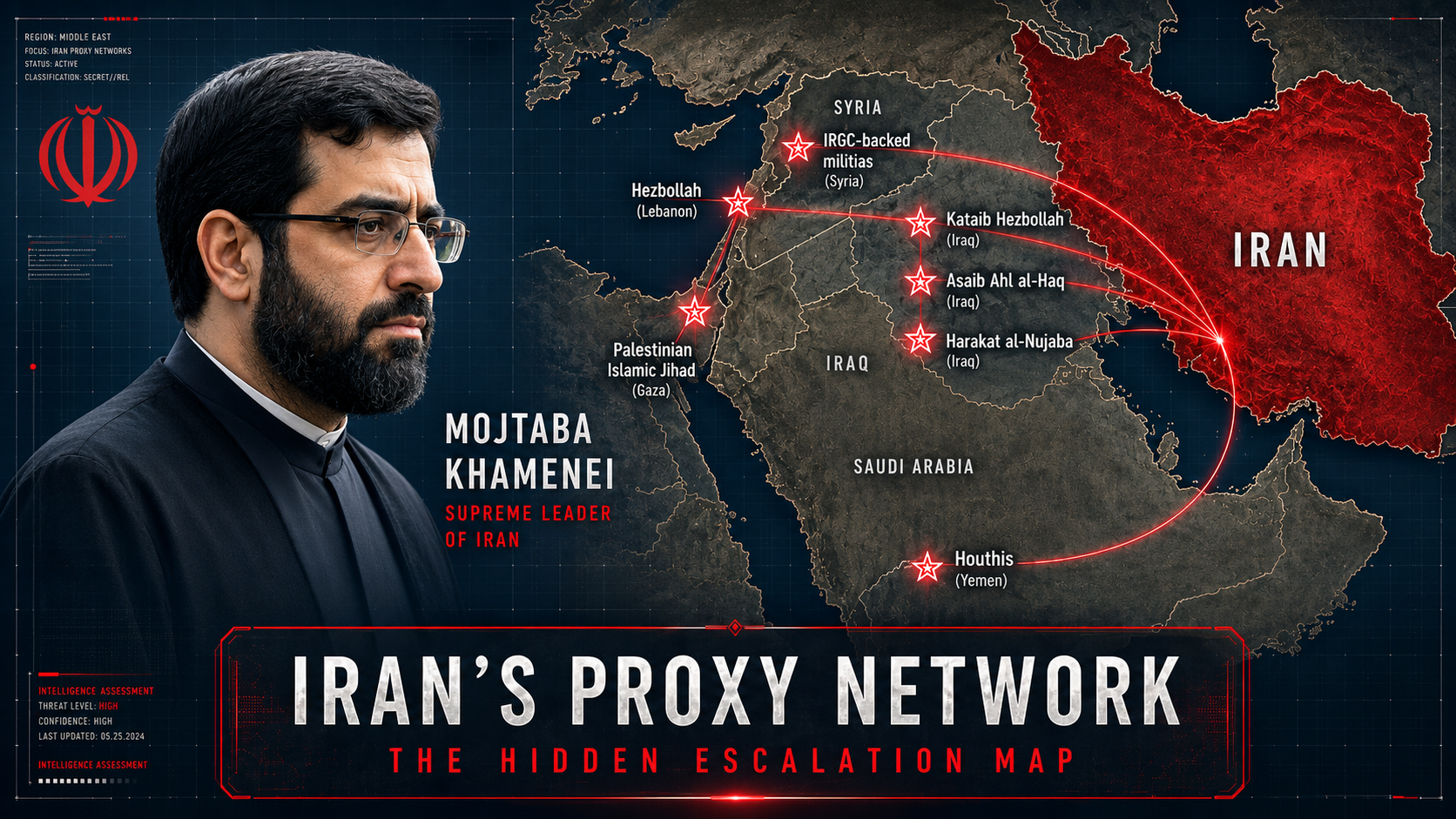
What decision-makers should watch now — before proxy escalation becomes a cost, compliance or supply-chain shock.
This 17-page executive briefing translates Iran’s proxy network into concrete business risks: energy price exposure, maritime chokepoints, war-risk premiums, sanctions, shadow fleets, supply-chain disruption and early-warning indicators for board-level decisions.
You are currently viewing a placeholder content from X. To access the actual content, click the button below. Please note that doing so will share data with third-party providers.
More Information