Executive Intelligence. Industrial Risk. Geopolitics.
Strategic Sparring
for Decision-Makers
Risk intelligence across technology, law, markets and power dynamics.

Verdeckte Geschäftsrisiken, strategische Widersprüche und kritische Abhängigkeiten frühzeitig erkennen.
Kostenlose Analyse starten →
Verdeckte Machtstrukturen, Führungsrisiken und organisatorische Blockaden frühzeitig erkennen.
Kostenlose Analyse starten →
Geopolitische Risiken, globale Abhängigkeiten und kritische Lieferkettenrisiken frühzeitig erkennen.
Kostenlose Analyse starten →
Identify hidden business risks, strategic contradictions and critical dependencies at an early stage.
Start Free Analysis →
Identify hidden power structures, leadership risks and organizational blockers at an early stage.
Start Free Analysis →
Identify geopolitical risks, global dependencies and critical supply-chain vulnerabilities at an early stage.
Start Free Analysis →
Verdeckte Geschäftsrisiken, strategische Widersprüche und kritische Abhängigkeiten frühzeitig erkennen.
Kostenlose Analyse starten →
Verdeckte Machtstrukturen, Führungsrisiken und organisatorische Blockaden frühzeitig erkennen.
Kostenlose Analyse starten →
Geopolitische Risiken, globale Abhängigkeiten und kritische Lieferkettenrisiken frühzeitig erkennen.
Kostenlose Analyse starten →
Identify hidden business risks, strategic contradictions and critical dependencies at an early stage.
Start Free Analysis →
Identify hidden power structures, leadership risks and organizational blockers at an early stage.
Start Free Analysis →
Identify geopolitical risks, global dependencies and critical supply-chain vulnerabilities at an early stage.
Start Free Analysis →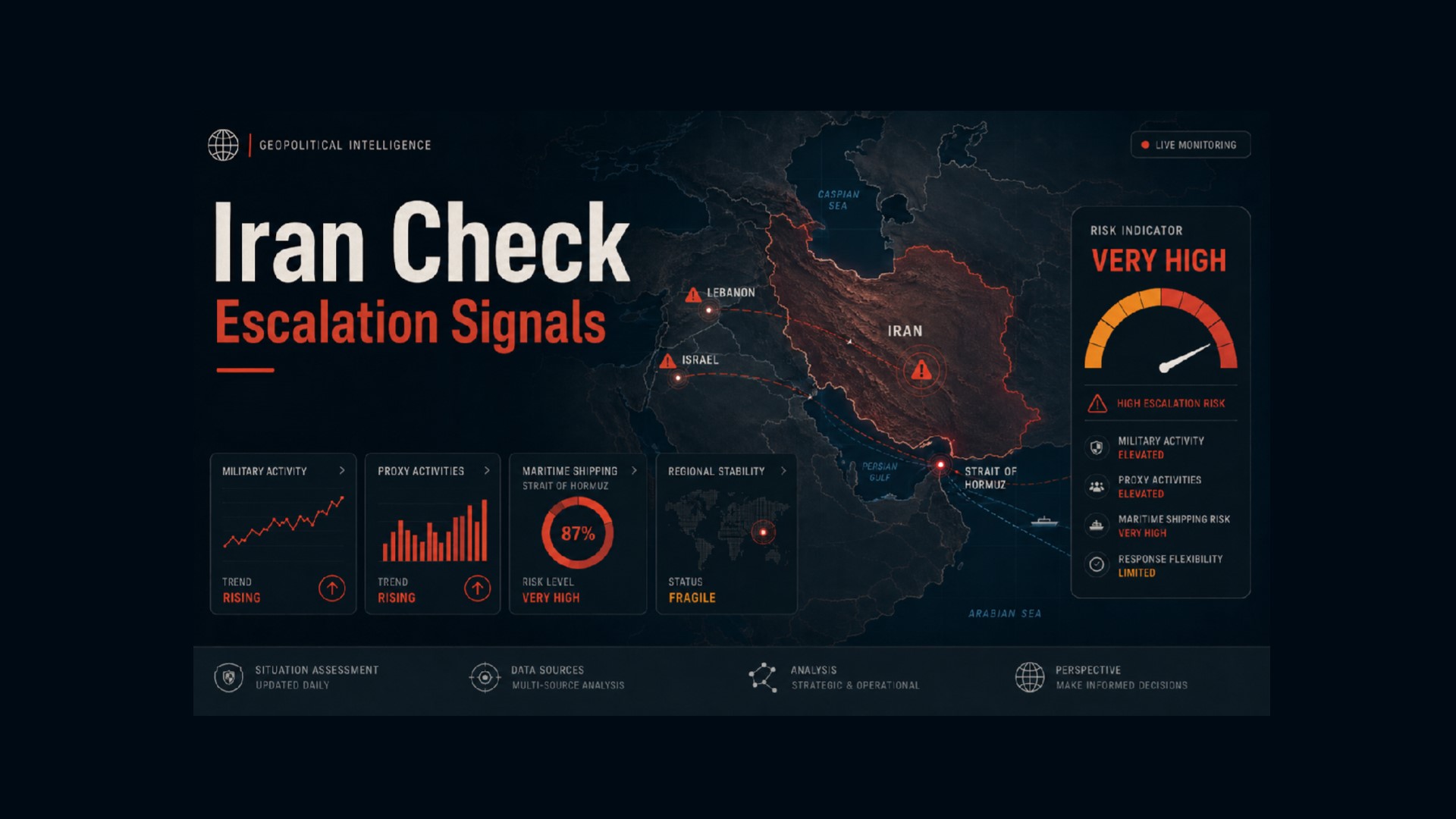
This escalation radar summarizes five relevant signals as of September 22, 2026. The focus is on verifiable statements by official sources, confirmed events and monitoring data with potential implications for energy prices, supply chains, markets, maritime security, aviation and regional stability.
UKMTO reports two new incidents in the Strait of Hormuz. One tanker was struck by an unidentified projectile, injuring two crew members; an LPG tanker was later hit by projectile debris.
Iran’s Revolutionary Guards warn the United States against further escalation. If new attacks occur, Iran says it will alter its military strategy and target selection. The IRGC is also demanding the withdrawal of U.S. and Israeli forces from the region.
London has agreed to provide Riyadh with direct operational support against Houthi attacks for the first time. An RAF Voyager will provide defensive air-to-air refuelling for Saudi combat aircraft. Another NATO member is therefore becoming directly involved in the regional security response.
| Actor | Type | Severity | Status | Source / Verification | Business Impact |
|---|---|---|---|---|---|
| Iran / international shipping companies / UKMTO / Hormuz | Two more tankers hit in Hormuz – crew members injured | Critical · Level 5/5 | Operational uncertainty in the Strait of Hormuz is intensifying again. UKMTO reports two separate tanker incidents on September 21. An inbound tanker was hit by an unidentified projectile. Two crew members sustained minor injuries. Later, an LPG tanker was struck by debris from unidentified projectiles. The crew remained uninjured, and both vessels were able to continue their voyages. Power dynamics: Repeated strikes without a clearly identified attacker increase uncertainty and the risk of miscalculation. Hormuz therefore remains an active military and commercial risk zone. | UKMTO reporting: Arab News / AFP, September 21, 2026 . Current situation: Al Jazeera, September 22, 2026 . Verification status: confirmed for both UKMTO reports, the two injuries and the vessels continuing their voyages. The responsible attackers have not yet been identified. Further analysis: Schaaf Media · Strait of Hormuz Blockade 2026: Protecting Margins and Supply Chains in the Chokepoint Shock . | Critical business impact on tankers, LNG, crude oil, marine insurance, war-risk premiums and supply chains. Repeated unexplained strikes complicate risk modelling and prevent a reliable normalization of the route. |
| Iran / IRGC / United States / Israel | IRGC threatens change in military strategy and target selection | Critical · Level 5/5 | Iran is intensifying its deterrence rhetoric. The IRGC warns the United States that further attacks could trigger a change in Iranian military strategy and target selection. On September 22, it also states that the United States and Israel must ultimately accept withdrawal from the region. Iranian messaging is therefore shifting from individual retaliation threats toward a broader strategic objective. Power dynamics: Tehran is signalling that further escalation would not necessarily be answered with the same targets or the same means. | Confirmed by AP News, September 22, 2026 . Current Iranian statement: The Business Standard, September 22, 2026 . Verification status: confirmed for the public IRGC statements. The specific new target categories have not been disclosed. Background: Schaaf Media · Iran War: How the West Is Fighting While Losing Its Dominance . | Critical business impact on U.S. bases, Gulf states, energy infrastructure, aviation and shipping. An expansion of Iran’s target set would significantly enlarge the regional risk zone. |
| United Kingdom / Saudi Arabia / Houthis / Iran / Yemen | London agrees to provide Saudi Arabia with direct air-to-air refuelling support | Critical · Level 5/5 | Another external state is taking on a direct operational role. UK Prime Minister Andy Burnham confirms that Riyadh formally requested military assistance. London is therefore providing an RAF Voyager for defensive air-to-air refuelling of Saudi aircraft. The support is initially intended to be temporary and is not to be used for Saudi strikes on Yemen. Power dynamics: The Houthi-Saudi conflict is drawing the United Kingdom directly into operational military logistics for the first time. This broadens the international response to Iran-aligned actors. | Confirmed by AP News, September 22, 2026 . Additional reporting: Reuters, September 21/22, 2026 . Verification status: confirmed for the Saudi request, the British approval and the Voyager deployment. Direct British participation in attacks against Houthi targets is not envisaged. Background: Schaaf Media · Middle East Escalation Check – September 21, 2026 . | Critical business impact on Saudi Arabia, regional aviation, military logistics, Bab el-Mandeb and energy infrastructure. Greater external military support strengthens Saudi Arabia’s defences but also increases the risk of international conflict expansion. |
| EU / Houthis / Saudi Arabia / Red Sea / Bab el-Mandeb | EU calls for more than ten warships for Aspides mission | High to Critical · Level 4/5 | Europe is also responding to the worsening Red Sea situation. EU foreign policy chief Kaja Kallas says the Aspides mission now requires more than ten warships. According to diplomats, only around six vessels are currently deployed. Additional air assets are also required. The backdrop is Houthi territorial gains along the Red Sea coast and growing risks around Bab el-Mandeb. Italy is simultaneously planning its own naval presence. Power dynamics: A limited European protection mission is increasingly becoming a strategic effort to secure a critical trade route. | Confirmed by Reuters, September 21/22, 2026 . European assessment: Euronews, September 21, 2026 . Verification status: confirmed for Kallas’ call, the current force size and the additional requirements. Additional contributions from individual EU member states have not yet been agreed. Further analysis: Schaaf Media · Iran’s Proxies: The Hidden Escalation Map of the Middle East . | High to critical business impact on Suez, Bab el-Mandeb, container shipping, insurance and Europe-Asia supply chains. The fact that the EU considers an almost doubling of the fleet necessary shows how significantly its risk assessment of the route has deteriorated. |
| United States / Iran / Qatar / Gulf states / UN General Assembly | Diplomatic window remains open – oil market reacts to potential U.S.-Iran talks | High · Level 3/5 | In parallel with military escalation, a limited negotiating channel remains open. President Trump says he would in principle be willing to meet Iranian President Masoud Pezeshkian in New York. U.S. Ambassador to the UN Mike Waltz also says the door to the negotiating table remains open, provided Iran returns in good faith. Qatar continues to mediate. At the same time, Brent rises again above $102 per barrel on September 22. Power dynamics: Military pressure and diplomacy are proceeding in parallel. Expectations of possible talks alone are already moving the global energy market. | Confirmed by Reuters, September 22, 2026 . UN diplomacy: Reuters, September 22, 2026 . Verification status: confirmed for Trump’s willingness to engage, the ongoing mediation and the market reaction. A bilateral Trump-Pezeshkian meeting has not yet been confirmed. Background: Schaaf Media · Iran Check: 5 Escalation Signals – September 20, 2026 . | High business impact on oil prices, LNG, inflation, markets and investment decisions. A credible negotiating channel could reduce risk premiums; failure would prolong uncertainty around Hormuz and energy markets. |
The most important operational development on September 22, 2026 remains the Strait of Hormuz. Two additional tankers have been hit within a short period. Two crew members were injured, while responsibility for the projectiles remains unclear. A reliable normalization of the chokepoint is therefore still not in sight.
At the same time, Iran is intensifying its strategic deterrence posture. The IRGC is threatening to alter its military strategy and target selection in response to further U.S. escalation and is demanding the withdrawal of American and Israeli forces from the region. The political objective is therefore broadening beyond individual retaliatory strikes.
Particularly significant is the growing involvement of external actors. The United Kingdom is supporting Saudi Arabia directly for the first time with military air-to-air refuelling. At the same time, the EU is calling for more than ten warships for the Aspides mission. The Iran-Houthi conflict is therefore tying up an increasing amount of European military resources.
At the same time, a limited diplomatic window remains open around the UN General Assembly. A Trump-Pezeshkian meeting has not been confirmed, but expectations alone are already influencing the oil market. No new Iranian alliance, partner or observer status has been confirmed as of September 22. EASA CZIBs for Iran, Iraq, Jordan, Lebanon, the Persian Gulf and Gulf of Oman remain active until September 30, 2026; no new revision was published on September 22.
The five most important signals for a European risk assessment are: the two new tanker incidents in the Strait of Hormuz, the IRGC threat to change its military strategy and target selection, direct British air-to-air refuelling support for Saudi Arabia, the EU’s call for a significant reinforcement of the Aspides mission in the Red Sea, and the still-open but fragile U.S.-Iran diplomatic window around the UN General Assembly.
Note: This assessment was prepared with support from our Geo-AI. AI can make mistakes. The analysis is intended as a radar for potential escalation signals and does not replace a fully verified intelligence assessment.
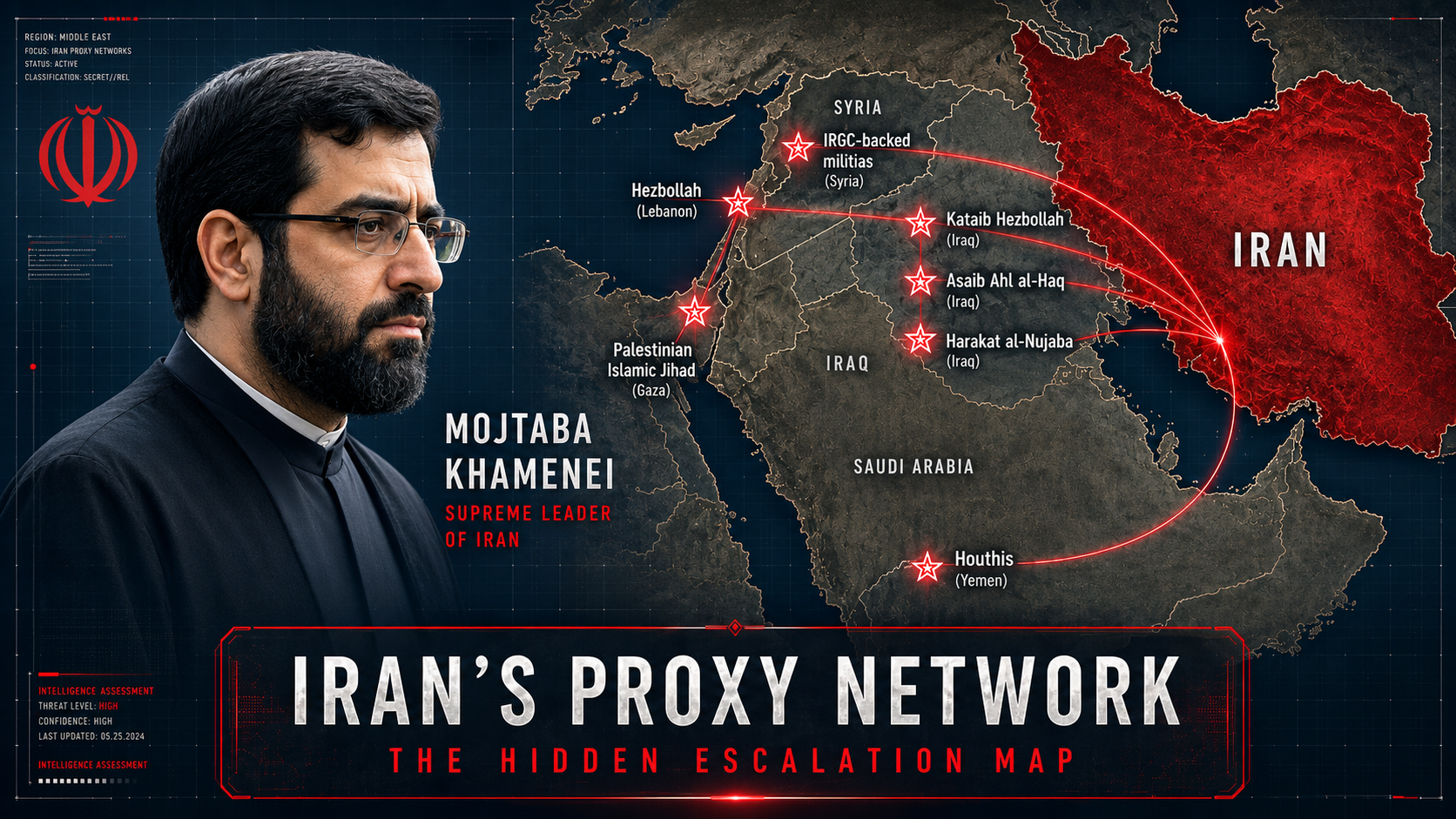
What decision-makers should watch now — before proxy escalation becomes a cost, compliance or supply-chain shock.
This 17-page executive briefing translates Iran’s proxy network into concrete business risks: energy price exposure, maritime chokepoints, war-risk premiums, sanctions, shadow fleets, supply-chain disruption and early-warning indicators for board-level decisions.
You are currently viewing a placeholder content from X. To access the actual content, click the button below. Please note that doing so will share data with third-party providers.
More Information