Executive Intelligence. Industrial Risk. Geopolitics.
Strategic Sparring
for Decision-Makers
Risk intelligence across technology, law, markets and power dynamics.

Verdeckte Geschäftsrisiken, strategische Widersprüche und kritische Abhängigkeiten frühzeitig erkennen.
Kostenlose Analyse starten →
Verdeckte Machtstrukturen, Führungsrisiken und organisatorische Blockaden frühzeitig erkennen.
Kostenlose Analyse starten →
Geopolitische Risiken, globale Abhängigkeiten und kritische Lieferkettenrisiken frühzeitig erkennen.
Kostenlose Analyse starten →
Identify hidden business risks, strategic contradictions and critical dependencies at an early stage.
Start Free Analysis →
Identify hidden power structures, leadership risks and organizational blockers at an early stage.
Start Free Analysis →
Identify geopolitical risks, global dependencies and critical supply-chain vulnerabilities at an early stage.
Start Free Analysis →
Verdeckte Geschäftsrisiken, strategische Widersprüche und kritische Abhängigkeiten frühzeitig erkennen.
Kostenlose Analyse starten →
Verdeckte Machtstrukturen, Führungsrisiken und organisatorische Blockaden frühzeitig erkennen.
Kostenlose Analyse starten →
Geopolitische Risiken, globale Abhängigkeiten und kritische Lieferkettenrisiken frühzeitig erkennen.
Kostenlose Analyse starten →
Identify hidden business risks, strategic contradictions and critical dependencies at an early stage.
Start Free Analysis →
Identify hidden power structures, leadership risks and organizational blockers at an early stage.
Start Free Analysis →
Identify geopolitical risks, global dependencies and critical supply-chain vulnerabilities at an early stage.
Start Free Analysis →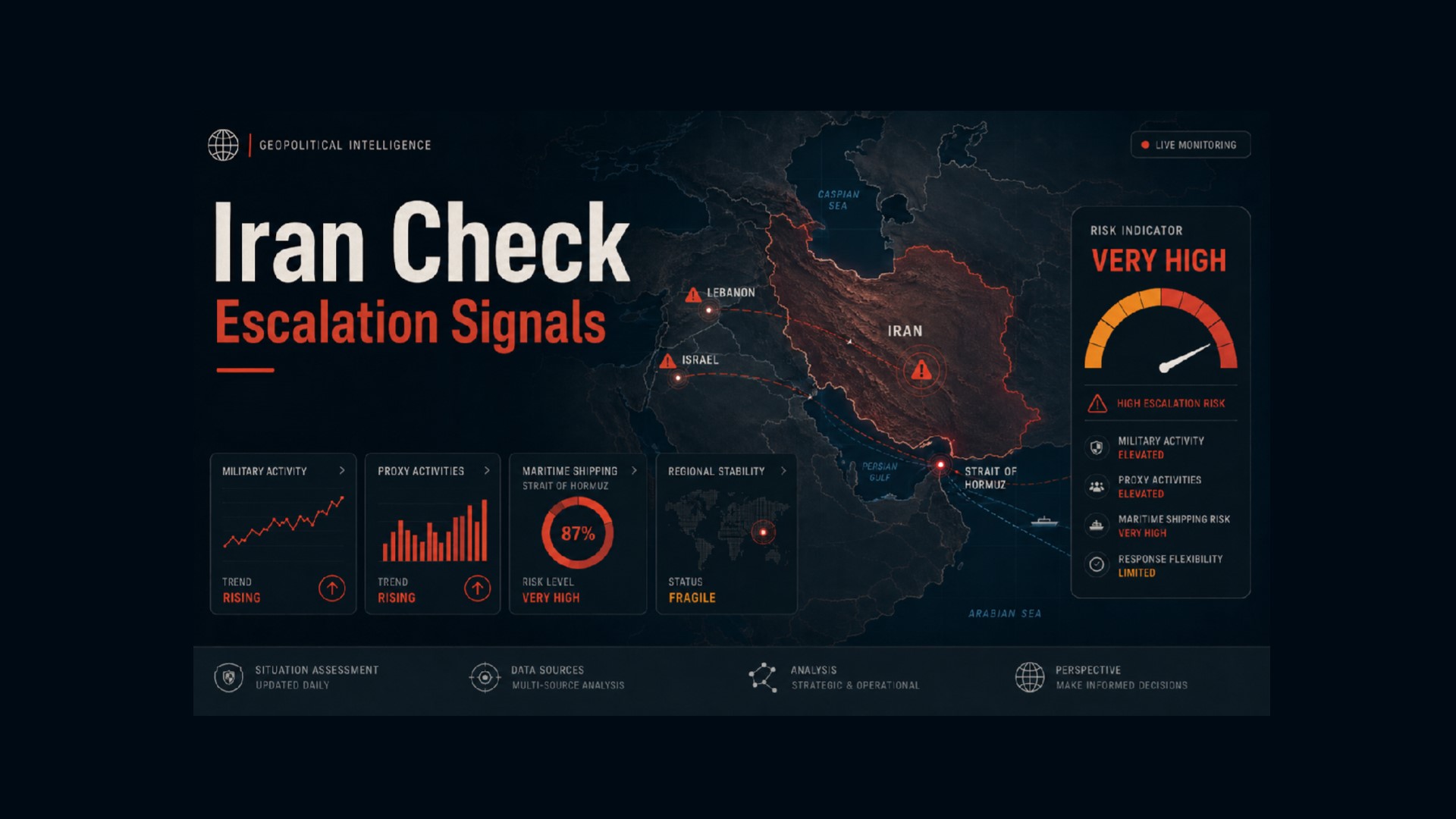
This escalation radar summarizes five relevant signals as of October 16, 2026. The focus is on verifiable statements by official sources, confirmed events and monitoring data with potential implications for energy prices, supply chains, markets, maritime security, aviation and regional stability.
U.S. military planners are reportedly considering the GBU-43/B MOAB for a potential resumption of hostilities against Iranian energy and nuclear targets. No strike order has been issued.
At least eight LPG tankers and one jet-fuel cargo have reportedly been exported despite the U.S. maritime blockade. Iran is using methods including ship-to-ship transfers off Oman.
Following the attack on the presidential palace in Aden, Taiz remains largely encircled by Houthi forces. A fall of the city would significantly weaken the defence of Aden and Bab el-Mandeb.
| Actor | Type | Severity | Status | Source / Verification | Business Impact |
|---|---|---|---|---|---|
| United States / Iran / nuclear programme / energy infrastructure | U.S. military planning includes possible MOAB deployment against Iran | Critical · Level 5/5 | Washington is keeping significantly stronger military options available. According to U.S. media reports, the military has developed operational plans that could include the use of the GBU-43/B Massive Ordnance Air Blast Bomb. Potential targets could include Iranian energy infrastructure and nuclear facilities. The MOAB is the largest conventional bomb in the U.S. arsenal. The planning, however, does not constitute an attack order. President Trump would have to explicitly authorize any resumption of major combat operations. Even within U.S. military planning, there are doubts over whether the weapon could effectively destroy deeply buried nuclear facilities. Power dynamics: Washington is increasing the maximum available military escalation pressure without yet using it operationally. | Published on October 15 and still directly relevant on October 16: Reuters, October 15, 2026 . Verification status: partially confirmed. Reporting on the corresponding U.S. military planning is confirmed. Reuters was unable to independently verify the underlying CNN information. No strike order has been issued. Background: Schaaf Media · Iran War: How the West Is Losing Its Dominance . | Critical business impact on Iran, Gulf states, energy, nuclear sites, aviation, shipping and insurance. An actual deployment against energy infrastructure could immediately trigger new Iranian retaliation and another energy-price shock. |
| Iran / United States / Oman / China / energy exports | Iran exports LPG and jet fuel despite U.S. maritime blockade | High to Critical · Level 4/5 | The U.S. blockade is showing its first documented operational gaps. Reuters reports on October 16 that Iran has been able to export limited volumes of LPG and jet fuel despite the maritime blockade. At least eight tankers carrying Iranian LPG have left the Gulf of Oman since July. The documented volume amounts to around 4.1 million barrels. Another shipment of Iranian jet fuel reached Myanmar. Iranian cargoes are partly concealed through ship-to-ship transfers near Shinas and Sohar. Further transfers take place off Malaysia, reportedly with China as the final market. At the same time, Iran’s crude-oil exports have almost come to a halt. Power dynamics: Tehran is testing where small, difficult-to-detect flows can circumvent the U.S. blockade. | Confirmed by Reuters, October 16, 2026 . Verification status: confirmed for the documented LPG and jet-fuel shipments and the use of ship-to-ship transfers. CENTCOM continues to describe the blockade as “ironclad” and notes that individual passages may also have been authorized. Further analysis: Schaaf Media · Energy Lockdown 2026: Oil Shock and Fragile Supply Chains . | High to critical business impact on sanctions, tankers, energy trading, China, Oman, insurance and compliance. Particularly relevant: Small shadow flows create new data and compliance risks for traders, banks, insurers and shipping companies. |
| Iran / Hormuz / Gulf of Oman / tanker shipping | Another tanker burns inside Iran-declared restricted zone | Critical · Level 5/5 | The maritime situation remains highly dangerous. Iran’s navy says another oil tanker has caught fire east of the Strait of Hormuz. According to Iranian authorities, the vessel had switched off its tracking system and attempted to sail through a restricted zone in the Gulf of Oman. Its name, flag and operator were not disclosed. The cause of the fire also remains unclear. Iran simultaneously states that the navy and the IRGC fully monitor the eastern and western waters around Hormuz. Numerous maritime incidents have already been reported in the region this month. Power dynamics: Iran is increasingly combining maritime control, AIS monitoring and self-declared restricted zones into a de facto enforcement regime. | Current reporting: Reuters / Astro Awani, October 16, 2026 . Verification status: confirmed for the Iranian report of the burning tanker and its alleged passage through a restricted zone. The cause of the fire, identity of the vessel and potential casualties have not been confirmed. Background: Schaaf Media · Strait of Hormuz Blockade 2026: Protecting Margins and Supply Chains in the Chokepoint Shock . | Critical business impact on tankers, war-risk insurance, AIS compliance, crew safety, oil shipments and schedules. For shipping companies, the risk is increasing that different Iranian and international navigation rules may directly conflict. |
| Houthis / Yemen / Aden / Taiz / Saudi Arabia | Houthis increase pressure on Aden and Bab el-Mandeb hinterland | Critical · Level 5/5 | The Yemen front is shifting strategically once again. Following the attack on the presidential palace in Aden, Taiz remains the most important current ground battlefield. Houthi forces have cut the main road between Taiz and Aden. The city is therefore largely encircled. Government forces, supported by Saudi air strikes, have so far been unable to reverse the latest territorial gains. At least 121,000 people have been displaced in the province. Food, medicine and fuel are becoming scarce. A Houthi victory in Taiz would also significantly complicate the defence of Aden and Bab el-Mandeb. Power dynamics: The Houthis are attempting to separate the Saudi-backed south militarily and logistically. | Confirmed by Reuters, October 16, 2026 . The attack on the government complex in Aden has also been confirmed. Verification status: confirmed for the encirclement of Taiz, the disruption of the Aden route and the high displacement figures. Further analysis: Schaaf Media · Middle East Escalation Check – October 13, 2026 . | Critical business impact on Yemen, Aden, Bab el-Mandeb, Red Sea shipping, ports, humanitarian logistics and insurance. A fall of Taiz could significantly alter the military balance around Bab el-Mandeb once again. |
| Hezbollah / Lebanon / United States / Israel / Iran | Hezbollah confirms explosives were intended for operations against Israel | High to Critical · Level 4/5 | The Lebanon front is showing a new escalation signal. Hezbollah confirms that a shipment of explosives seized by Lebanese security forces belonged to the organisation. The truck was carrying around 780 kilograms of explosives, including TNT and C4. A Hezbollah lawmaker says the material was intended for operations against Israel. The organisation is demanding the return of the explosives. U.S. Secretary of State Rubio is instead urging Lebanese President Joseph Aoun not to return the material under any circumstances. Aoun reiterates that the Lebanese state will confiscate illegal weapons. Power dynamics: The Israel-Hezbollah front is simultaneously becoming an internal Lebanese power struggle over the state’s monopoly on force. | Confirmed by Al Jazeera / Reuters / AP, October 16, 2026 . Verification status: confirmed for Hezbollah’s ownership acknowledgment, the intended use against Israel and Rubio’s intervention. Whether there were specific attack targets or operational timelines has not been publicly confirmed. Background: Schaaf Media · Iran’s Proxies: The Hidden Escalation Map of the Middle East . | High to critical business impact on Lebanon, Israel, border regions, transport, aviation, site continuity and investment risk. A renewed Hezbollah-Israel escalation could rapidly expand the currently limited front again. |
The most strategically striking development on October 16, 2026 is the range of U.S. military planning. For a potential resumption of major strikes, planners are reportedly considering even the use of the GBU-43/B MOAB against Iranian energy and nuclear targets. No attack order has been issued. The signal nevertheless shows the range of escalation options Washington is preparing to keep available.
At the same time, it is notable that the U.S. maritime blockade is not completely sealed. Iran has managed to export limited volumes of LPG and jet fuel. Ship-to-ship transfers off Oman and Malaysia make it more difficult to identify the actual commodity flows. For companies, this creates additional sanctions and compliance risk.
Operationally, Hormuz remains highly dangerous. Iran’s navy reports another burning tanker east of the strait. The cause and identity of the vessel remain unclear. Tehran is simultaneously reinforcing its claim to fully control the waters around Hormuz and enforce its own restricted zones.
In parallel, cross-theatre escalation is intensifying. The Houthis continue to largely encircle Taiz, increasing pressure on Aden and the hinterland of Bab el-Mandeb. In Lebanon, Hezbollah openly confirms for the first time that seized explosives were intended for operations against Israel. The United States is pressing Beirut not to return the material. The mandatory alliance review shows no new Iranian membership, partner or observer status as of October 16. EASA’s Saudi Arabia CZIB remains active until November 16. Jordan’s advisory was most recently adjusted on October 14; no new EASA revision was identified on October 16.
The five most important signals for a European risk assessment are: U.S. military planning for the potential use of America’s largest conventional bomb against Iranian energy and nuclear targets, the first detailed evidence of Iranian LPG and jet-fuel exports despite the U.S. maritime blockade, another burning tanker inside an area east of Hormuz that Iran considers restricted, growing Houthi pressure on Taiz and Aden with potential implications for Bab el-Mandeb, and Hezbollah’s confirmation that seized explosives were intended for operations against Israel.
Note: This assessment was prepared with support from our Geo-AI. AI can make mistakes. The analysis is intended as a radar for potential escalation signals and does not replace a fully verified intelligence assessment.
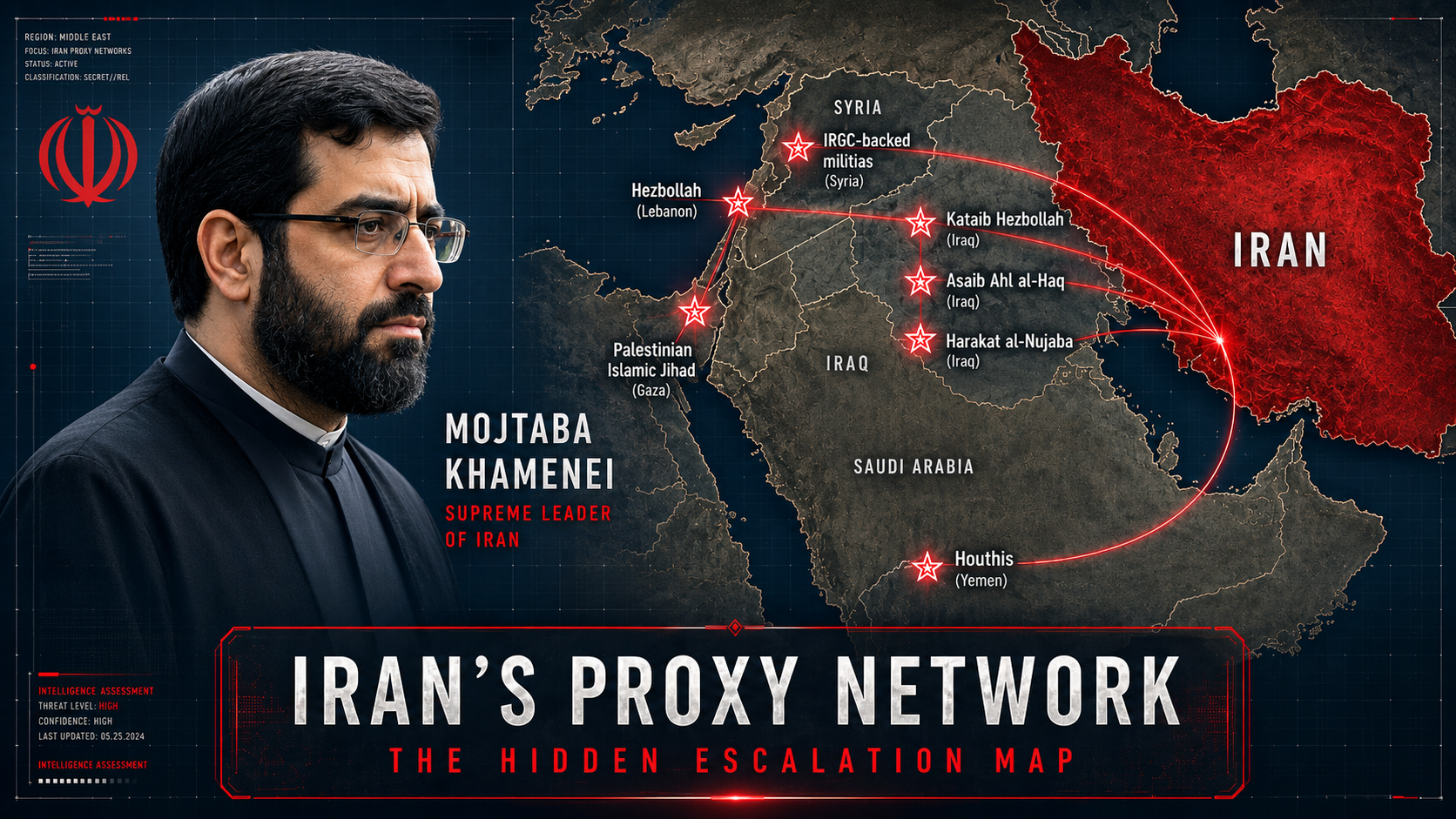
What decision-makers should watch now — before proxy escalation becomes a cost, compliance or supply-chain shock.
This 17-page executive briefing translates Iran’s proxy network into concrete business risks: energy price exposure, maritime chokepoints, war-risk premiums, sanctions, shadow fleets, supply-chain disruption and early-warning indicators for board-level decisions.
You are currently viewing a placeholder content from X. To access the actual content, click the button below. Please note that doing so will share data with third-party providers.
More Information