Executive Intelligence. Industrial Risk. Geopolitics.
Strategic Sparring
for Decision-Makers
Risk intelligence across technology, law, markets and power dynamics.


Verdeckte Geschäftsrisiken, strategische Widersprüche und kritische Abhängigkeiten frühzeitig erkennen.
Kostenlose Analyse starten →
Verdeckte Machtstrukturen, Führungsrisiken und organisatorische Blockaden frühzeitig erkennen.
Kostenlose Analyse starten →
Geopolitische Risiken, globale Abhängigkeiten und kritische Lieferkettenrisiken frühzeitig erkennen.
Kostenlose Analyse starten →
Identify hidden business risks, strategic contradictions and critical dependencies at an early stage.
Start Free Analysis →
Identify hidden power structures, leadership risks and organizational blockers at an early stage.
Start Free Analysis →
Identify geopolitical risks, global dependencies and critical supply-chain vulnerabilities at an early stage.
Start Free Analysis →
Verdeckte Geschäftsrisiken, strategische Widersprüche und kritische Abhängigkeiten frühzeitig erkennen.
Kostenlose Analyse starten →
Verdeckte Machtstrukturen, Führungsrisiken und organisatorische Blockaden frühzeitig erkennen.
Kostenlose Analyse starten →
Geopolitische Risiken, globale Abhängigkeiten und kritische Lieferkettenrisiken frühzeitig erkennen.
Kostenlose Analyse starten →
Identify hidden business risks, strategic contradictions and critical dependencies at an early stage.
Start Free Analysis →
Identify hidden power structures, leadership risks and organizational blockers at an early stage.
Start Free Analysis →
Identify geopolitical risks, global dependencies and critical supply-chain vulnerabilities at an early stage.
Start Free Analysis →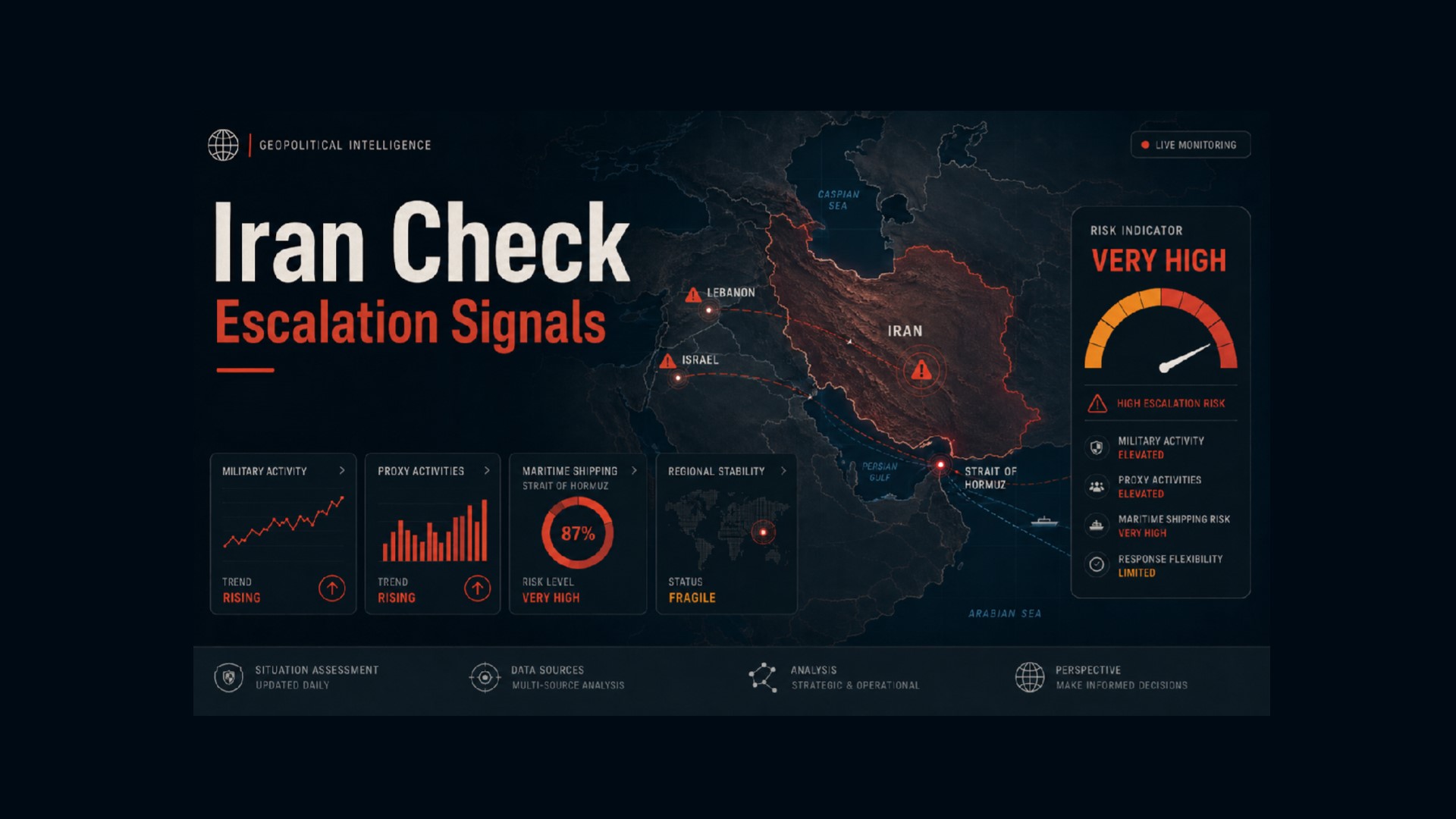
This escalation radar summarises five relevant signals as of September 6, 2026. It focuses on substantiated statements by official bodies, verified events and monitoring sources with potential implications for energy prices, supply chains, markets, maritime security, aviation and regional stability.
US forces strike three Iranian tankers after the IRGC reportedly fired ballistic missiles at a US aircraft carrier and a destroyer. According to US officials, two tankers are permanently disabled and a third is destroyed.
Iran says on September 6 that it struck an unmanned US vessel attempting to enter Hormuz. At the same time, the Iranian military threatens even more severe and potentially expanded attacks on US naval forces.
Only five commodity vessels are recorded on Saturday. Early on Sunday, no additional transits had initially been registered, compared with 31 vessels the previous weekend. The military escalation is therefore having an immediate impact on the chokepoint.
| Actor | Type | Severity | Status | Source / Verification Status | Business Impact |
|---|---|---|---|---|---|
| United States / Iran / CENTCOM / IRGC / oil tankers / Hormuz | US strikes three Iranian oil tankers after missile attacks on US warships | Critical · Level 5/5 | The maritime US-Iran confrontation reaches a new level. US forces strike three Iranian oil tankers. According to US officials, the attacks followed ballistic missile launches by the IRGC against a US aircraft carrier and a destroyer. The US vessels were not hit; no injuries were reported. Two Iranian tankers were reportedly permanently disabled, while a third unloaded tanker was destroyed. Power dynamics: Washington is now responding to attacks on military vessels with immediate military-economic strikes against Iran’s oil transport capacity. Military warfare and economic warfare are therefore converging further. | Confirmed by AP News, September 6, 2026 . Verification status: confirmed regarding the US strikes on three Iranian tankers and the preceding Iranian missile attacks. Iranian claims of damage to US vessels have not been confirmed. Background: Schaaf Media · Middle East Escalation Check from September 5, 2026 . | Critical business impact on Iranian oil exports, tankers, insurance, charter contracts, war-risk premiums and Hormuz. State and commercial oil transport are increasingly becoming part of the military retaliation cycle itself. |
| Iran / United States / IRGC / US Navy / Strait of Hormuz | Iran reports attack on unmanned US vessel and threatens harsher retaliation | Critical · Level 5/5 | Iran continues its maritime retaliation on September 6. Tehran says it struck an unmanned US vessel while it was attempting to enter the Strait of Hormuz. At the same time, Iran’s Khatam al-Anbiya Command warns that further US attacks, the blockade or interference with Iranian vessels would be met with even harsher attacks on US military ships. An expansion of the attacks is explicitly not ruled out. Power dynamics: Iran is attempting to transfer the military costs of the US blockade directly onto American naval power. The chokepoint is increasingly developing into a direct maritime war theatre. | Confirmed by AP News, September 6, 2026 and Arab News / AFP, September 6, 2026 . Verification status: partially confirmed. Iran’s report of the attack and the official retaliation threat are confirmed. Independent US confirmation of the claimed hit was not initially available. Background: Schaaf Media · Iran Check: 5 Escalation Signals from September 4, 2026 . | Critical business impact on Hormuz, US naval operations, commercial shipping, insurability, crew safety and transit planning. Every additional direct US-Iran naval confrontation increases the risk of accidental strikes on commercial vessels. |
| Iran / Oman / international shipowners / Hormuz / tanker traffic | Hormuz traffic again approaches standstill after latest tanker strikes | Critical · Level 5/5 | The latest military escalation is having an immediate impact on commercial use of Hormuz. Kpler records just five commodity vessels in the strait on Saturday. For Sunday, no additional transits had initially been registered at the early research cut-off. The previous weekend, 31 vessels were recorded. Saturday’s inbound traffic included an empty VLCC with AIS switched off and an Indian Very Large Gas Carrier on an Iran-related route. Power dynamics: Every new attack cycle triggers an immediate retreat by commercial shipowners. Political control over Hormuz therefore has limited practical value as long as passage remains physically unpredictable. | Confirmed by Gulf Times / Reuters, September 6, 2026 . Verification status: confirmed regarding five registered transits on Saturday and the sharp decline compared with the previous weekend. The Sunday figure reflects the early research cut-off and may change later in the day. Further reading: Schaaf Media · Strait of Hormuz Blockade 2026: Strategies for the Chokepoint Shock . | Critical business impact on crude oil, LNG, LPG, tanker charters, freight rates, insurance and delivery times. The renewed near-standstill prevents any reliable normalisation of Gulf supply chains. |
| Israel / Hezbollah / Lebanon / Iran / southern Lebanon | Hezbollah launches drones at IDF – Israel responds with air strikes and evacuation warning | Critical · Level 5/5 | The Lebanon theatre also escalates operationally again on September 6. According to the Israeli military, Hezbollah launches two drones against Israeli soldiers in the security zone in southern Lebanon. Israel responds with new air strikes against Hezbollah targets. Residents of Arab Salim are explicitly ordered to evacuate ahead of another strike. Israel initially reports no injured soldiers. Power dynamics: The conflict is shifting from territorial pressure back towards an immediate attack-and-retaliation cycle. Iran’s most important regional ally therefore remains an active military escalation channel. | Confirmed by Arab News / AFP, September 6, 2026 . Verification status: confirmed regarding the Israeli report of two Hezbollah drones, new Israeli strikes and the evacuation warning for Arab Salim. Independent details regarding the Hezbollah targets hit were not initially fully available. Background: Schaaf Media · Iran’s Proxies: The Hidden Escalation Map of the Middle East . | Critical business impact on southern Lebanon, Israel, aviation, land logistics, evacuation planning and regional operations. The return of direct drone retaliation increases the risk of another expansion of the combat zone. |
| OPEC+ / Saudi Arabia / Russia / Iran / global oil markets | OPEC+ expected to keep output policy unchanged despite Iran crisis | High to critical · Level 4/5 | The Iran crisis is also affecting OPEC+’s room for manoeuvre. Ahead of the September 6 meeting, several sources familiar with the talks expect the group to leave its October production policy unchanged. The reversal of earlier production cuts, completed in September, has not fully normalised actual supply conditions. The Iran war continues to restrict exports through Hormuz and keeps actual production below targeted volumes. Power dynamics: Additional nominal production volumes have limited effect when transport routes and real export capacity remain constrained. The geopolitical chokepoint is therefore reducing OPEC+’s traditional ability to stabilise the market. | Confirmed by Reuters, September 6, 2026 . Verification status: confirmed regarding the expected continuation of the October production policy and the conflict’s impact on actual output. The final OPEC+ decision had not yet been announced at the time of research. Further reading: Schaaf Media · Oil as a Weapon: Why Energy Dominates Geopolitics and Markets in 2026 . | High to critical business impact on oil prices, energy procurement, transport, inflation, chemicals and industry. As long as Hormuz remains constrained, additional production capacity can only partially compensate for the physical supply bottleneck. |
The most important escalation shift on September 6, 2026 is the direct linkage between maritime warfare and oil transport. The United States strikes three Iranian tankers after Iran reportedly attacks US warships with ballistic missiles. Oil transport itself is therefore becoming a military retaliation instrument.
Iran is responding with further maritime escalation. Tehran reports an attack on an unmanned US vessel and explicitly threatens harsher attacks on US naval forces. Hormuz is therefore increasingly shifting from a threatened chokepoint into an immediate maritime war theatre.
The commercial response is already visible. Only five commodity vessels are recorded on Saturday, while early Sunday initially shows no additional transits. Compared with 31 vessels the previous weekend, this represents another major collapse. Operational normalisation therefore remains out of reach.
At the same time, southern Lebanon is escalating again directly. Hezbollah is using drones against Israeli soldiers, while Israel responds with air strikes and evacuation warnings. OPEC+ meanwhile has only limited capacity to offset high prices, because the problem is increasingly not production alone, but transport. The mandatory alliance review shows no new Iranian accession, partner or observer status today. EASA CZIBs for Iran, Iraq, Lebanon, the Persian Gulf and the Gulf of Oman remain active until September 30, 2026; no new tightening was issued on September 6.
The five most important signals for a European and German risk assessment are: the US strikes on three Iranian oil tankers following Iranian missile attacks on US warships, Iran’s newly claimed attack on a US vessel and its threat of even harsher maritime retaliation, the renewed collapse of commercial Hormuz traffic to near-standstill levels, the new direct drone and air-strike cycle between Hezbollah and Israel in southern Lebanon, and OPEC+’s limited ability to offset oil-market stress caused by war and chokepoint disruption.
Note: This assessment was prepared with the support of our Geo AI. AI can make mistakes. The analysis is intended as a radar for potential escalation signals and does not replace a fully verified intelligence assessment.
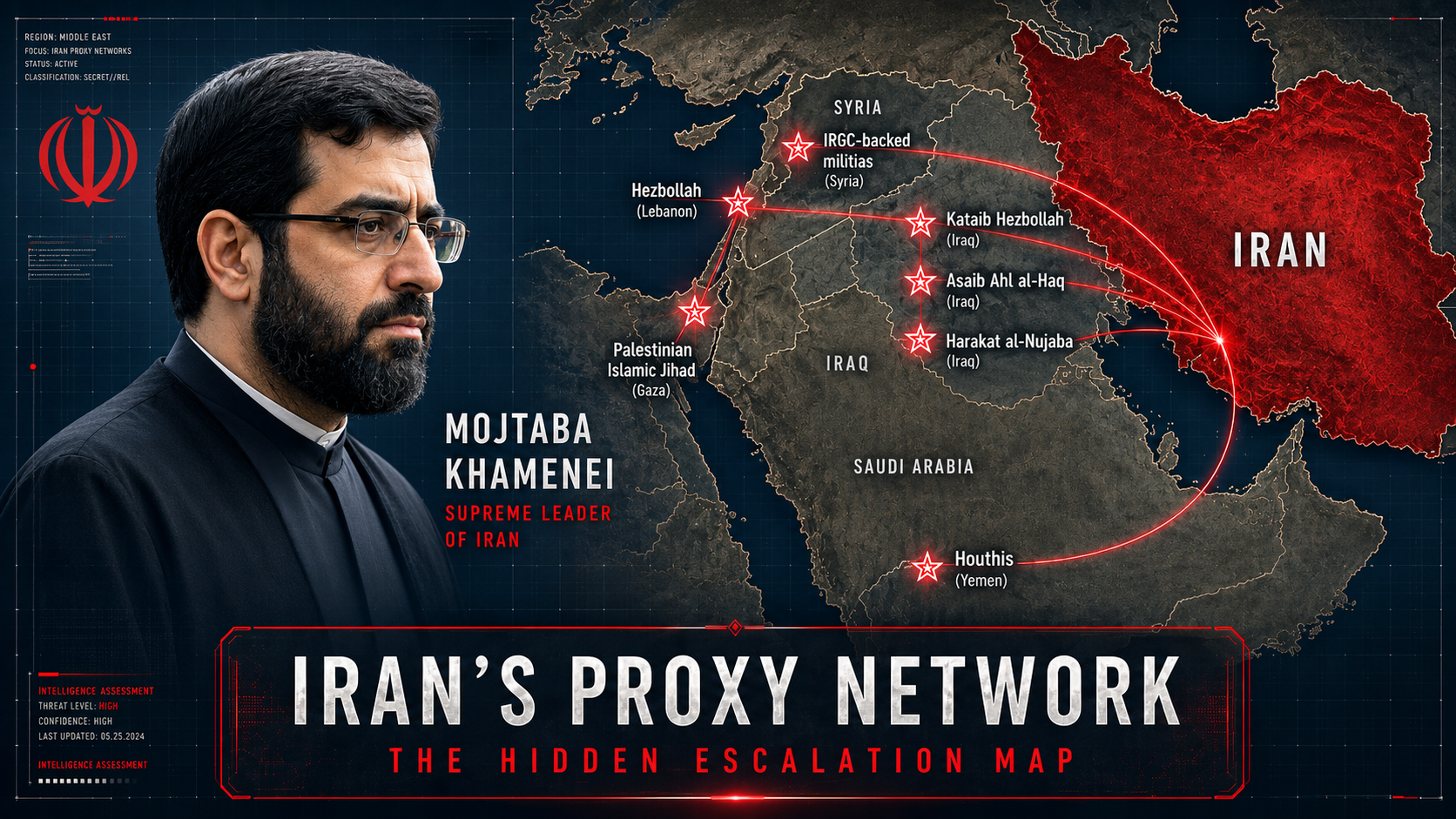
Was Entscheider jetzt beobachten sollten – bevor Proxy-Eskalation zum Kosten-, Compliance- oder Lieferkettenschock wird.
Dieses 17-seitige Executive Briefing übersetzt Irans Proxy-Netzwerk in konkrete Unternehmensrisiken: Energiepreis-Exponierung, maritime Chokepoints, War-Risk-Prämien, Sanktionen, Schattenflotten, Lieferkettenstörungen und Frühindikatoren für Board-Entscheidungen.
You are currently viewing a placeholder content from X. To access the actual content, click the button below. Please note that doing so will share data with third-party providers.
More Information