Executive Intelligence. Industrial Risk. Geopolitics.
Strategic Sparring
for Decision-Makers
Risk intelligence across technology, law, markets and power dynamics.

Verdeckte Geschäftsrisiken, strategische Widersprüche und kritische Abhängigkeiten frühzeitig erkennen.
Kostenlose Analyse starten →
Verdeckte Machtstrukturen, Führungsrisiken und organisatorische Blockaden frühzeitig erkennen.
Kostenlose Analyse starten →
Geopolitische Risiken, globale Abhängigkeiten und kritische Lieferkettenrisiken frühzeitig erkennen.
Kostenlose Analyse starten →
Identify hidden business risks, strategic contradictions and critical dependencies at an early stage.
Start Free Analysis →
Identify hidden power structures, leadership risks and organizational blockers at an early stage.
Start Free Analysis →
Identify geopolitical risks, global dependencies and critical supply-chain vulnerabilities at an early stage.
Start Free Analysis →
Verdeckte Geschäftsrisiken, strategische Widersprüche und kritische Abhängigkeiten frühzeitig erkennen.
Kostenlose Analyse starten →
Verdeckte Machtstrukturen, Führungsrisiken und organisatorische Blockaden frühzeitig erkennen.
Kostenlose Analyse starten →
Geopolitische Risiken, globale Abhängigkeiten und kritische Lieferkettenrisiken frühzeitig erkennen.
Kostenlose Analyse starten →
Identify hidden business risks, strategic contradictions and critical dependencies at an early stage.
Start Free Analysis →
Identify hidden power structures, leadership risks and organizational blockers at an early stage.
Start Free Analysis →
Identify geopolitical risks, global dependencies and critical supply-chain vulnerabilities at an early stage.
Start Free Analysis →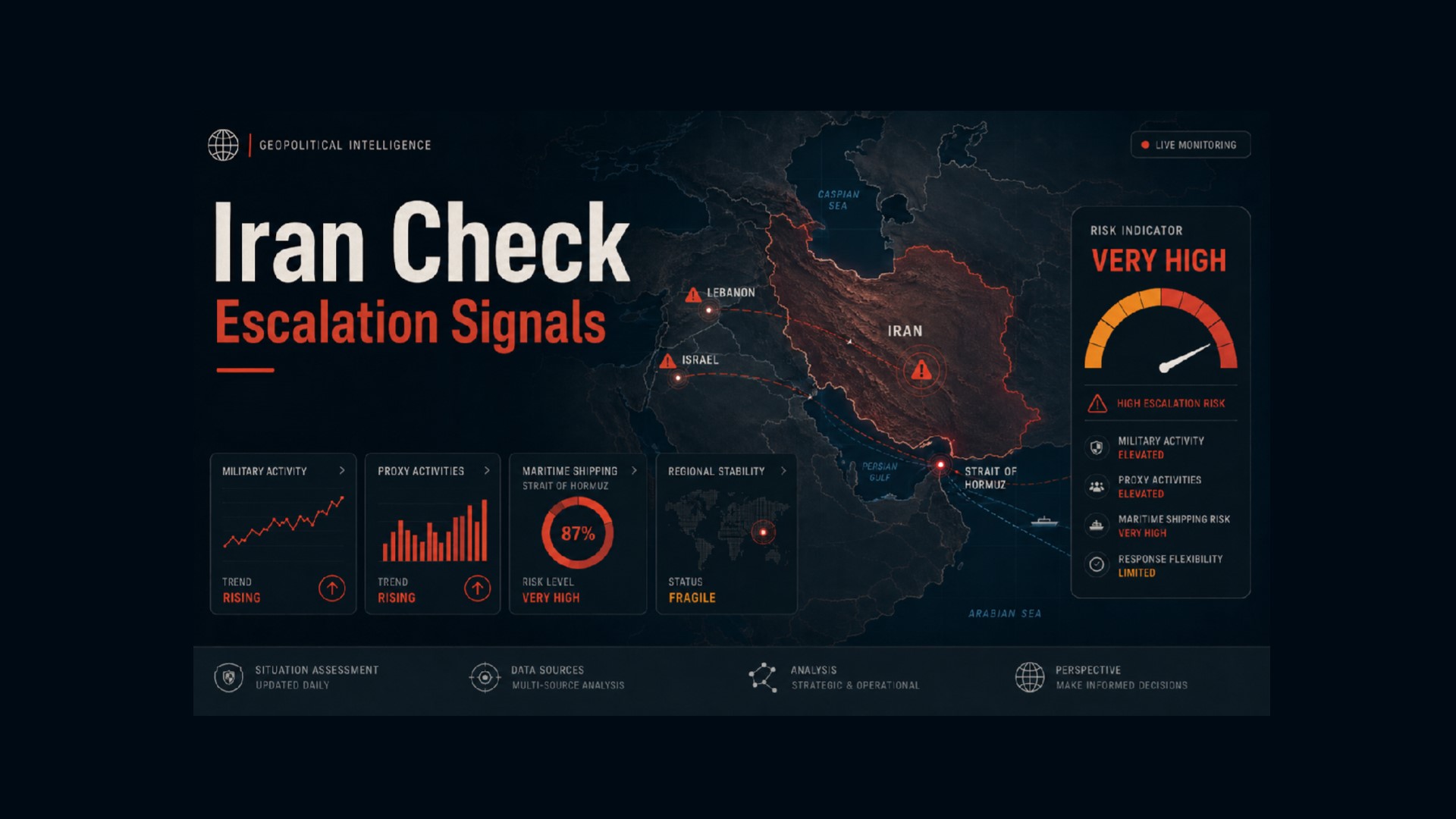
This escalation radar summarizes five relevant signals as of October 14, 2026. The focus is on verifiable statements by official sources, confirmed events and monitoring data with potential implications for energy prices, supply chains, markets, maritime security, aviation and regional stability.
Two senior Iranian officials confirm to Reuters a deliberate shift in the pace, tactics and geographical scope of operations. Vessels are no longer intended to be considered safe beyond Hormuz.
Two Singapore-registered vessels are hit by unidentified projectiles. The GFS Pride catches fire and sinks; a second vessel suffers hull damage.
An attack damages administrative areas at the Saudi oil company’s headquarters. The Houthis threaten further attacks on oil infrastructure and airports.
| Actor | Type | Severity | Status | Source / Verification | Business Impact |
|---|---|---|---|---|---|
| Iran / IRGC / Hormuz / Persian Gulf / United States | Iran confirms new offensive tactics against international shipping | Critical · Level 5/5 | Tehran is once again significantly tightening its maritime strategy. Two senior Iranian officials confirm to Reuters that Iran has been using new attack tactics against vessels for around ten days. Both the nature and pace of operations have changed. The targets are vessels that Iran considers to be violating Tehran’s restrictions. At the same time, the operational area is expanding beyond Hormuz into the Gulf of Oman and waters off Qatar and the UAE. According to the U.S. military, IRGC units are using small unarmed boats, among other assets, as observers for target identification. An Iranian official also states that such vessels are not safe even beyond Hormuz. Power dynamics: Iran is deliberately attempting to expand maritime risks both geographically and tactically. | Confirmed by Reuters, October 14, 2026 . Verification status: confirmed for Iran’s new attack tactics, the increased pace of attacks and the geographical expansion of operations. Attribution for individual attacks continues to vary in terms of the available evidence. Further analysis: Schaaf Media · Strait of Hormuz Blockade 2026: Protecting Margins and Supply Chains in the Chokepoint Shock . | Critical business impact on tankers, container ships, LNG and oil shipments, marine insurance, crew safety and delivery times. The key point: The risk is no longer limited to the actual Hormuz passage. Shipping companies increasingly need to include the entire Gulf region in their risk planning. |
| Hormuz / Singapore / UAE / commercial shipping | Two container ships hit – GFS Pride sinks | Critical · Level 5/5 | Maritime escalation has reached a new operational threshold. Two Singapore-registered container vessels are hit by unidentified projectiles while transiting the Strait of Hormuz. The GFS Pride catches fire and sinks. The vessel has a capacity of around 2,824 TEU. A second vessel suffers hull damage. The Maritime and Port Authority of Singapore confirms both incidents. Floating containers create an additional navigation hazard. Power dynamics: The conflict now threatens not only energy tankers, but increasingly conventional container and cargo logistics. | Confirmed by Reuters, October 14, 2026 . Verification status: confirmed for the strikes on two vessels, the sinking of the GFS Pride and hull damage to the second vessel. The exact origin of the projectiles has not been conclusively established. Background: Schaaf Media · Iran Check: 5 Escalation Signals – October 12, 2026 . | Critical business impact on container shipping, freight rates, supply chains, ports, insurance and schedules. Particularly relevant: A sinking container ship demonstrates that conventional cargo flows are now directly affected by the Hormuz conflict. |
| Houthis / Saudi Arabia / Aramco / Dhahran | Houthi attack hits Saudi Aramco headquarters | Critical · Level 5/5 | The Houthis are targeting the symbolic centre of Saudi Arabia’s oil industry. An attack hits an administrative building at Aramco’s headquarters in Dhahran. According to the Saudi Energy Ministry, a limited fire breaks out. Aramco’s operational activities continue. No fatalities are reported. The Houthis subsequently threaten further attacks on Saudi oil infrastructure and airports. In parallel, another missile is intercepted over Riyadh. Power dynamics: The Houthis are shifting pressure from regional targets toward central national energy and management infrastructure. | Confirmed by Reuters, October 14, 2026 . Verification status: confirmed for the attack, the limited fire and the Houthi threat of further attacks. No material production disruption at Aramco has been confirmed. Further analysis: Schaaf Media · Middle East Escalation Check – October 13, 2026 . | Critical business impact on Saudi Arabia, oil supply, Aramco, insurance, aviation and site continuity. Even without a production outage, the risk premium rises because central corporate and administrative locations are now being directly targeted. |
| Israel / Iran / Hezbollah / Lebanon | Netanyahu rules out pre-emptive strike on Iran ahead of Israeli election for now | High to Critical · Level 4/5 | Israel is sending a limited de-escalation signal toward Iran. Prime Minister Netanyahu says on October 14 that he is not seeking a pre-emptive strike on Iran before Israel’s election on October 27. At the same time, the deterrence threat remains in place. If Iran or an allied actor attacks Israel, Israel will respond decisively. In parallel, Defence Minister Katz warns Hezbollah that renewed attacks could lead to severe consequences and further territorial losses in southern Lebanon. Power dynamics: Israel is reducing the short-term risk of an offensive first strike, while maintaining a hard retaliatory posture. | Confirmed by Reuters, October 14, 2026 . Verification status: confirmed for Netanyahu’s statement on a pre-emptive strike and the continuing threat of retaliation. No statements were made regarding potential operations after the election. Background: Schaaf Media · Iran War: How the West Is Fighting and Losing Its Dominance . | High to critical business impact on Israel, Iran, Lebanon, aviation, energy and investment planning. In the short term, the risk of an Israeli first strike declines. The high level of retaliatory readiness, however, keeps regional escalation risk elevated. |
| UN / Iran / United States / Hormuz / global food security | UN warns of food crisis from blocked fertilizer shipments | High to Critical · Level 4/5 | The Hormuz conflict is increasingly developing into a global agricultural risk. UN Under-Secretary-General Jorge Moreira da Silva warns on October 14 that an agreement between the United States and Iran on a fertilizer shipping corridor is needed within weeks. Otherwise, key planting seasons in parts of Asia and Africa could be missed. The UN plan envisages a coordination mechanism in Oman. Five monitored fertilizer vessels per day could, according to the UN, cover the most urgent requirements. The mechanism could be activated within seven to ten days after a political agreement. Power dynamics: Hormuz is therefore becoming not only an energy chokepoint, but increasingly a risk to global food security. | Confirmed by Reuters, October 14, 2026 . Verification status: confirmed for the UN warning, the planned Oman corridor and the proposed timeframe for activation. No agreement between Washington and Tehran has yet been reached. Background: Schaaf Media · Energy Lockdown 2026: Oil Shock and Supply Risk . | High to critical business impact on fertilizer, agriculture, food prices, inflation, emerging markets and global supply chains. Europe also faces additional indirect cost pressure through agricultural commodities, import prices and food inflation. |
The most important operational development on October 14, 2026 is Iran’s confirmed change in its maritime attack tactics. Tehran is increasing both the pace and reach of operations against vessels. The risk zone now extends beyond Hormuz into the Gulf of Oman and waters off Qatar and the UAE. This significantly expands the geographical scope of maritime risk.
At the same time, the shipping crisis has reached a new threshold. Two Singapore-registered container vessels are hit. The GFS Pride sinks after catching fire. The escalation is therefore increasingly affecting not only energy exports, but also conventional container shipping and cargo flows.
Saudi Arabia’s energy infrastructure also remains directly threatened. The Houthis strike Aramco’s headquarters in Dhahran and threaten further attacks on oil targets and airports. No production outage has been reported, but the strategic targeting pattern is becoming more severe.
Politically, Israel is sending a limited de-escalation signal. Netanyahu says he is not seeking a pre-emptive strike on Iran before the October 27 election. The threat of retaliation against Iran and Hezbollah remains in place. At the same time, the economic consequences are unexpectedly expanding into global food security. The UN warns that blocked fertilizer shipments through Hormuz could jeopardize planting seasons in Asia and Africa within weeks. The mandatory alliance review shows no new Iranian membership, partner or observer status as of October 14. EASA continues to maintain active advisories for Iran, Saudi Arabia, the Persian Gulf/Gulf of Oman, Iraq, Lebanon and Yemen; no new revision was published on October 14.
The five most important signals for a European risk assessment are: Iran’s confirmed new attack tactics, with a higher operational tempo and an expansion of the maritime operating area beyond Hormuz, the strikes on two Singapore-registered container vessels and the sinking of the GFS Pride, the Houthi attack on Aramco’s headquarters in Dhahran and the threat of further attacks on oil and aviation targets, Netanyahu’s temporary decision not to seek an Israeli pre-emptive strike against Iran ahead of the October 27 election, and the UN warning of a potential food crisis if the planned Hormuz fertilizer corridor is not activated quickly.
Note: This assessment was prepared with support from our Geo-AI. AI can make mistakes. The analysis is intended as a radar for potential escalation signals and does not replace a fully verified intelligence assessment.
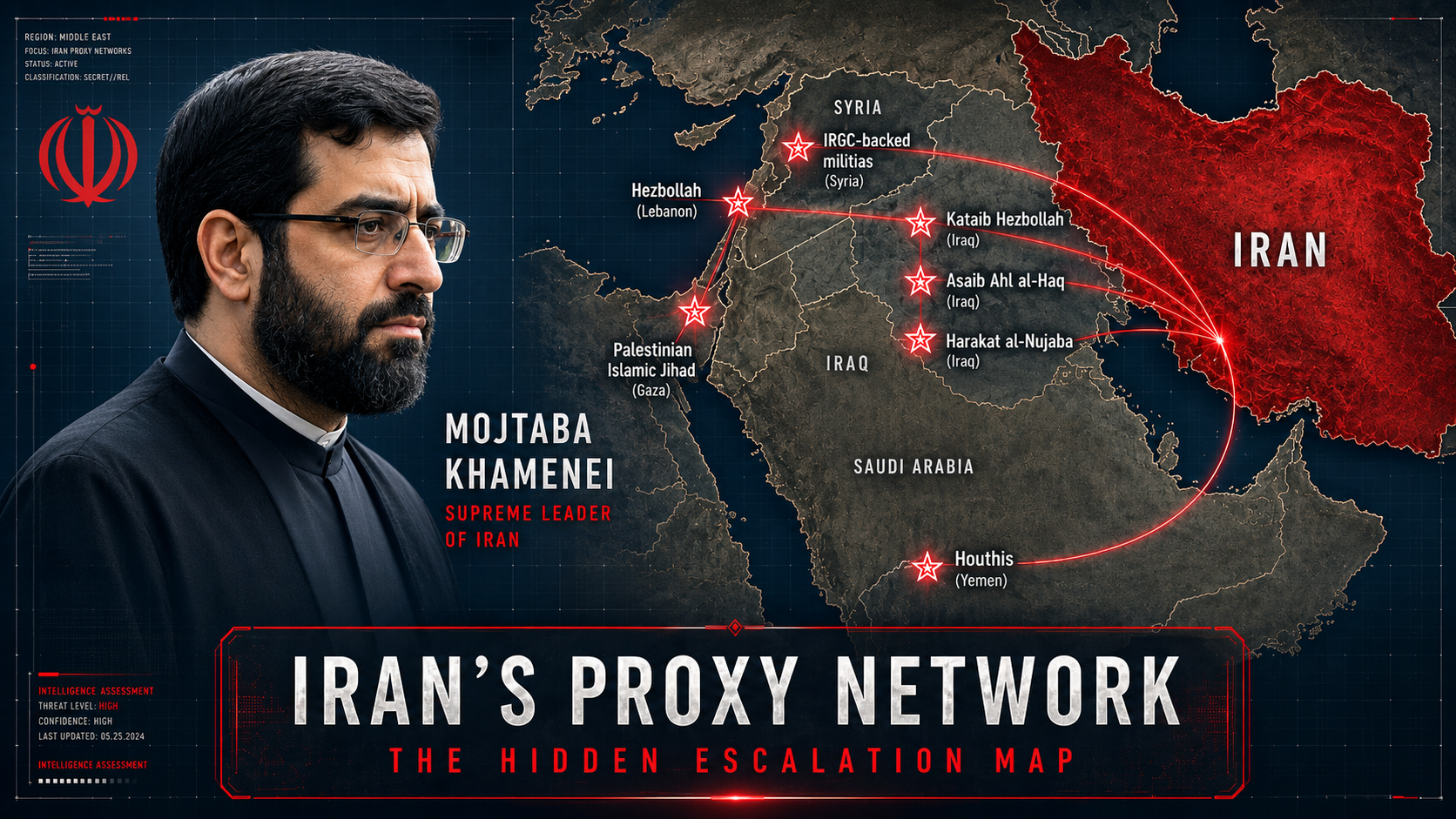
What decision-makers should watch now — before proxy escalation becomes a cost, compliance or supply-chain shock.
This 17-page executive briefing translates Iran’s proxy network into concrete business risks: energy price exposure, maritime chokepoints, war-risk premiums, sanctions, shadow fleets, supply-chain disruption and early-warning indicators for board-level decisions.
You are currently viewing a placeholder content from X. To access the actual content, click the button below. Please note that doing so will share data with third-party providers.
More Information