Executive Intelligence. Industrial Risk. Geopolitics.
Strategic Sparring
for Decision-Makers
Risk intelligence across technology, law, markets and power dynamics.

Verdeckte Geschäftsrisiken, strategische Widersprüche und kritische Abhängigkeiten frühzeitig erkennen.
Kostenlose Analyse starten →
Verdeckte Machtstrukturen, Führungsrisiken und organisatorische Blockaden frühzeitig erkennen.
Kostenlose Analyse starten →
Geopolitische Risiken, globale Abhängigkeiten und kritische Lieferkettenrisiken frühzeitig erkennen.
Kostenlose Analyse starten →
Identify hidden business risks, strategic contradictions and critical dependencies at an early stage.
Start Free Analysis →
Identify hidden power structures, leadership risks and organizational blockers at an early stage.
Start Free Analysis →
Identify geopolitical risks, global dependencies and critical supply-chain vulnerabilities at an early stage.
Start Free Analysis →
Verdeckte Geschäftsrisiken, strategische Widersprüche und kritische Abhängigkeiten frühzeitig erkennen.
Kostenlose Analyse starten →
Verdeckte Machtstrukturen, Führungsrisiken und organisatorische Blockaden frühzeitig erkennen.
Kostenlose Analyse starten →
Geopolitische Risiken, globale Abhängigkeiten und kritische Lieferkettenrisiken frühzeitig erkennen.
Kostenlose Analyse starten →
Identify hidden business risks, strategic contradictions and critical dependencies at an early stage.
Start Free Analysis →
Identify hidden power structures, leadership risks and organizational blockers at an early stage.
Start Free Analysis →
Identify geopolitical risks, global dependencies and critical supply-chain vulnerabilities at an early stage.
Start Free Analysis →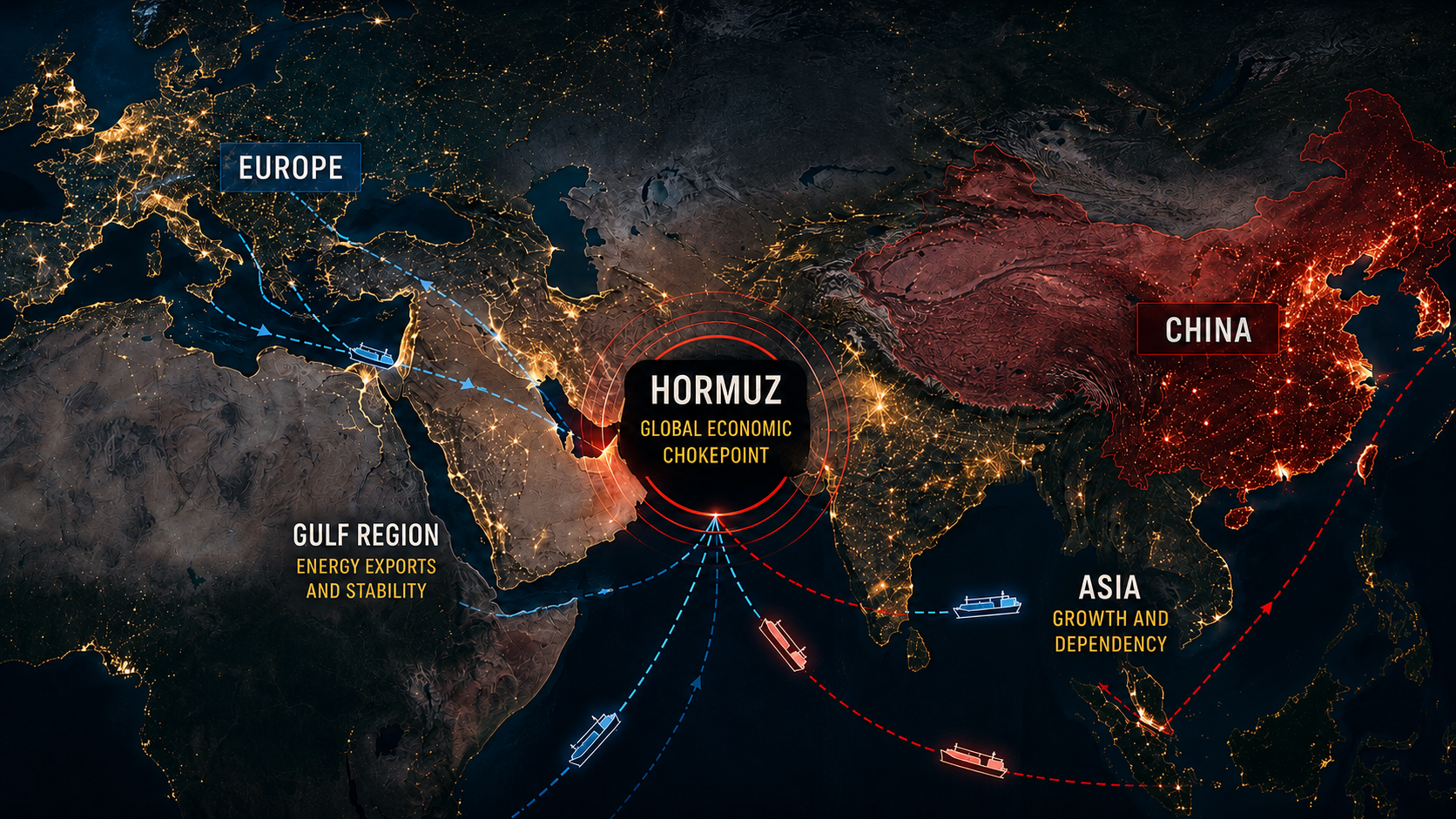
This Chokepoint Check assesses current pressure on the Strait of Hormuz, Bab al-Mandab and the Gulf region’s critical water, power, port and energy infrastructure. The key question is not only whether a route remains geographically open, but whether transport, insurance coverage, energy supply and site operations remain operationally viable.
Diplomatic momentum is increasing – but actual shipping traffic still shows no reliable normalisation.
Kpler recorded only seven commodity vessels on Thursday, down from 17 on Wednesday and compared with a 10-day average of around 15. In parallel, Iran said it was preparing conditions for a normalisation of traffic through Hormuz.
The southern chokepoint also remains weak, although no new operational attack wave has been confirmed today.
Kpler recorded 17 commodity-vessel transits through Bab al-Mandab on Thursday. Visible traffic therefore declined again. However, no sufficiently confirmed new attack signal was identified for August 27 or 28 that would justify a further risk upgrade.
No sufficiently confirmed new attack signal against fixed Gulf infrastructure was identified for August 27 or 28.
Infrastructure pressure nevertheless remains high: Gulf states still need to expand ports, pipelines and alternative export corridors because Hormuz remains operationally unreliable. The required redundancy is available only to a limited extent in the short term.
Kpler recorded seven commodity vessels passing through Hormuz on Thursday, down from 17 on Wednesday. Bab al-Mandab simultaneously fell to 17 transits.
Despite diplomatic progress, Hormuz remains significantly below its 10-day average. AIS shutdowns may conceal individual movements but do not alter the underlying structural weakness.
Volatile transit continues to prevent reliable chartering, procurement and delivery planning. Companies cannot yet treat political reopening efforts as operational normalisation.
Verification Status: confirmed through current preliminary Kpler data from August 28. Reuters / Kpler, 28.08.2026 · SchaafMedia: Hormuz Blockade 2026 – Strategies Against the Chokepoint Shock
Following the Qatari prime minister’s visit to Tehran, Iran said on August 28 that it would formulate conditions for restoring regular shipping traffic through Hormuz.
Qatar is pushing for freedom of navigation. Iran continues to link reopening to US concessions and the planned joint corridor with Oman.
A reliable regulatory framework could reduce planning and insurance risks. Until conditions and implementation are defined, however, this remains a political de-escalation signal.
Verification Status: confirmed for the ongoing Qatari mediation effort and Iran’s willingness to formulate conditions. A reopening has not yet been agreed. Al Jazeera, 28.08.2026 · SchaafMedia: Iran Check – 5 Escalation Signals from August 27, 2026
CENTCOM commander Brad Cooper said on August 28 that the internationally recognised shipping lanes through Hormuz had been cleared of Iranian sea mines.
This is an official US statement. Full independent verification that the lanes are mine-free is not yet available; other maritime risks remain.
Confirmed mine clearance would remove an important physical risk factor. Low transit volumes, the blockade and military risk nevertheless continue to prevent normal operations.
Verification Status: partially confirmed. Official CENTCOM statement from August 28; full independent verification of the shipping lanes remains outstanding. Arab News / CENTCOM, 28.08.2026 · SchaafMedia: Chokepoint Check – Hormuz, Trade Routes & Supply Chain Risks
The USS Theodore Roosevelt Strike Group is expected to deploy to the Middle East in the coming weeks for a deployment lasting more than seven months.
The carrier will replace USS George Washington. This therefore represents primarily a continuation of US carrier presence rather than a confirmed additional second carrier strike group.
The rotation signals that companies should plan for prolonged military protection and blockade dynamics in the Gulf rather than a rapid US withdrawal.
Verification Status: partially confirmed. USNI reported the deployment citing senior Navy officials; the Pentagon had initially not separately confirmed the report. AFP / Arab News, 28.08.2026 · SchaafMedia: Iran War – How the West Fights and Loses Its Dominance
Pakistan and Kuwait signed the Protocol Agreement 2026 on August 27. Pakistan will support Kuwait in training, capacity building and border management.
The agreement expands the defence cooperation established in 2023 and deepens Pakistan’s security role in the Gulf. It does not constitute a new collective defence pact.
Closer military cooperation may strengthen Kuwait’s resilience, but also illustrates the continued development of new regional security and dependency structures.
Verification Status: confirmed. The agreement was officially signed on August 27 and published by Pakistani government authorities. Associated Press of Pakistan, 27.08.2026 · directly relevant on 28.08. · SchaafMedia: Middle East Escalation Check from August 26, 2026
Hormuz falls back to seven visible transits, while Bab al-Mandab drops to 17.
Mine risk is lower according to the US, but blockade, control and military presence remain.
Diplomatic reopening efforts have not yet produced sustainably higher transit volumes.
Insurance, energy logistics and procurement remain dependent on political security guarantees.
Hormuz remains significantly below normal levels even though CENTCOM now describes the international shipping lanes as clear of mines.
Physical mine risk declines · operational usability remains constrainedNo new confirmed attack on fixed Gulf facilities was identified for August 27 or 28. The lack of short-term export redundancy nevertheless keeps infrastructure vulnerability high.
No new strike · alternative capacity remains strategically necessaryLow transit volumes, the US blockade, long-term carrier presence and new regional defence cooperation are operating simultaneously.
Maritime, military and institutional risks remain systemically interconnectedOverall risk remains critical. Diplomatic momentum is clearly stronger today than on August 26, and the reported mine clearance would be operationally significant. At the same time, actual shipping traffic is falling again, the US blockade remains in place and Washington is already preparing the next long-term carrier rotation. De-escalation is becoming more concrete, but has still not translated into stable operational normality.
Note: This assessment was produced with support from our Geo-AI. AI can make mistakes. The analysis is intended as a source-based radar for potential escalation signals and does not replace fully verified intelligence, security, insurance or investment advice. In rapidly evolving situations, status, source availability and risk assessments may change at short notice.
Independent of the subject covered in this article, this separate Executive Briefing provides an in-depth analysis of another critical risk domain affecting European companies.
The 27-page Executive Briefing “Black Swan Risk Mapping for Europe’s Next Mobility and Infrastructure Shock” examines how geopolitical, infrastructural and administrative developments that are currently viewed in isolation could reinforce one another.
Based on the GFDD Framework™, the report shows how these dynamics could affect operational continuity, access to critical resources and the strategic resilience of companies.
The briefing includes a structured systemic-shock analysis and a directly applicable Business Exposure Checklist for CEOs, CFOs, COOs, investors and strategy teams.
You are currently viewing a placeholder content from X. To access the actual content, click the button below. Please note that doing so will share data with third-party providers.
More Information